Dashanzi - arts, culture, eating, drinking
by mke1963
Dashanzi is a well-kept secret. Few taxi drivers even know of the place, yet it is less than a kilometre from the touruist hub of the Lido area.
Dashanzi is an old factory and power station area, which has become a focus for many new galleries, clubs, bars and restaurants.
It is centred around a former Bauhaus-style radio factory. An art gallery has been constructed in the shell, and a photo gallery (Beijing's best) in an annexe. In the collection of old brick buildings, huts and grimy industrial buildings a new arts complex is developing, unplanned, unstructured and unashamed.
So far, there are maybe 20 tenants, all at the cutting edge of the Beijing scene.
Getting there is very difficult unless you already have a good map.
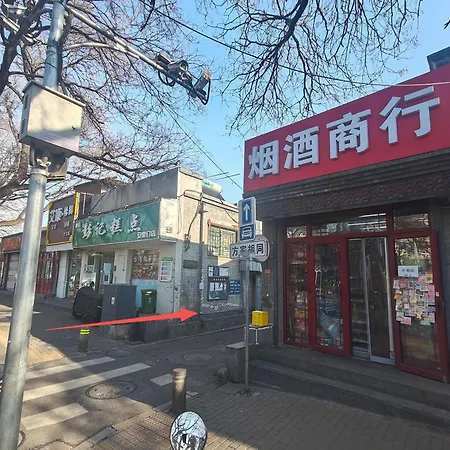
From the Lido, complex turn right, then left at the lights bringing you to the Dashanzi roundabout, take the left turn onto Jiuxian Qiaolu (but not the road that takes you under the expressway to Wang Jing for those who know Wang Jing!), heading north. Immediately before the second pedestrian overbridge, turn down the lane to the right past some security guards (The lane is immediately before the tall Hong Yuan appartment complex) and head to the end of the road...maybe 300 metres.
Taxi drivers will know Jiuxian Qiaolu but it is a long road.
Beijing has more colleges and...
by pastaayd
Beijing has more colleges and universities than any other Chinese city. The most prominent institutions are Beijing University, founded in 1898; and Qinghua University, founded in 1911, which is the most prestigious scientific and technical institution in the country. Both institutions are located in the northwest suburbs, an area associated with higher education and research. Also in this area are the People's University, founded in 1937, and the Chinese Academy of Sciences, founded in 1949.
Beijing also has many museums and cultural activities. There are numerous theaters, including the People's Theater, the Capital Theater, and the Nationalities Theater. The Beijing Concert Hall is among the venues for musical performances. There are also art museums and a museum of natural history.
Under The Beaten Path: Beijing Underground City
by Confucius
Beijing's underground city was built during the height of the Cultural Revolution in 1969 when it was relatively easy for Mao Zedong to find volunteers.
The Chinese were sweet buddies with the Soviet Union at the beginning of the communist revolution, but things ultimately turned sour during a bloody border skirmish in northern Heilongjiang province in 1969.
A system of tunnels, bunkers, and air raid shelters was then built from 1969 to 1979 by thousands of Beijing citizens in case of a nuclear attack. Fortunately the elaborate labyrinthe was never needed for defense purposes and today serves as one of Beijing's least known tourist attractions.
Inside you can walk around some of the tunnels and see vacant facilities which were once meant to be hospitals, restaurants, schools, theaters, roller skating rinks, and barber shops. The temperature is maintained at 18 degrees Celsius throughout the year.
If you can read Chinese then you'll enjoy the amusing nostalgic Chinese slogans and murals still visible on the walls, with Mao quotes calling for people to "dig deep" and hopefully "win the fight against American imperialists and Soviet revisionists"
The only activity you might see is at an underground silk workshop where you can observe the entire silk-making process, but it is actually a recent addition contracted out to Jiangsu entrepreneurs hoping to sell pillow covers and pajamas to Hong Kong and Taiwan tour groups.
Admission into the tunnel costs 20 yuan for adults and 10 for children. It's best to bring your own flashlight, which you can find available for sale (very cheap) at stores on nearby Qianmen Dong Dajie.
Wang Fu Jin
by Winged about Wang Fu Jin
Wang Fu Jin is a famous shopping district. It's like, a street with malls and smaller shops all along it. I personally would not do much shopping there, but it is an enjoyable place to just wander around and look at stuff. There are a lot of more posh stores; it seems like a shopping area for the more well-heeled. My experience was that there were more English signs than at other shopping sites we had visited, more brand names and store names that were familiar from home; it seemed a bit more clean and 'nice'.
If you are like me and think "what's the point in going to expensive, 'nice' places when in a city where cheap shopping is prevalent?", there are also cheap stores around, including side streets where vendors sell cheap food and souvenirs in stalls. We found some cool shops in Wang Fu Jin that had "10 yuan" tables, where everything is 10 yuan. You can find some real bargains, some marked down from over 200 yuan. These are good places to buy Chinese souvenirs, things like enamelware, jewellery, and dozens of miscellaneous things, from tiny replicas of swords to gold ink paintings.
Of course, not all of it is real, but some of it seems to be. If you have been on tours then you have no doubt been dragged to those big stores that sell crystalware, jade, enamelware, silk, whatever, and their sales pitches usually feature a briefing on "how to tell that this is genuine -whatever-".
Some things I particularly liked buying were enamelware - you can get it cheap, it's not usually too big or heavy, and it looks cool and it's very Chinese... I also love these little translucent bottles you can buy that feature paintings. They paint these bottles from the -inside- using special brushes, and it's quite amazing and very cool. They are also a souvenir that it would be difficult to fake, as far as I can tell.
If you're going to Wang Fu Jin I'd recommend not eating beforehand because there are lots of nice, cheap eatables to be found. ^_^. Depends what kind of store you go into, darling. ^_^.
Any tour book can tell you...
by bokononist
Any tour book can tell you where to find 'bar street,' San Li Tun and the other really popular bars; I preferred to go out at the bars/clubs by the universities in the Haidian district, drinks are cheaper (our favorite bar was all you can drink for $5), there are fewer tourists, and you meet all kinds of interesting places. anything goes at these places
Comments