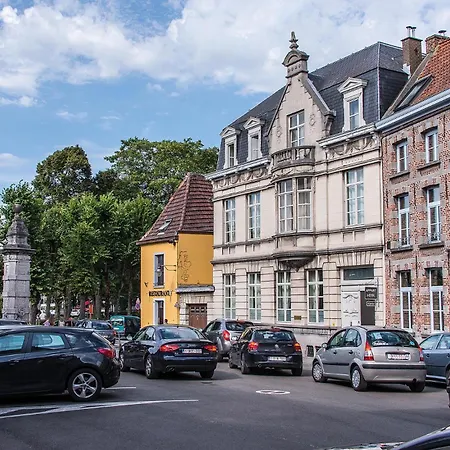
Mons - Bergen, capital city of Hainault province
by Norali
Mons is the capital city of the Hainault province. The Hainault province is the third biggest province in Belgium (Luxembourg and Liege provinces come over it).
Its name means "Mountains". No wonder why when you see its location. The town had grown on one of the five hills in the valley of the Haine river. It has kept the name of Bergen in Flemish, so Mons-Bergen it is.
Besides Mons, Hainault's main cities are Charleroi, La Louvière, Mouscron and Tournai.
The city of Mons, and the whole province, is wrongly overlooked by tourists. Still, Mons offers the splendors and historical elements one would find in most of the cities in Belgium. History? read here: http://www.trabel.com/mons/mons-history.htm
The city has some Universities and schools, more than in any average Belgian towns.
I know Mons from having lived there for months during the last part of my studies. Like most of Belgium cities, its center is built around a Grand-Place (square place with guild houses, stonebricks pavement, it seems)... a legacy from Roman epoch. Belgian city halls (Hotels de ville) use to be on a Grand-Place, so does Mons'.
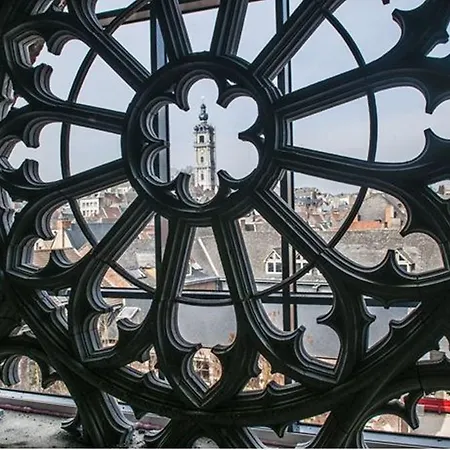
My first visit of Mons was lovely. I was shown some nice view from the belfry (the only Baroque belfry in Belgium), visited a Museum of clocks, Duesberg museum. Then studying there changed my view of Mons a bit. Mainly because I went out of the belfry and Grand-Place areas.
I admit, I am not a huge fan of Mons but got used to my student life there. Still, it has one of interesting shopping joints (Oriental jewelry and accessories) I love most. Also, from those years spent there, I had gained some habits, some insider tips (restaurants and eateries). I hope you will use them if you plan to go there. More than anywhere else, the charm of Mons lies in the tiny and upslope cobblestoned streets. It's so typical of the city. I remember walking there in mornings when heading to my university from the train station. Then, when I decided to live there (generally for second semesters), I spent one day of my week-ends strolling in the center area, doing some window shopping just before catching my train for Brussels.
Also, I have nice memories of Fete de la musique there. I think I liked Fete de la Musique, on June 21, there because the city is so small that it became so atmospheric. Also, it tends to be our break in our June "blocus" (a period in which Belgian students prepare themselves for the exams, school is over but they still have to sit for exams.)
Mons, in the Borinage area
by Norali
Mons is a city in South of Belgium, in the Hainault province. Mons is located in the Borinage area.
The Borinage is an industrial region in Hainault province. It surrounds Mons and extends to the French border. Traditionally a coal-mining district, most of the mines have been closed. Besides rýgion du Borinage, the coal is found other basins: the Central Basin, the Charleroi & Liege basins, which are all located in the Sambre-Meuse valleys. The Campine Basin, located near the Netherlands border makes up for 85% of all the coal mined today.
Glass-making and metallurgy are the now the regionýs primary industries. Yet, already in 1248, coal mining activities were organized in the Borinage. For decades, the wealth of the entire Borinage had been depending heavily on this industry. It soon had to stop since, after WW II, coal mining activites in Belgium came to a halt.
As a result of an unplanned and weak reconversion: a dire economic situation for the former coal-mining districts, the Borinage included. If you take the train from Brussels to Mons, you can't miss here and there the quarries still exploited. Also, I saw a blue-green lake in a big hole, so blue that I thought it was a clear water to dive in. In fact, I was told it was designed near a quarry but its colours are due to chemical products poured in there.
I don't say that only Mons area has those kind of sceneries. Still, these are ones of memories I have of my many railtrips there. I used to commute regularly by train from Bussels to Mons for some time, to attend Univ lessons.
The Mons Monkey
by viddra
On the left of the Town Hall, you can find the mascot of the people of Mons, the bronze sculpture of a monkey (Le Singe de Mons).
Nobody can say for sure why it’s there, but it’s believed to bring good luck to those who pet it with their left hand.
Festivities
by viddra
There are several local festivities, such as ‘Ducasse’, originating from the 14th century, which takes place every year on Trinity Sunday.
The major events are the colourful Golden Chariot’s Procession with the reliquary of St. Waltrude and the ‘Lumeçon’, the fight of Saint George against ‘le Doudou’ (= the dragon). The aim of the young people is to tear out the hairs from the Doudou’s long tail, and in this way prove their virility.
Every year on Trinity Sunday...
by annelies77
Every year on Trinity Sunday all the people of Mons witness the traditional and annual Car d'or procession. The guilded wagon (which during the year can be seen in the Saint Wautru church) was made in the 17th century by Ghienne and Midavaine. During the procession the wagon carries the relic shrine of Saint Waudru through the streets of the city, accompanied by musicians, singers, flag-bearers and horsemen. Legend has it that Mons will get in trouble if the horses do not carry the shrine back to the church without hampering.
On the same day as the Car d'or procession, the famous 'Lumeçon' battle takes place in Mons. The battle is based on the story of Saint George slaying the dragon. In 1380 a fellowship called 'Dieu et Monseigneur Georges' (God and Sire George) was founded. Its aim was to preserve the veneration of Saint Georges and, for the members of the fellowship to accompany his relic shrine during the annual procession of the Car D'or. To illustrate Saint George's battle against evil, a play during which the dragon was killed became part of the entire Trinity procession in Mons. Saint Georges, dressed with a yellow helmet and white pants, is accompanied by helpers (les Chinchins). The green dragon is made of willow branches, and its tail is a young tree. It is 9,5 meters long and weighs about 180 Kg.
Inside the courtyard of the Town Hall, in the 'Jardin du Mayeur' (the Mayor's garden) stands a fountain of the 'ropieur', a boy who teased passers-by by spitting water on them. The little park where the statue stands is surrounded by some of the finest museums of Mons: the Museum of Ceramics, the War Museum, and the Numismatic Museum.