The Procession of Penitence
by Mahieu
The Procession of Penitence (Boeteprocessie) passes every last Sunday of July through the streets of the city centre. The culminating point is the figure of Christ, carrying a cross of 40 kilos. A large group of penitents follows him. Every year more people take part in the procession. All of them still have the original intention of doing penance.
Houses from the 18th century
by Mahieu
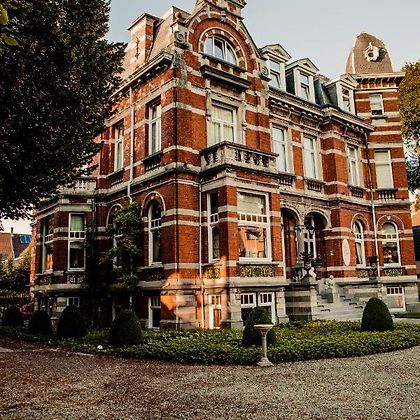
Throughout the city you can find several beautiful houses from the 18th century. A lot of them are situated in the "Zwarte Nonnenstraat". Don't hesitate to wander around the town and be surprised by its beautiful architecture.
Triptyque 16th century
by wandeljp
Triptyque painting
A triptyque of 1534 painting to Jan van Amstel with in the middle a crucifixion of Jesus (photo), visits of kings of Saba (left) and Discovered Holy Cross (upright)
Admired the hot colours, notably the blue ones and the red ones.
---oooOOOooo---
Un triptyque datant de 1534, œuvre de Jan Van Amstel, avec au centre une crucifixion de Jésus (photo), visite du roi de Saba (panneaux de gauche)et découverte de la Croix (panneau de droite)
Admirez la chaleur des couleurs, notamment les bleus et les rouges
---oooOOOooo---
Sint Nicolas statue
by wandeljp
Santa Klaus
(Santa Klaus) is known in our country (with so Holy Martin in of other cities) to give gifts to the children the day of his party day (December 6) This is a little the Santa Claus of at our place so dear to the countries Anglo-Saxons.
It practically always is represented in companies of small children.
You find it on the front of de pulpit.
---oooOOOooo---
Saint-Nicolas est connu dans nos contrées (avec Saint-Martin dans d'autres villes) pour être le protecteur des enfants, leurs offrant des cadeaux le jour de sa fête (le 6 décembre).
C'est le Santa Klaus des pays Anglo-Saxons.
Il est pratiquement toujours représenté en compagnie d'enfants.
Vous le trouverez ici au devant de la chaire de vérité.
---oooOOOooo---
Other building: Vleeshuis
by wandeljp
Vleeshuis
Constructs in 1615 (classified since 1939) and transformed in 1861 in theatre under the architect P. Croquison, serves currently (since 1968) community library and tourism office,.
This is another late Renaissance example to Veurne, following the example of city Hal current, an older little.
---oooOOOooo---
Construit en 1615 (et classé depuis 1939) puis transformé en 1861 en théâtre (architecte P. Croquison), fait actuellement usage de bibliothèque et de bureaux pour l'office du tourisme (depuis 1968).
C'est un autre exemple de Renaissance tardive a Furnes, suivant le modèle de l'hôtel de Ville actuel, de façon plus ancienne.
---oooOOOooo---