













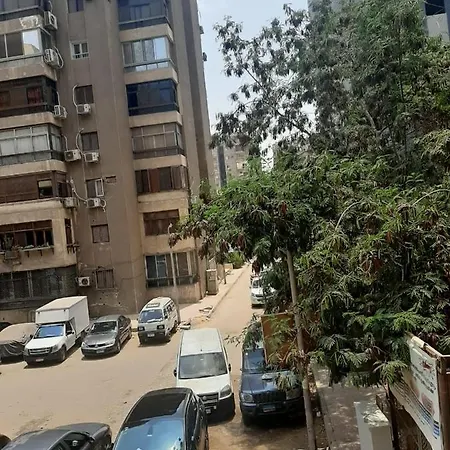
City of the Dead (Qarafa, Arafa) is a four mile long cemetery from northern to southern part of Cairo, Egypt. To the people of Cairo and other Egyptians, it is simply el'arafa which means "the cemetery". It is a bustling grid of tombs and mausoleums where people live and work amongst their dead and ancestors. Many residents live here to be near their loved ones, or because they were forced from more crowded areas in Cairo and 60s immigration from countryside. In fact many came from their villages simply looking for work — a good example of rural to urban migration in an LEDC.
Its foundation dates back to the Arab conquest of Egypt in 642 AD. The Arab commander, Amr ibn al As, founded the first Egyptian Arab capital, the city of Al Fustat, and established his family’s graveyard at the foot of the hill al Moqattam. The other tribes buried their dead within the living quartiers. The following Arab dinasties built own political citadel northwards to the previous, founding a new graveyard every time. The Great Qarafa and the Lesser Qarafa (the commander’s family cemetery) have been inhabiting since the first centuries after the conquest. Its first resident nucleus consisted of the custodians to noble graves and the staff in charge of the burial service as well as the Sufi mystics in their khawaniq (colleges). During the Fatimid Caliphate, because of their Shi’ite faith, the sovereigns supported pilgrimages to Ahl al Bayt (Prophet’s family) shrines as part of their politics. These pilgrimages increased the cemetery’s habitat in order to provide pligrims’ needs. The following sultan, Salah el Din, in order to unify all the four capitals within a surrounding wall, included both cemeteries in an unique urban space. The next Mamluk rulers, originally freed slaves forming a military caste, founded a new graveyard named Sahara, because of its deserted environment, outside the city at its north-eastern border. It was also a place for military parades, such as tournaments and investiture ceremonies, as well as for processions, at which sultan and nobles took part during the religious celebrations. So that many of them built their palaces on the main road of the cemetery in order to assist to the spectacles.
Updated Dec 13, 2010
The Northern Cemetery is to the rest of Cairo what black is to white. Honeycombed with tombs, the narrow streets are car-less and empty. The air here acts as a sponge, soaking up the din that the rest of city is engulfed in. The result is an arid desert silence, clinging onto in each street and corner like mildew on clothes.
Yet here life still finds a way. The homeless and the impoverished make a living for themselves as tomb keepers. The women wash pots and pans with their bare leathery palms; kids patter around in slippers 6 sizes too large for their feet. But say what you will-- this is still their makeshift home, their little patch of the world. It doesn't take a pauper to know Despair, but neither does it take a monarch to rule a land.
The secret to their troubles isn't graffittied in Arabic on the walls; it's written on their faces and you don't need to travel to the backalleys of Cairo to learn it. And though it's untaught in any classroom, it's a familiar sight on any playground. You've most likely seen it in the office pantry, heard it bounce off the walls of a long corridor and been part of it yourself.
It is the language of laughter, and it may be one of the most empowering things we will ever have.
Please FULL VIEW photo.
Written Aug 12, 2006
Cairo has two main "City of the Dead", and the Northern Cemetery is recommended.
This place offers an escape to those who need a break from the endless bustle of the city, for the streets are quiet and the area on the whole seems to live at its own pace. There is an unsual sort of charm here that is enchanting simply because it's so different from the rest of Cairo that stepping into it is akin to discovering another world altogether.
According to my well-travelled Iraqi friend, however, it resembles many other slums in the middle east.
EXTRA TIP: Go with a local and see if he can talk to the swarms of children there and have one of them guide you to a house for a peek at the tombs behind the closed doors.
Written Jul 30, 2006
In the "City of the Dead" on the eastern fringes of Cairo are other structures that feature of Mamluk architecture: the mosque of Farag, the tomb of Barquq , the mosque and tomb of Barsbey , and the impressive madrassa and mausoleum of the Sultan Qait Bey.
Due to housing shortages, overpopulation, and the rising cost of living, the cemeteries have become home to over 5 million of Egypt’s urban poor. They have migrated there in droves turning these tombs of the dead into residences for the living.
Updated Jun 7, 2006
this was amazing, we did it with a friend who had been many times before, and was also egyptian. do not do this without a tourguide. due to the housing prblem in cairo a population greater than the population of belfast lives here. you see cables bringing electricity from the mosques to the tombs, washing hanging from tombs, children playing hide and seek around gravestones. you probably will get a small crowd following you.
keep valuables very safe, but it is an excellent experience.
Written Dec 27, 2005
We were 'lucky' enough to find a taxi driver with a family tomb within the City of the Dead - it's a vast cemetry where many people are forced to live amongst the dead in the tombs after a terrible earthquake some years ago (the governements rebuilding plans are very obvious throughout the outskirts.)
Our driver allowed people to live there free of charge, with the proviso that they clean the area whenever the family wish to pay their respects.
I was very humbled my it all; although the people there seemed content and dignified.
Written Feb 1, 2005
I was actually looking for the Citadel walking from Midan El Hussein and ended up on a ring road, after crossing 6 lanes of furious traffic I saw that at my feet was the so-called cities of the Dead. It was the most enchanting afternoon I spent in Egypt, wandering around for several hours.
Written Sep 1, 2004
Cairo has poverty, just as many countries in the world.
In Cairo, there are poor communities that have taken up residency in the old tombs of the buried from centuries ago.
It is eye opening to take a journey through the city's back streets to see how these people live.
Written Jul 11, 2004
Inside Cairo, north of Saladin's Sqare and going to the Islamic Cairo, ther's a cementery used by locals as their home!
The Family's mausoleum are their houses. It's all organized! they even have their post office inside the complex!
It is amazing but truth, living around their deths!
Written Feb 3, 2003
The City of the Dead:
I'd suggest a visit there to those who want to see a Cairo which is really different. Note, however, that venturing there alone is not the safest thing in the world, especially if you have valuables on you. Take a guide from the locals if you know some Arabic, you'll see more and be safer. The huge graveyards existed there since 12th century and the place became the City of the Living as well, with people inhabitins the mausoleums. You'll see many different things: rich mausoleums of those who once where famous, Copt tombs looking like tiny houses with neat gardens, or just stones.
Written Aug 25, 2002
Sponsored Links
Four Seasons At The First Cairo
4 Reviews and 205 Opinions You must go through a street barrack and through metal detectors just to get to the elevator and get...
Mena House Oberoi Cairo Cairo
23 Reviews and 847 Opinions This is the best hotel I have been. It was Sultans Palace and it was renovated and started to be...
Four Seasons Cairo Nile Plaza Cairo
5 Reviews and 249 Opinions If you are seeking a luxurious trip to Egypt, then the Four Seasons Hotel is the only place to stay....
City of the Dead tips and photos posted by real travelers and Cairo locals.
Write a Review
The City of the Dead:I'd suggest a visit there to those who want to see a Cairo which is really different. Note, however, that venturing there alone is not the...
884 members live in Cairo
Q: Hi, Im planing to travel in Egypt. I would like to know about the Taxi fares in Cairo. Can I walk and see the important places?...

A: In general, I don't think people have a problem with taxis in Cairo. It's quite common to ask the driver to come and pick you up later after visiting places. If the...
Read 2 Replies
1

Cairo is a city of many cities. Throughout its many millennia and several names, Memphis, Babylon, Fustat, or Cairo, Africa's largest city has been a centre of great importance to many civilisations,...
3

The first thing that struck me when I arrived in Cairo was the chaos. The airport itself, depending on whether you arrive at the old or new terminals, has nothing to welcome you. If there is a health...
4

Without a doubt my visit to Cairo was unforgettable. Months passed since my return home and I'm still thinking of the beautiful moments spent there, wishing to be back and explore more. When I wrote...
5

I've got some interesting experiences in Cairo. I'd love to share with you the 104 tips I've written, the 137 photos uploaded, and 5 travelogues I've created.
Build your own Cairo page
Sponsored Links