Favorite thing:
For your visit to Tupran I recommend the following day tours and combinations of visiting the most important places. You'll need at least 2 - 3 days:
Day 1:
Flaming Mountain
Beziklik Thousand Buddha Grottoes
Gaochang
Astana Necropolis
In the evening: Emin Minaret
Day 2:
Jiaohe
Karez
Bazaar
Museum
Please consider that you cannot do much sightseeing during noon, as it is much to hot.
Opening hours for all this places are mainly 9:00 to 17:30 (Beijing Time). Entrance fees are about 20 to 40 Yuan for each spot.
Favorite thing:
Turpan is a hot city: very hot indeed! You have to expect about 40° Centigrade from June to September. It is a very continental dry climate. But from November till February temperatures drop until far below zero!
The heat and the location in this depression also are the reasons, tthat many storms appear in Turpan-Area. Between Urumqi and Turpan is one of the biggest windmills of the world. But this storms can also cause problems. Trains donot go in storms, Sandstorms are a big handicap for tourists: no sight and going out in a sandstorm is no fun.
Dispite of the storm and the heat it was nice to be in Turpan in June. It must have rained a bot before we arrived: the trees and plants were all green and blooming.
Favorite thing:
Today's Turpan is the center of a big oasis on the north route of silkroad. This fertile area has been attractive to merchants with their caravans and nomads with their herds. Since more than 2000 years have been settlements in this oasis. You'll find the remains of big cities and glorious past around modern Turpan: the ruins of Gaochang, which had been a prosperous city during the Tang-Dynasty, and of Jiaohe, and also the famous Thousand Buddha Caves of Beziklik. In an old graveyard near Gaochang archaeologists excavated hundreds of 2000 year old tomkbs. Some with nice frescoes, some with well preserved mummies.
Now Turpans has about 300000 inhabitants. It is a pleasant and quiet city with broad streets and not many highrise buildings.
Favorite thing: Turpan is located in one of the deepest places of the earth. Nearby Aydinkol Lake is about 154m below sealevel. Turpan is an old oasis in the north of Taklamakan Desert. The water from Tianshan Mountains makes this area very fertile. In the heat of the desert grapes are grown for the production of raisins.
Favorite thing: Here on VT you find this famous oasis, which is located in Xinjiang Uygur Automomous Province, under the name of TURPAN. In Germany and in many guide books the name TURFAN is more common. It is just a difference in the correct transcripption of this old Uygur name. The official Chinese Pinyin Transcription is TU LU FAN, as no Han Chinese person could pronounce Turpan correctly.
Favorite thing:
I have always loved those popular Asian street markets, where you can find unknown fragrant impossible things, roots, plants, dried animals...
Here in Turpan you have a mix of chinese stuff and muslim bazaars, as this area is a border between these 2 worlds.
Favorite thing:
Being an important stop on the Silk Road caravans trail and the last frontier against the "northern tribes", this part of China has always been of startegical importance and mant defensive and civil structures have been built here.
Most of them are gone forever, but you can still see the remains of some as Gaochang, Jiaohe...
Favorite thing: If you like desertic landscapes, Turpan is one of the most amazing places I have visited. The Takla Makan desert offer a great variety of arid landscapes with the gorgeous background of the Flaming Mountains in the horizon line.
Favorite thing: Goats are very important in Turpan, in fact in the whole region of central Asia in general. As such, you will see these animals everywhere in Turpan. You should try eating the delicious mutton dishes while in Turpan and other parts of Xinjiang.
Favorite thing:
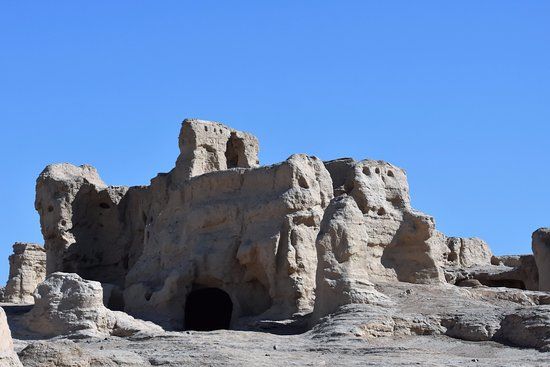
Ruins of the Ancient City of Jiaohe
About 10 kilometers west of Turpan County, Jiaohe was a strategically important city on the ancient Silk Road that travelers must pass through. Ancient City of Gaochang
Situated at the foot of the Flaming Mountains, Gaochang was founded in the first century B.C. and abandoned by the end of the 13th century
Sponsored Links
Sponsored Links
Comments