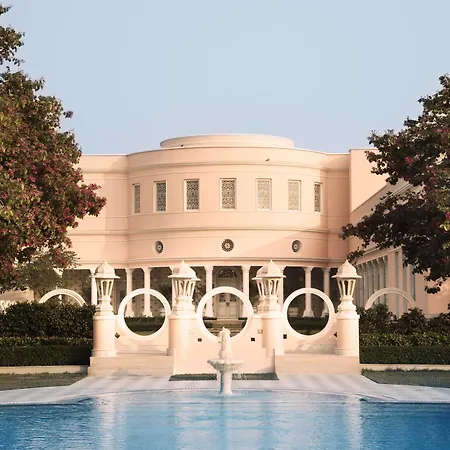
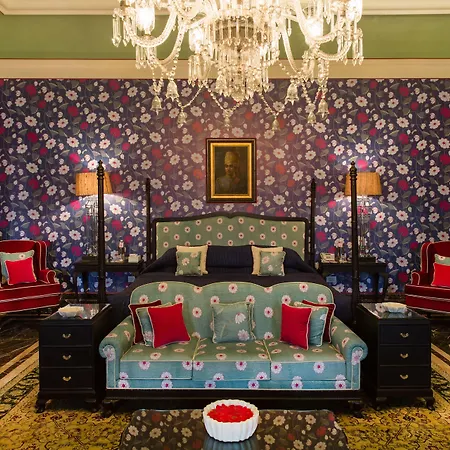
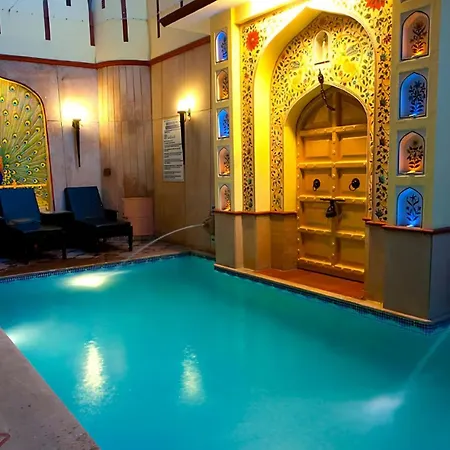
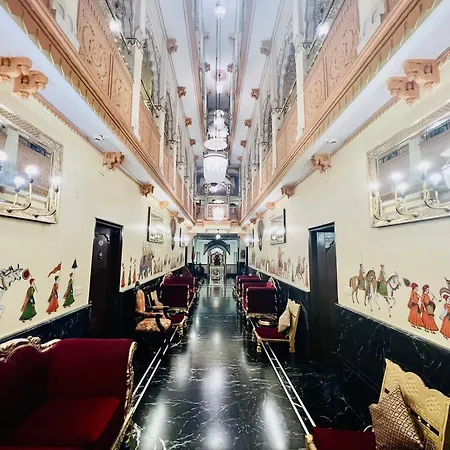
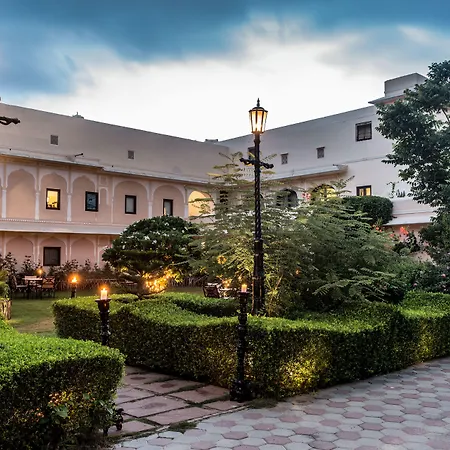
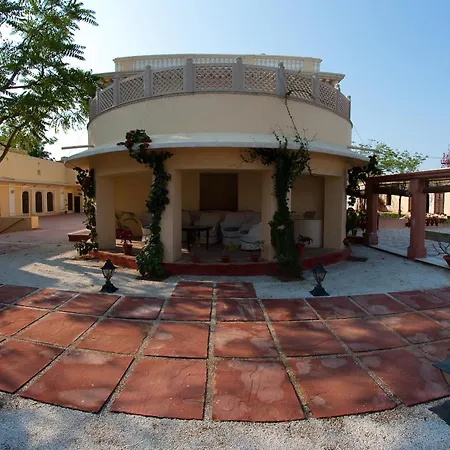
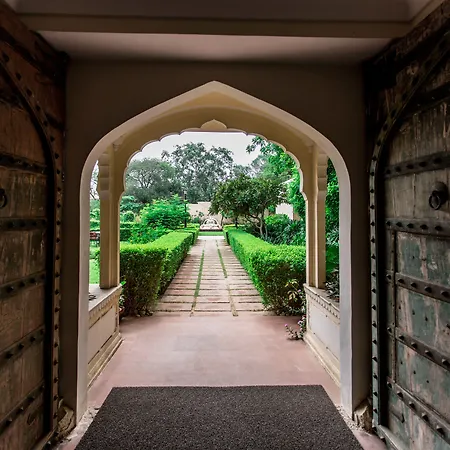
The Night Illumination of of Amer Fort is just fantastic! You are going to love the place in the night as the illumination keeps you mesmerised! Please have a closer look of the pictures to realise that! Please buy your tickets in advance if you wish to experience the Light & Sound show followed by dinner in near by Surabhi Restaurant. We also organised Pagdi ceremony for our group at the show!
During the 50-minute show, admire the colorful lights that illuminate the structure and reflect beautifully on Maota Lake, and gain an understanding of Amber Fort’s legendary past, dating back more than 600 years. Learn about the 28 kings of the Kachwaha Dynasty who ruled a number of kingdoms in the area and see how they played a part in changing the destiny of medieval India. You’ll leave the show with a deeper understanding of how the Indian state of Rajasthan has developed its unique identity.
The Fort was built over the Maota Lake. The view from the top of the fort is fantastic! The lake is not a very big one but big enough for Rajasthan , where water is always a scarce commodity! This must have also served as major water supply source for King Man Singh and his family! Enjoy the beautiful lake!
Last time we missed this place in May'12 but on 16th november' 12 during our revisit we compensated this to the hilt! We visited this place twice in a day! During the day we had a visit and in the evening we had Light & Sound show and a grand party at their garden!
Amer Fort ( Amber Fort) is located in Amer 16 kilometers from Jaipur, Rajasthan state, India. It is one of the principal tourist attractions in the Jaipur area, located high on a hill.Amer Fort was built by Raja Man Singh I. Amer Fort is known for its artistic style, blending both Hindu and Rajput elements. With its large ramparts, series of gates and cobbled paths, the fort overlooks the Maota Lake, at its forefront.
The aesthetic ambiance of this formidable fort is seen within its walls on a four level layout plan (each with a courtyard) in a well turned out opulent palace complex built with red sandstone and marble consisting of the Diwan-e-Aam or the "Hall of Public Audience", the Diwan-e-Khas or the "Hall of Private Audience", the Sheesh Mahal (mirror palace) or Jai Mandir, and the Sukh Niwas where a cool climate is artificially created by winds that blow over the water cascade within the palace. Hence, the Amer Fort is also popularly known as the Amer Palace. The palace was lived in by the Rajput Maharajas and their families. At the entrance to the palace near the fort’s Ganesh Gate, there is also a temple dedicated to Sila Devi, a goddess of the Chaitanya cult which was given to Raja Man Singh when he had defeated the Raja of Jessore, Bengal in 1604. (Jessore is now in Bangladesh).
This fort, along with Jaigarh Fort, located immediately above on the Cheel ka Teela (Hill of Eagles) of the same Aravalli range of hills, is considered as one complex, as the two are well connected by a subterranean passage. This passage was meant as an escape route in times of war for the royal family members and others in the Amer Fort to shift to the more redoubtable Jaigarh Fort.
Amer was known in the medieval period as Dhundar (meaning attributed to a sacrificial mount in the western frontiers) and ruled by the Kachwahas from the 11th century onward – between 1037 and 1727 AD, till the capital was moved from Amer to Jaipur. The history of Amer is indelibly linked to these rulers as they founded their empire at Amer.
Earlier to the Kachwahas, Amer was a small place built by the Meenas in the town they consecrated to Amba, the Mother Goddess, whom they knew as `Gatta Rani' or `Queen of the Pass'.[6] The Amer Fort, as it stands now, was built over the remnants of this earlier structure during the reign of Raja Man Singh, Commander in Chief of Akbar’s army and a member of the Emperor's inner circle of nine courtiers, in 1592.The structure was fully expanded by his descendant, Jai Singh I. Even later, Amer Fort underwent improvements and additions by successive rulers over the next 150 years, until the Kachwahas shifted their capital to Jaipur during the time of Sawai Jai Singh II, in 1727.
Many of the ancient structures of the medieval period of the Meenas have been either destroyed or replaced. However, the 16th century impressive edifice of the Amer Fort and the palace complex within it built by the Rajput Maharajas are very well preserved.
Riding an elephant uphill seems a cliche for tourists. And it is. But it really helps feeling the ambience and plunging deeper in India.
I had a personal experience in Fort Amber... well... I describe it in a Travelogue. But the visit to the fort, going up by elephant, on foot, or by helicopter, is something no one can miss.
This is one of the most fascinating palaces in Jaipur. Situated in the town of Amer or Amber, which is also called the old city/old capital. The most famous Sheesh mahal is housed here. It makes sense to hire a guide to learn about the trivia and interesting details of the Royal kings and their families. The guides cost about 200/2 to 4 persons.
There is a Kali temple within the palace which is open from 5 p.m. in the evening.
The whole ambience in and around the Amer fort and palace is so enchanting. Surrounded by mountains, the fort has a wall running to about 12 kilometres around, there is a guest house and park at the base (Dil aaraam Bagh and the kesar Kairi Bagh are at the base) The climb up to the palace is interesting when you have a guide pointing out the various sites around.
We had a guide for the city and our first stop was Amber (pronounced Amer) fort. A steep ramp led to the entrance, at which point you could walk up or take an elephant ride up. There is some controversy about the treatment of those elephants so we walked up to the fort.
The fort was built in 1592 by Raja Man Singh I. It was built in white marble and red sandstone and is really stunning, the outside being a stark contrast to the inside. It was more a palace then a fort with a huge (magnificent) courtyard, small temple - the Kali or Shila Mata Temple - with gorgeous silver doors, various residence areas including that of the maharaja, and mosaics, hand paintings, marble columns, sculptures, and some great doors. The highlights included wonderful carvings and minute mirror work.
There were long views of the surrounding watchtowers and loverlooking Maota Lake. There was room for the king, queen, and the king’s 300 concubines.
This is definitely a must see in Jaipur. I would allow a couple of hours to explore.
You can make a day out of visiting Amber, Jaigarth, and Nahargarh Forts, starting at the bottom with Amber. I think Amber rates as #1, Nahargarh as #2, and Jaigarh as #3.
Admission is Rs 10 for Indian citizens, and Rs 50 for foreigners.
Camera fees Rs 40 for Indian citizens, Rs 25 for foreigners.
The fort is open daily except Holi from 9:30 a.m. to 4:30 p.m.
Amber Fort is one of the biggest fort in jaipur which once overlooked the vast land and now an emerging city.The fort is really unique and huge.If you are into art or architecture you would probably love this by far.There are so many things within the fort,entering the fort would find you a temple and then the big entrance and then a Sheesh Mahal(palace made of mirrors).
You can do elephant rides in here and the price would depend upon how you negotiate.
The tour to fort would be included in your travel package if you have taken the Golden Triangle package(generally taken by tourist for Delhi-Jaipur-Agra)if not and you are an independent one the you can find a licence holder guide just outside the fort for INR 50-150(depending upon how you negotiate).
You will see handicraft market inside but,they are nothing unusual and can be bought in local market for less.
Amber Fort is a very well visited tourist site and deserves to be so. The honey coloured fort/palace is situated on a hillside above the village Amber, 11km north of Jaipur.
Construction of Amber Fort begun in 1592 by Raja Man Singh and it was later extended to its present form by Jai Singh I.
The fort/palace is a good example of Rajput architecture and both Hindu and Muslim style of decoration can be found. Inside there are wonderful carvings, paintings and mirror work. There are several courtyards, gates and audience halls. There are the women’s quarters and the Maharaja´s quarters and temples.
Amber Fort is open every day of the week between 9.00 - 17.30. Admission for foreigners was Rs 150 (August 2010). An audio guide is not included in that price, but as I didn’t pay extra for one I don’t know how much it cost.
Situated about 20 minutes by car north of Jaipur, Amber is the original capital of the Kachhawaha dynasty. Maharaja Sawai Jai Singh II was the last from this dynasty to rule out of Amber while he commissioned the construction of Jaipur in 1727 as the new capital of the kingdom. The history of the two cities is thus intertwined and a trip to Jaipur is not complete without a visit to Amber and its formidable Palace-Fort. For a more detailed description of Amber and its sites, check out my separate Amber page.
Note: Amber is sometimes also referred to as "Amer".
A few kilometers out of the city of Jaipur you will find Amber fort, the most beautiful and largest of the three forts. Arriving into the fort will probably be on the back of huge elephants. When you are in the fort you can choose to just look around for yourselves or use a guide. This fort is really something to see.
Sponsored Links
Taj Rambagh Palace Jaipur
4 Reviews and 493 Opinions First Impression - Smartly dressed staff greeted us upon arrival and escorted us to the reception....
Trident, Jaipur Jaipur
7 Reviews and 620 Opinions Trident lives upto its standards of its 5 star hotels and staying in this hotel is not very...
Oberoi Rajvilas Jaipur
1 Review and 311 Opinions On arriving at Rajvilas, a horse and carriage carried us through the extensive and beautifully...
Sponsored Links
Comments