I passed by this vegetable stall on the main road without a vendor. Basically you pick whatever you like, and deposit the money into the can to the right of the yellow container. The Japanese radish (daikon) in the middle are free!
Not sure if it is a permenant stall, but I saw this on the main road between the hostel that I stayed at (see accomodation page) and the sacred bridge.
Written Jun 4, 2007
There is a Consumption tax of 5% on all goods purchased. This includes meals at restaurants and hotel charges. Overseas visitors are exempt from this tax on large purchases outside of hotels and restaurants. There are rebate counters in the larger stores. An additional 3% sales tax applies on hotel accounts over yen15,000 and restaurant bills over yen7,501 per person.
Updated Aug 18, 2006
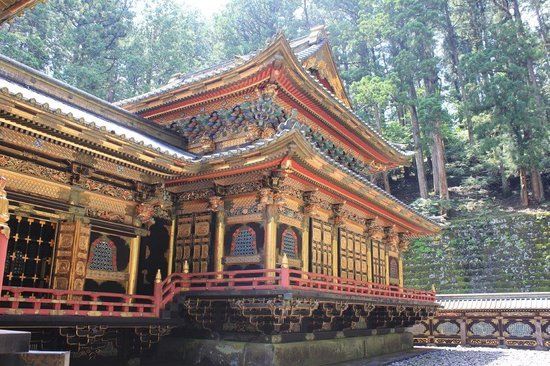
Do remember to remove your shoes before entering the temples. The locals are very polite if you forget, but it sure does get you a big smile if you remember.
Who cares if you have a hole in your sock, take it off as well :)
Written Jan 2, 2006
Omikuji are fortune telling paper slips found at many shrines and temples. Randomly drawn, they contain predictions ranging from daikichi ("great good luck") to daikyo ("great bad luck"). By tying the piece of paper around a tree's branch, good fortune will come true or bad fortune can be averted.
You tend to see mostly young girls and ladies doing this.
Written Feb 22, 2005
Some shrines here belong to the holiest of Japan and one expects some more respectfull behaviour around them. Some tourists do not know how to behave in these places, but maybe it helps to know that among the places are burial-grounds. Let yourself not be a part of the noisious tourists.
Written Oct 13, 2002
Japanese language is one of the most complicated! Three types of characters. Anyway, here's some useful phrases to keep in mind in case you need help.
IN AN EMERGENCY:Help! Tas'kete!
Stop! Tomete!
Fire! Kaji!
Call the police Keisatsu o yonde kudasai!
Useful Phrases:
Yes Hai
No Ie
Thank you Arigato gozaimasu
Please Dozo
Sorry Sumimasen
Excuse Me Sumimasen
I don't understand Wakarimasen
Do you speak English? Eigo o hanashimasuka?
How are you? Ogenki desu ka ?
Good morning Ohayo gozaimasu
Good afternoon Konnichiwa
Good evening Konbanwa
Good night Oyasumi nasai
Good bye Sayonara
Written Sep 1, 2002
May 17 & 18 and October 17 are particularly popular as rather elaborate festivals are held on these dates with omi koshi (carrying the Toshogu deity through the streets with a portable shrine) and hundreds of people parading in traditional costumes, which are stored at Toshogu Shrine. There is also a Nikko Ice and Snow Festival during the first two weeks of February near the Chuguji Shrine at Lake Chuzenji. Many ice sculptures are erected and there are fireworks and other daily events.
Written Sep 3, 2002
A reminder that the electrical unit is 100V; 50 Hz (Tokyo and eastern Japan), 60 Hz (western Japan). Be sure to take whateve adapters you need incase they are not available at your hotel.
Updated May 4, 2004
Japan is the virtual nonexistence of violent crime. If you leave your briefcase or camera in a taxi, often it will be returned before you realise it's missing.
Written Sep 3, 2002
Be sure to wear shoes that can be easily taken off. You need to remove your shoes visiting the insides of temples.
Written Sep 3, 2002
Sponsored Links
2 Reviews and 72 Opinions The Nikko Kanaya Hotel is the oldest Western-style hotel in Japan and is designated a National...
1 Review and 53 Opinions Located about 20 minutes walk up the hill form the station. Surrounded by tree and forest it is a...
3 Reviews and 20 Opinions Avoid Logette Sainbois! It was slightly snowing when we arrived at Logette Sanbois and it was as...
Reviews and photos of Nikko attractions posted by real travelers and locals. The best tips for Nikko sightseeing.

Be sure to wear shoes that can be easily taken off. You need to remove your shoes visiting the insides of temples.
2 members live in Nikko
Q: I find the trains in Japan to be very confusing. I have found an English schedule link online, but it seems to have all the names...

A: Take a look at this map of Japanese railway system and look for the line between Tokyo and Fukushima ? http://www.railkey.com/tickets/popups/japan_map_en.pdf Railway...
Read 2 Replies
1

Nikko's shrines and temples have been classified by UNESCO as a World Heritage site and deservedly so. Its many temples and shrines are just beautiful and religiously sacred. The site is made up of...
2
Nikko - UNESCO World Heritage Site

The pilgrim city of Nikko is about 130 km. northeast of Tokyo, easily reached in 2 hours by direct train from Asakusa station. The site is centered on the mausoleum and shrine to the shogun Tokugawa...
3

On the way from Tokyo to Nikko we saw the "Nikko is Nippon" advertisement, and were thinking it must be hype..we were wrong. Nikko is everything you have heard and then some! A lot of people see this...
4
History and Nature Tours All in One!

I spent 4 days in Nikko and the surrounding area in late-summer of 2005. The town of Nikko was very quiet in the early mornings and evenings as many tourists came here only as a day trip. I don't...
5

The Shrines and Temples of Nikko Nikko was listed as a World Heritage Site in 1999, becoming the tenth in Japan to achieve this status and recognition. Nikko is where nature's special beauty of...
Build your own Nikko page
Sponsored Links