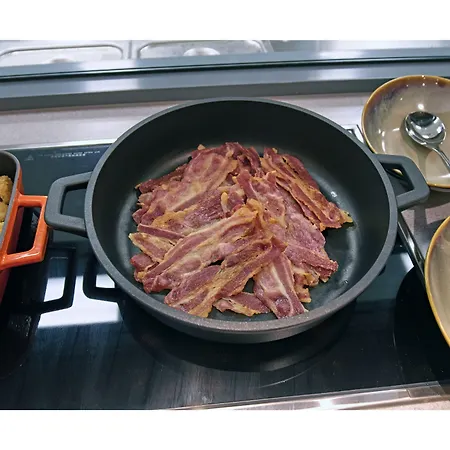
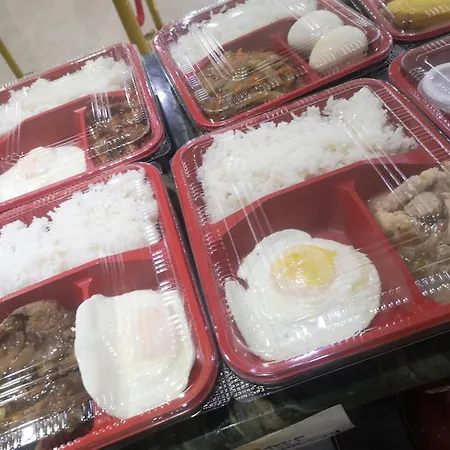

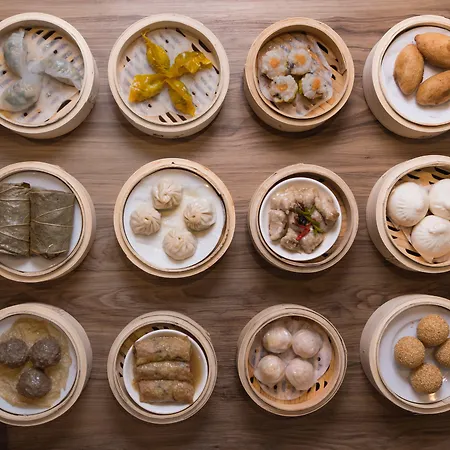

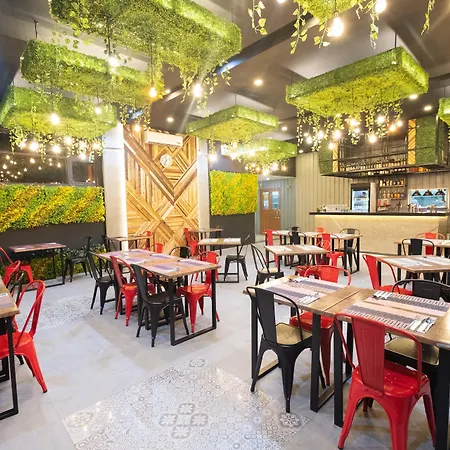
Ok, Here is my Separate Things to do tip for the Binondo Chinatown and eating along the Chinatown Area is one big adventure and also one filling for your tummy hehhehe. You can find almost all the Cuisines of china here in chinatown like the Shanghai Cuisine, Beijing Cuisine, Cantonese Cuisine, Fujian Cuisine and more plus an amalgalm of Chinese and filipino offerings. Prices range from the very cheap from the holes in the wall up to the fit for the emperor type at the fine dining restaurants and example of the food are: steaming hot congee, dimsum and assorted dumplings may be found at either the more upscale restaurants or at the quaint sidewalk teahouses similar to those found in Chinese market places. Chinese cuisine cooked the Fukienese, Macanese, and Cantonese styles may also be found in restaurant menus. Pastries and sweet meats like the hopia (a flaky pastry with purple yam or mung bean stuffing,) machang (rolled up sticky rice with meat filling wrapped in banana leaf) may be bought at the bakeries and food stalls scattered around the Binondo Area so what are you waiting?
Written Mar 21, 2012
Address: Binondo District, Manila, Philippines
I will do a separate tip for the Food Tripping in Manila Chinatown.
Like in other places in the globe, Manila has it's own Chinatown but unlike in other Chinatowns in Other Countries, The Chinatown in the Philippines is not that big since the chinese are well assimilated in Philippine Society. The Manila Chinatown is a treasure trove of Chinese History in the Philippines. The Chinatown was called the "Isla De Binondo" in the Spanish Times and they say that during the trading galleon centuries, the mercantile town of Binondo served as the center of trading post between Asia and the New World.
Certain streets became known for the types of establishments found there. The 393-meter long Calle Escolta, made of imported stones from Hong Kong, was the place where one could find newly arrived European and American products. Calle Rosario and Calle San Fernando, on the other hand, served as the marketplace for Chinese products. Chinese artisans resided along Calle Anloague, while stores and panciteries were centralized in Calle Nueva. Calle Santo Cristo housed apothecaries, opium headquarters and gambling houses. The famous Teatro de Binondo was located at Calle San Jacinto. Calle Jaboneros was named as such because it was then the center of the soap-making industry, and Calle Fundidor was the perfect place to find statues and statuettes, and metalworks.
Written Mar 21, 2012
Address: Binondo District, Manila, Philippines
I have been to many Chinatowns around the world, but I consider the one in Manila the best because it is very nostalgic for me. The streets are very small and my father would drive me around with his Lambretta motor scooter and then we would look for siopao (which is meat in a white floury cover) and also HOPIA ( which is a sweet mung delicacy)....yummy!
It strecthes from Santa Cruz Church in the east and all the way to Binondo Church in the west. And areas of it had been burned down and then rebuilt - but it is terribly congested and a bit overcrowded with buildings --- a sore to the eye sometimes, but i think it is what makes it special and "authentic". Very colourful place to visit...Especially on Chinese New year with the dragon parades --- awesome sight for tourists!
Chinatown in Manila is also famous for all the sales, specially the gold jewelry (at Escolta and Ongpin) that can be bought by weight. but when you're there, just wear simple clothes to avoid standing out. But if you have blond or red hair, I can't help you with that, hehehe...
Updated Jun 5, 2009
Kuang Kong, AKA the God of War, AKA Patron of Martial Arts, AKA Patron of Scholars (when seated/reading). Kuang Kung who was a powerful and loyal general is also protector of Quan Yin, Goddess of Mercy. As C. Celdran puts it, in the spirit of assimilation, the Chinese believers calls Kuang Kong, Santiago. Go figure.
This Buddhist temple is open to the public. You can light incense sticks and put them in the urn at the entrance of the temple and utter your prayers. There is also these red wooden half moons you can use to have your fortunes told. Couch your questions in such a way that they're answerable by YES or NO! Swirl a pair of these wooden half disks over your incense sticks so they catch the smoke and then throw them to the floor. Identical faces means NO. Opposing figures means YES!
BTW, my friend S. L. tells me that, to quote him, "Guang Kong falls under Taoism though in Chinese religion, Buddhism, Taoism and Confucianism are often portrayed together in the same temple." Thanks for the info S. L.
They appreciate donations of any amount.
Updated Nov 13, 2007
Address: Kipuja Street, Binondo
The first Santa Cruz Church (often abbreviated to Sta. Cruz Church) was erected in 1608 by the Society of Jesus, better known as Jesuits, as a parish church for the swelling ranks of Chinese immigrants to Manila, many of whom had converted to the Catholic faith. The original structure was twice damaged by earthquakes, and totally destroyed in World War II. The present building, completed in 1957, is essentially Baroque and somewhat reminiscent of the Spanish-built mission churches.
Updated Nov 8, 2007
Address: Sta. Cruz, Manila
Basilica de San Lorenzo Ruiz
Located in the Chinatown area of Manila, Binondo Church is one of the oldest church in the Philippines (built in 1596).
The original structure suffered a lot from typhoons and earthquakes over the past years since its erection. The only thing that remains as original is the octagonal bell tower.
Patron is Saint Lorenzo Ruiz (1st Filipino Saint) who served in the church as altar boy during his younger years.
By the way, the church is the Heritage Conservation Society.
Updated Apr 26, 2007
Address: Quintin Paredes St., Binondo, Manila
There are lots of things to do at Chinatown: Buy appliances that cost lesser, find suppliers for your restaurant or whatever business, buy jewelry, customize jewelry, buy Chinese medicine, buy authentic Chinese food, etcetera, etcetera. It's within Manila, but it seems like you're in another country (just like any other China town, I guess).
BTW, the First Filipino saint, St. Lorenzo Ruiz, was born in Binondo, Manila (the location of China Town)
Updated Mar 21, 2007
Address: Binondo, City of Manila, Philippines
Chinatown is not a clearly defined suburb but a cultural and business district that takes in parts of Santa Cruz and Binondo, roughly the area between the three Chinese-Philippine friendship arches called the Welcome Marker. From Ermita you cross the Pasig River over the Jones Bridge, between the Immigration Office and the GPO, to the First Welcome Gate. The southern part of Chinatown begins here. From Quintin Paredes St, which runs through the gate, several little streets seem to wind crazily towards the big east-west curve of Ongpin St, the eastern end of which is marked at Plaza Santa Cruz by the Third Welcome Gate (Arch of Goodwill). Ongpin St is the main business street of Chinatown, with well-stocked Chinese grocers, herb-scented drug stalls and spacious restaurants. However, you can also find exotic shops and little teahouses in the sidestreets leading off Ongpin St, eg in the narrow confines of Carvajal St. Unlike the Chinatowns in other Asian cities, this one is very busy on Sunday.
Updated Oct 29, 2006
Address: Chinatown, Manila
Even Manila has a Chinatown. The Chinese presence in Manila is strong. During the Spanish times, the Chinese were kept out of the walled city and they settled across the Pasig River in what's known as Binondo.
Like most Chinatowns, Manila's Chinatown has all the proverbial sights sounds and smell. Yet it is unique because of the presence of horse drawn carriages called calesas and it is flanked by baroque-style churches, Binondo church and Santa Cruz church.
Most of the Chinese in Binondo are Catholics but they maintain some of their Chinese traditions
Updated Sep 13, 2003
Address: Binondo, Manila
That Dragon is long, so you'll need a real wide angle lens to get the whole thing. Of course, if Dragons are not your thing, or if you forgot to bring your wide angle, there's always Rick you can aim your camera at. Right, Syl? :o)
Updated May 26, 2003
Sponsored Links
Makati Shangri-La Manila Manila
17 Reviews and 429 Opinions This is my Makati Shangrila Tips with the Newer Pictures. The Shangri-La Hotels and Resorts is a...
The Peninsula Manila Manila
14 Reviews and 363 Opinions Stay was ok. The worst part is if you are a member, you get to be passed around until you get a NO!...
Edsa Shangri-La Manila
8 Reviews and 217 Opinions When it comes to hotels, the Shangrila brand is always associated with impeccable service, high...
Chinatown tips and photos posted by real travelers and Manila locals.
Write a Review
That Dragon is long, so you'll need a real wide angle lens to get the whole thing. Of course, if Dragons are not your thing, or if you forgot to bring your wide...
1,816 members live in Manila

Q: How much is the most affordable beach footwear that I can use even under water? (--,) Thanks. -Ralf Luwee

A: A little off-topic but I recall Imelda Marcos, former Philippine First Lady, was (or still is) a bit of a shoe-addict - around three thousand pairs!
Read 4 Replies
1

MANILA By: Hot Dog 1 Maraming beses na kitang nilayasan , Iniwanan at ibang pinuntahan Parang babaeng mahirap talagang malimutan Ikaw lamang ang aking laging binabalikan... Manila, I......
2

Metropolitan Manila is the capital of the Philippines and among the world's thirty most populous metropolitan areas. Metro Manila is one of the two defined metropolitan areas in the Philippines, the...
3
Aliwan Fiesta 2011: Ilonggo's Pride and Victory

Ilonggo's Double Victory Back to back winners: Grand Champion Tribu Pan-ay of Fort San Pedro National High School (Iloilo Dinagyang Festival Grand Winner) & 2nd Place Winner Tribu Pantat of Zarraga,...
4

I've been making other pages and have ignored my Manila page for some time so I decided it needed a makeover and a facelift. Most of the photos on these pages will be new ones from my most recent trip...
5
Capital City of the Philippines

Manila is underrated as a tourist destination. It has fun places to go to. And plenty of history and art also. This is a picture of Intramuros at night.
Build your own Manila page
Sponsored Links