
It was great to sit on the beach observing the natural flow of life on this section of coastline. Most impressive were the numerous Magnificent Frigate Birds effortlessly gliding up and down the beach on their massive 6-foot (tip-to-tip) wings. With these large pointed wings and a forked tail for added manoueverability, these birds specialize in harrying other birds to either steal their meals or take chicks directly from the nest. This type is only found in the Caribbean Sea and up and down both coasts of North and South America.
We also spotted a small crab (second photo) scuttling along the beach in front of us. Norm headed him off with a palm frond and managed to make him sit up and take notice of us with his pincers before we let him proceed on his way. The beach here shelved very slowly and had a smooth bottom - where we also were able to reach down and find another creature, a very flat Sand Dollar. These 4-inch wide, circular and flat creatures are related to the sea lily, the sea cucumber, the star fish and the sea urchin. From their sea-floor habitat, they live on plankton and organic particles that end up in the sandy bottom.
Updated Nov 18, 2008
We drove and walked up and down quite a large part of Hopkins during our stay in the village. Other than a small section of two parallel streets where the spur off the Hummingbird Highway enters the village, it is basically one long street that stretches for miles along the coast here.
It was interesting to observe the lives and houses of the locals as they went about their daily business - for one thing, I could not get over how many school busses they had picking up and dropping off the children in their smart uniforms. Another time, I watched a lively soccer game between a bunch of youths on a large pitch. Later, I spotted an old-timer twirling a coconut shell on a contraption to remove it's meat and asked him if I could take a photo of what he was doing. However, he just shook his head and his wife shouted out that he did not like photos! Not as easy to get a few 'Local Customs' shots as I had hoped!
Updated Nov 18, 2008
After lunch in the capital city of Belmopan, we began our trip to Hopkins by pulling out onto the Hummingbird Highway for the 55 mile drive southeast, even though we still had not arranged any accommodations there. Now this is a scenic route, the lush green tropical growth immediately being much more appealing than the dry forest we had experienced up to then along the Western Highway. Obviously, the peaks of the Maya Mountains along this road catch more rainfall and the vegetation shows it (my 'General' tips show a map of this area).
We were thinking of stopping for a look at or dip in the Blue Hole National Park along the way, but it clouded over and spit with rain just then, so we decided to keep on rolling. I really enjoyed the rugged peaks along here, covered as they were in green forests and plantations of orange and grapefruit trees. However, it was frustrating because the vista was so wide-spread that it could not easily be properly captured in a photo. It turned out to be a great highway with a few quaint single-lane bridges and it was also interestng to see how an actual orange harvest is carried out as we passed many plantations along the way. We had much better weather on our way back to Belmopan, so I was able to better appreciate the views.
Take this highway if you get the chance - it is paved all the way and smooth (except for speed bumps which are everywhere in Belize). Note that there is also a Coastal Highway from the Belize Zoo to the Dangriga area. This is not paved, can be bad during wet weather and is not as scenic from reports that I have read.
Updated Dec 18, 2006
One day, we back-tracked a bit for the 20-mile drive north to the town of Dangriga, population 11,000. This predominantly Garinagu (or "Garifuna" as they are commonly known) community is home for a large population descending from intended West African slaves who were shipwrecked on the West Indian island of St. Vincent in 1635 and then mixed with the native Carib islanders. The descendents of this mixture were expelled from there by the British in 1796 after finding themselves on the losing French side in the European wars for control of the island. In the course of their long journey to freedom, it was not until 1823 that they landed in the Dangriga area of Belize. The huge ceremonial iron drums of the 'Drums of Our Fathers Monument' recognizes the feat of maintaining their culture as it greets visitors entering Dangriga, and was erected as a symbol of Garinagu pride.
Although there are sometimes lively and colourful musical and dance events celebrating the unique African heritage here, our few hours in time conincided with a low point in these activities. To us, Dangriga seemed more like a large commercial town with busy streets, banks, shops and stores - a completely different league from the small and lazy village of Hopkins. Nevertheless, our visit was interesting and we also made the most of the opportunity to empty a few more $$ out of the ATM machines, get caught up on email messages and enjoy a nice lunch before returning to Hopkins for our final night.
Updated Dec 18, 2006
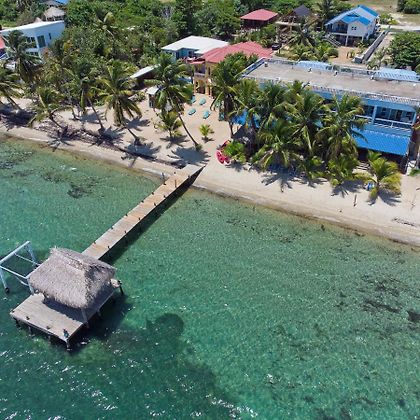
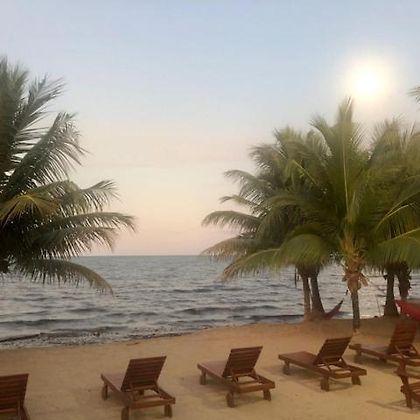
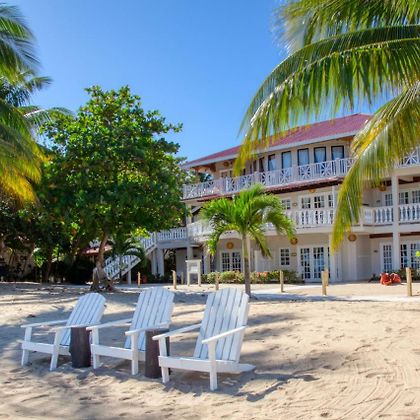
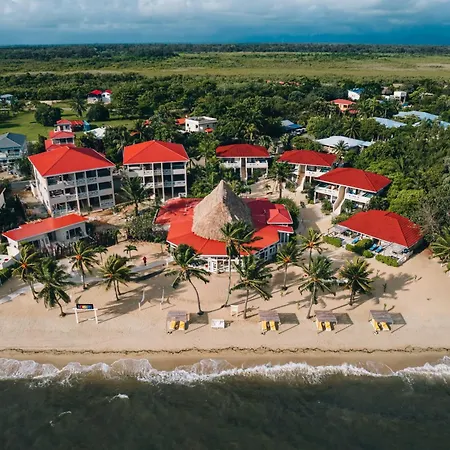
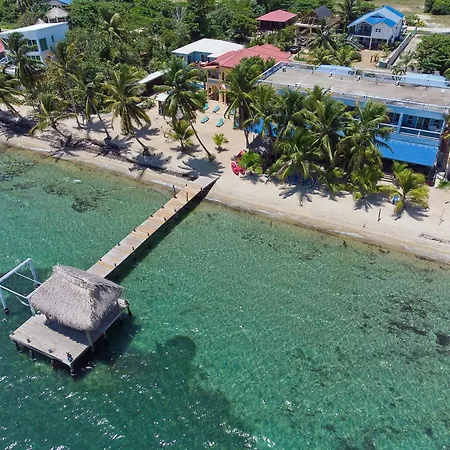
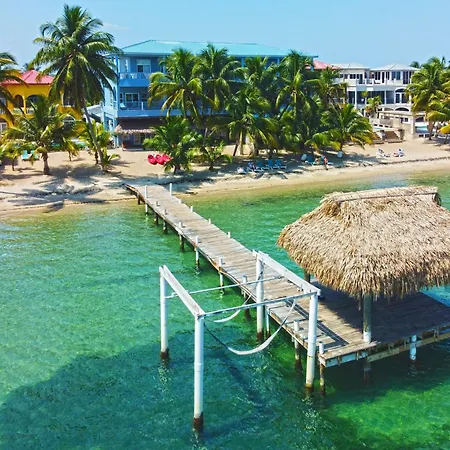
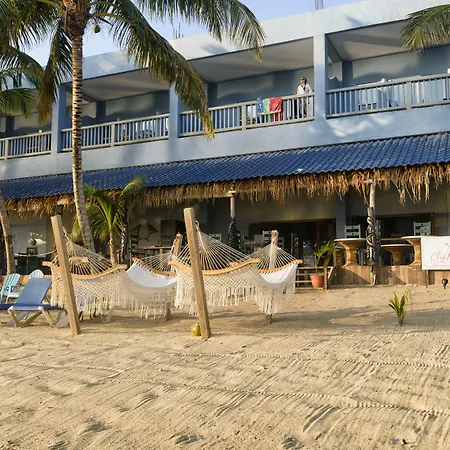
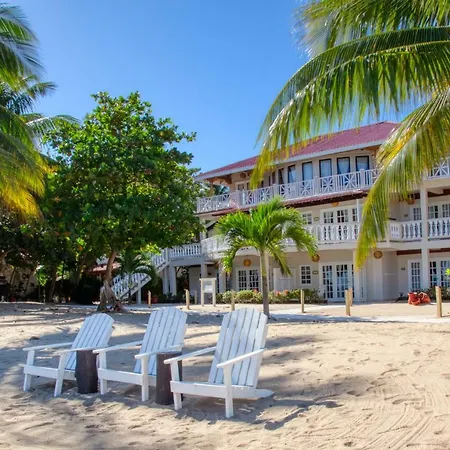
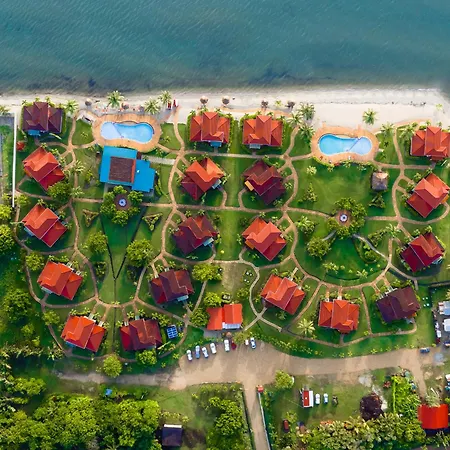
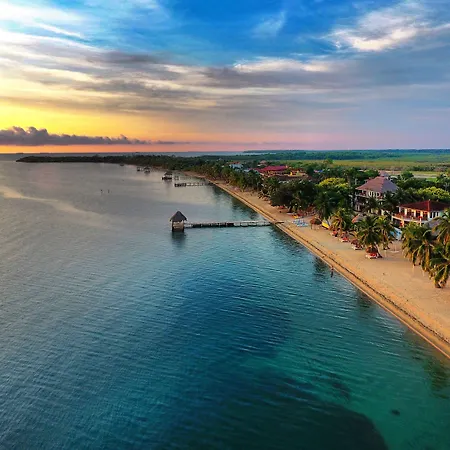
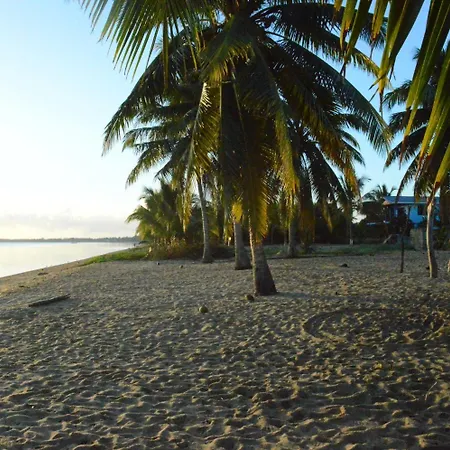
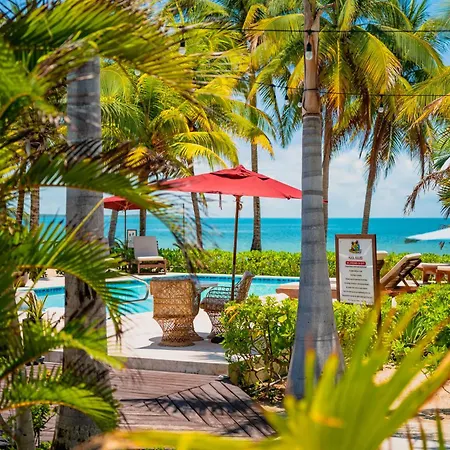
Although the beach at our Whistling Seas Vacation Inn had not been swept clear of debris washed from the Caribbean Sea and the seating arrangements were a trifle rudimentary, we all immediately liked the overall ambiance of the seaside in Hopkins. With beautiful coconut palms lining the shore, Frigate birds majestically patrolling overhead and strong winds and waves coming ashore in the tropical temperatures - it seemed that we had found another little piece of paradise!
We spent a lot of our time here, chatting away as we sipped our cold Belikin beers under the palm trees. In fact, we were doing just that when someone spotted creatures swimming just off-shore, parallel to the beach. At first I thought they must be Dolphins, but one of the regular visitors mentioned that Manatees swim along here! Sure enough, a closer look at the large brown backs surfacing every now and again confirmed it. As it turns out, the Sittee River empties into the Caribbean Sea just south of Hopkins, and it is common for these endangered animals to swim out and along the beach here. It was not long before Sue and I were in the water, wading out quite some distance for a closer look with our bird-watching binoculars. Manatees are warm-blooded vegetation-eating mammals, weighing between 300-500 kg (600-1200 lb.) and can reach lengths of 4-m (13-ft.). These particular ones are part of the West Indian species (with the only two others being Amazonian and West African). Just seeing Manatees was a 'first' for us, even if it was impossible to get photos due to the sporadic nature of the brief surfacings of their backs!!
Updated Apr 11, 2006
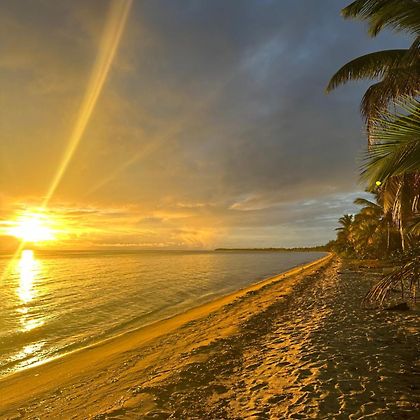
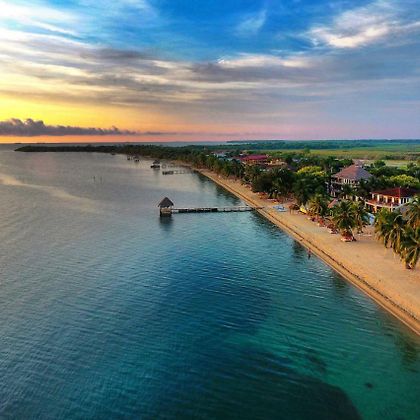
We took a walk along the one village road and came back along the beach with the sun setting behind us. It is a huge bay with a narrow palm fringed beach. The sand is fairly coarse and the waves are so small it’s like being on a large lake. Unfortunately there is quite a bit of debris and rubbish on the beach. We met some students who were with a non profit organisation from the US to clean up the beach and school play ground.
Written Nov 11, 2005
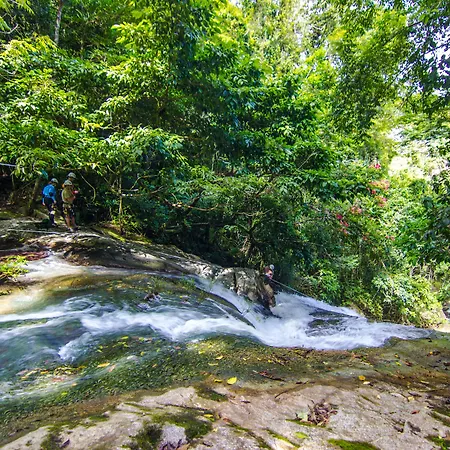
Hike miles of nature trails, swim under waterfalls, go river tubing, and possibly spot some jungle wildlife. That's what's to do here. It's an impressive park with a good visitor center with toilets and refreshments available.
We hiked here all morning and most of the afternoon before jumping into the waterfall pool. Boy did we need it! After that, we hiked back down the trail to the visitor center and rented a couple of innertubes to float down the river. Innertubes go for $5 BD ($2.50 US) per day. The tube float normally takes about 20 minutes, but it being the end of the dry season, the river was low and we kept getting hung up in shallow water, so it took us 50 minutes. It was quite beautiful, and a nice relaxing way to end the day. We saw quite a lot of birds, but no mammals all day!
Turn into the Maya Center off the Southern Highway to purchase tickets ($5 USD) and pick up some souvenirs. Then continue up the dirt road a few more miles to the visitor center, which is run by the Belize Audubon Society.
Updated Jun 16, 2003
Phone: 2-35004
Website: http://www.belizeaudubon.org/
At the end of the road there's a drumming school, early evenings the kids do the real cool garifuna drum thing, you can watch and you can buy a CD of their stuff (w/bonus video of Hopkins)
Written Jun 20, 2007
Sam had an awesome time judging by the colour of her clothes and body at the end of the day. I don’t think I have ever seen her so dirty.
Written Nov 11, 2005
We hardly saw Sam the entire time we were here, a little nerve wracking when you don’t know the place but she had fun.
Written Nov 11, 2005
Sponsored Links
Reviews and photos of Hopkins attractions posted by real travelers and locals. The best tips for Hopkins sightseeing.

We hardly saw Sam the entire time we were here, a little nerve wracking when you don’t know the place but she had fun.
Q: Can one swim or snorkel out of Hopkins

A: Yes I think you can , all that I have seen there is the beach, no excursions for snorkeling are available (not that i noticed anyway) Hopkins is small and a tad bit...
Read 4 Replies
1
Hopkins - a Quiet 'Backwater' in Belize

After finishing our first six days in Belize on the off-shore cayes ('Caye Caulker' and 'Ambergris Cay') and in the tropical forests of the 'Belmopan' area, we were keen to explore along the...
2

Hopkins is a small fishing village on a lovely beach. It does not cater to tourists particularly, it is an authentic Garifuna village, rundown and dilapidated but that is half the charm. There are...
3
If you REALLY want to get away from it all...

Hopkins is a one-street town about 5 miles south of Dangriga. This is a place to come to hang in a hammock and forget about the rest of the world. There are several small hotels & guest houses in town...
4
A Little Out of the Way for Traditional Culture

Hopkins is a small town south of Dangriga. It has beautiful sandy white beaches and wonderful people. There are two luxerious resorts south of town with diving tours but we stayed in a lovely inn...
5
Traveling aimlessly thru Central American continue

(This trip started off as a quick weekend getaway only to Belize but we ended up in Belize, Guatemala, Honduras and El Salvador all in 8 days). We woke up early that morning in San Ignacio, Belize...
Build your own Hopkins page
Sponsored Links