

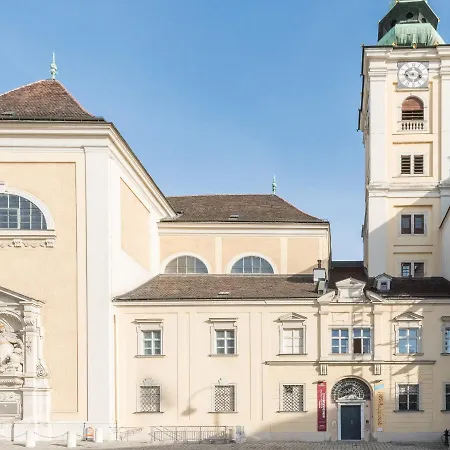
 Immens palace and seat of the Habsburgian empire by Pavlik_NL | Hofburg tips and photos posted by real travelers and Vienna locals. The winter palace of the emperor • 537 Photos • 286 Reviews See all Vienna Things To Do |  | Vienna Hofburg Reviews | 1 - 10 of 286 |  |
 KHMuseum - P. Bruegel "Hunters in the Snow" by breughel For all amateurs of Pieter Bruegel the Elder the room X of the Paint gallery at the KHM, located in one of the imperial palaces near the Hofburg, is an absolute must. The museum has 14 paintings of P. Bruegel the Elder, i.e. the third of his paintings known about the world! Among these 14 some of the most remarkable as The Tower of Babel, The Fight of Carnival and Lent, the Peasants Dance, The Peasant Wedding and especially the most beautiful, the purest, the most intense of the works of P. Bruegel " Hunters in the Snow" To go to Vienna without having seen Bruegel it is as going to Paris without seeing La Joconde in Le Louvre. But contrary to the room of the Louvre with Mona Lisa, visitors are not bumping into each other in room X of the KHM of Vienna. A relation having visited the KHM asked me (it was the time of the action in justice against the Austrian State about the Klimt's) if Belgium, which has only six P. Bruegel the Elder, did not wish the return of the Bruegel's to Brussels where the painter lived and died (1569). I would certainly like to see more Bruegel's in the Museum of the Fine Arts in Brussels but these paintings were offered by the city of Antwerp to the archduke Ernest in 1594, the others were bought in total legality. Furthermore if Belgium began demanding the return of all the works of the Flemish painters worldwide she would not have enough walls to hang them on and numerous museums in the world would have empty rooms. And last but not least, numerous persons worldwide know Belgium only by her painters. Let the Bruegel's stays in Vienna, it is a pleasure to see them in a beautiful surrounding such as the KHM and the town of Vienna. Directions: Near the Neue Burg and Hofburg.Website: www.khm.at
|  | |  |
Visiting Vienna?
Read reviews about Vienna Hotels
Real Reviews from Real VirtualTourist Members.
As one of the most important art museums of Europe the "Kunsthistorisches Museum" has no specific site on the Vienna "things to do" I will join my comment on the KHM to the Hofburg site as it is located in one of the imperial palaces close to that Hofburg. The gallery of paintings of the Kunsthistorisches Museum results from the project of a private imperial collection and is the reflection of the taste of the various member collectors of the dynasty of Habsburg, mainly the emperor Rodolphe II and the archdukes Ferdinand II and Leopold Guillaume. This archduke is the greatest paint collector of his 17th century. Thanks to him the Kunsthistorisches Museum of Vienna became a museum of an essential importance as regards the Flemish and Venetian Schools. One will notice that this collection is geographically limited to the countries which had narrow links with the Habsburg i.e. Germany, the South of Netherlands (Belgium) the North of Italy and Spain but that France and Holland, with whom Austria had tense relations, are only weakly represented. It would be vain to review the painters and the works of this grand collection of the 15th to the 18th centuries. The collection of Pieter Bruegel the Elder is unequalled and is worth by itself the journey to Vienna. Furthermore there are Van der Weyden, Dürer, Jordaens, Rubens, Van Dyck, Titien, Tintoret, Veronese, Canaleto, Velasquez and many others. One of my favourite paintings, besides the Bruegels, is the" Allegorie of Painting" of Vermeer who was acquired in 1945. I find extraordinary that sixty years ago one could still buy a Vermeer! Directions: close to the Neue Burg and Hofburg.Website: www.khm.at
|  | |  |
This is the most beautiful collection of suits of armour in Europe. The collection of weapons ( Hofjagd-und Rüstkammer) of the Kunsthistorisches Museum is centred on ceremonial or parade weapons and offers a very wide panorama of the evolution of what was a real art for the 15th century in Europe and in the Middle East. The emperor Maximilien I devoted gladly to the tournaments and incited the young noble persons to devote to the joust and especially the running which was practised with sharp lances, more dangerous than the joust, but much less expensive because she could be practised in the battle armour. Things did not stay in the field of ordinary armour because the Habsburg (notably both brothers Maximilien II and Ferdinand II) by taste for art and splendour led the technique of armours to a real art close to the goldsmith's art. The connoisseur will find in this museum numerous chiselled armours, inlaid armours, the fluted armours, the costume armours, greek-roman style armours, and darkened armours from the Baroque period. Considerable financial means were needed to pay such works of art. Ferdinand II of Tyrol excelled at this passion of the beautiful suits of armour. Not satisfied with his own armours he collected armours and weapons of 125 famous persons of his time. We can see the suit of armour of Philippe II of Spain. These collections are well presented in a number of rooms where the visitor is often alone! This museum still has not the chance (or misfortune for the connoisseurs) to be on the visit program of the groups. There is also on show a collection of hunting weapons. Directions: The collection of armours and hunting weapons is part of the KHM but is in Neue Burg next to the Hofburg.Website: www.khm.at
|  | |  |
Hofburg is a giant area in the very centre of vienna and it includes all of the buildings between Albertina - Nationalbibliothek - Ballhausplatz and between the Burg-Ring and the stables of the Vienna White Horses / Lippizaner. The Hofburg used to be the living-quaters of the austrian emperors and their employees and today you may see most of these rooms that were transfered into various museums. Even when you do not have enough time to enter any of these museums, you may still spend 1-2 hours to enjoy all of the interesting details of the parks and buildings of Hofburg : Michaelator - the giant gate under the golden dome of Hofburg takes you to Amalienburg ( the large innercourt with great renaissance-facades and a giant monument in the centre.) Schweizertor is the most beautiful side-gate and it is dating back to the 16th century. Neue Burg is the big building with the statue of Prinz Eugen in front of it. In Burggarten you may see the lovely Mozart-monument, the Palmenhaus and the Schmetterlingshaus with exotic butterflies humming in the former Orangerie of the emperor... Leave a Comment Directions: You may walk from Karlsplatz or the Opera to Hofburg within 5 minutes, or take tram #1 or #2
|  | |  |
Hofjagd- & Ruestkammer is one of the museums in Neue Burg with the entrance next to the monument of Prinz Eugen. The Ruestkammer shows various iron-armours that were collected by the Habsburg-family at a time, when these armours were still used at several tournaments & parades and so you will see there mostly armours, whose former owners were kings, dukes and even cardinals, you will see armours of children and horses - all of them beautifully arranged, polished and looking almost brand-new. The Hofjagd- & Ruestkammer is open daily except tuesday 10.00a.m. - 06.00p.m. Leave a Comment Directions: Hofjagd- & Ruestkammer is one of the museums in Neue Burg with the entrance next to the monument of Prinz Eugen at Heldenplatz. Take tram #1 or #2 and leave at Hofburg / Burgring !
|
Visiting Vienna?
Read reviews about Vienna Hotels
Real Reviews from Real VirtualTourist Members.
Schatzkammer is the treasury of the Hofburg and it shows various crowns of the Austrian empire, precious gold- and silverplates and cutleries, and even a 33-meters long centre-piece made of gold-bronze, it was ment as a table-decoration for banquets at the royal court. The oldest crown in Schatzkammer dates back to the 10th century and so it is no wonder, there is a real tresor-door at the entrance to this museum and a lot of people watching each of your steps through the collections ! Photography is not forbidden, but unfortunately it is quite dark in that museum ! Photography only without flash or tripod !! the Schatzkammer is open daily except tuesday 10.00a.m.-06.00p.m. at dezember 31st it is only open untill 01.00p.m. it is closed january 1st + may 1st + november 1st !! Leave a Comment Directions: Schatzkammer is between Nationalbibliothek and Schweizertor, next to the stables and performance-halls of the white horses.
|  | |  |
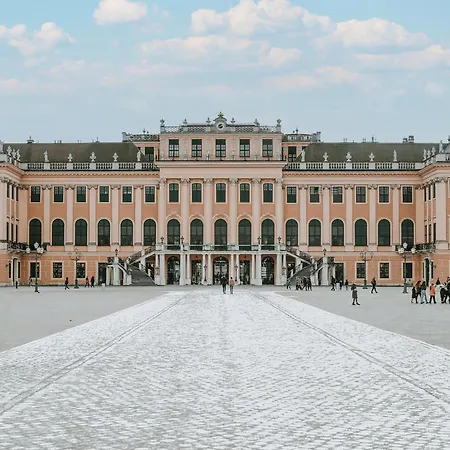
Hofburg Imperial Palace is a palace in Vienna, Austria, which has housed some of the most powerful people in Austrian history, including the Habsburg dynasty, rulers of the Austro-Hungarian empire. It currently serves as the official residence of the President of Austria. It was the Habsburg's principal winter residence, while Schönbrunn Palace was their preferred summer residence. The Palace was the birthplace of Marie Antoinette in 1755. The Hofburg area has been the documented seat of government since 1279 for various empires and republics. [1] Directions: A-1010 Vienna, Maria Theresien-Platz
|
The Museum of old instruments is one of the collections inside Neue Burg and there you may see the pianos, where Mozart, Beethoven, Joseph Hayden and Franz Schubert used to perform their works. Even more famous is their collection of renaissance-instruments - it is considdered the most precious collection of these instruments. Another highlight in their collection is a Klavichord, dating back to 1596 - it is able to imitate various instruments and even the singing of birds. Another highlight of the museum is a small-scale model of the city of Vienna. It dates back to the year 1845, and shows still the medieval townwalls around the city - that wall was taken down later-on in order to build Ringstrasse, as you may see it nowadays ! The Museum of old instruments is open daily except tuesday 10.00a.m. - 06.00p.m. Leave a Comment Directions: Museum of old instruments is one of the various museums inside of Neue Burg with the entrance next to the monument of Prinz Eugen at Heldenplatz. Take tram #1 or #2 and leave at Hofburg / Burgring !
|  | |  |
Avoiding the erzatz-Mozarts that lay in wait for unwary tourists, as you cross the Michaelerplatz, you cannot help but be impressed by the great sweeping curve of the Michaeletrakt, the facade of the Hofburg, and the Michaelertor, with its massive copper dome and classical sculptures flanking either side of the entrance. Behind this facade (built in the late 1800s in the dying days of the Austro-Hungarian Empire) lies the vast complex of palaces and chapels, gardens and royal apartments and offices that was the seat of Hapsburg power more than 500 years. Add in the surrounding streets, once home to the aristocracy and clergy that revolved around the court, and you could spend days in this quarter of Vienna and still not see the half of it. Passing under the gate, the Spanish Riding School is on your left, the ticket office and entrance to the State Apartments of Franz Joseph, last Emperor of Austria, and his beautiful Empress Elizabeth, and the Silberkammer - a treasure house of the plate and porcelain - is on your right. They're housed in the Amalienburg, a palace built in 1575. This time I'm heading for the Schweizertor though, the entrance to the oldest part of the complex, the Schweitzer Hof (Swiss House), the mediaeval core of the Hofurg. Here, in the Burgkapelle (Royal Chapel), the angel voices of the Wiener Sangerknaben (Vienna Boys Choir) have been heard on high days and holy days for 500 years. Plan ahead and you too may be lucky enough to get a ticket for an exquisite Mozart or Haydn mass. After that, it's the Schatzkammer (Treasury) when 21 rooms contain the fabulous treasures of 1000 years of church and state, including the 1100 year-old crown of the Holy Roman Empire - to my mind the most amazing object in the whole museum, with its barbaric chunks of precious gems, huge pearls and Byzantine enamels set in an extraordinary crown of gold. State Apartments, Silberkammer and Burgkapelle are open daily Schatzkammer is closed on Tuesdays. Leave a Comment Directions: Ticketsfor the choir should be booked well ahead. A few tickets are on sale on Friday 11-1 and 3-5, Sunday 8:15 to 8:45am. Get there early. Standing room is freeWebsite: http://info.wien.at/hofburg/hofburg-e.html
|  | |  |
The Kaiserapartments inside the Hofburg are another museum, showing the royal chambers of Kaiser Franz Joseph, his wife, Kaiserin Sisi and the russian Tsar Alexander I, who was living there in 1815 during the "Wiener Kongress". The entrance to the Kaiserapartments is under the golden dome of Michaelator and you may also see there the gym and the bath-tub of Sisi and a long table, set up with precious plates and cutleries for a royal dinner. The Kaiserapartements in Hofburg are open daily except tuesday 09.00a.m. - 04.30p.m. guided tours are available saturday & sunday Leave a Comment Directions: The Kaiserapartements are under the the big Michaela-Dome. It is the best to walk there from Graben-Kohlmarkt or from Opera-Albertina-Hofburg...
|
|
More Vienna Travel Deals Cheap Hotel in Vienna Up to 70% off on Vienna Hotels Select, Reserve, and Save Big Hotels Austria by Crowne Plaza Hotels. Book our lowest online rates! Official Site Hotels in Vienna Book direct in 40 charming hotels Up to 50% discount. No prepayment Sponsored Links
- Best Western Hotel Tigra
Tiefer Graben 14-20, Vienna - Hotel De France
Schottenring 3, Vienna - Savoy Hotel
Lindengasse 12, Vienna - Schild Hotel
Neustift Am Walde 97 - 99, Vienna - Delta Hotel Vienna
Sonnwendgasse 8, Vienna - Graben Hotel
Dorotheergasse 3, Vienna - Holiday Inn Vienna City
Margaretenstrasse 53, Vienna - Radisson SAS Style Hotel Vienna
Herrengasse 12, Vienna - Hotel Congress
Wiedner Gurtel 34-36, Vienna - Nh Atterseehaus
Mariahilfer Strasse 78, Vienna - Pharmador Pension
Schottenfeldgasse 39, Vienna - Hotel Favorita Austria Trend
Laxenburger Strasse 8-10 Wien, Vienna - Haydn
Mariahilferstrasse 57-59, Vienna - Hotel Furst Metternich
Esterhazygasse 33, Vienna - Alexander Hotel Vienna
Augasse 15, Vienna
|