Diocletian's Palace, Split

4.5 out of 5 stars4.5 Stars - 127 Reviews

  Carrarina poljana
by croisbeauty
 
  • Carrarina poljana
      Carrarina poljana
    by croisbeauty
  • Grisogono - Cipci Palace
      Grisogono - Cipci Palace
    by croisbeauty
  •   Diocletian's Palace
    by croisbeauty
  •   Diocletian's Palace
    by croisbeauty
  • Carrarina poljana
      Carrarina poljana
    by croisbeauty
  • Diocletian's Palace
      Diocletian's Palace
    by spidermiss
  • Diocletian's Palace and St Duje Church
      Diocletian's Palace and St Duje Church
    by spidermiss
  • Diocletian Palace
      Diocletian Palace
    by aukahkay
  • Diocletian Palace
      Diocletian Palace
    by aukahkay
 
  • traveloturc's Profile Photo

    Diocletican Palace

    by traveloturc Updated Mar 24, 2012 1564 reviews

    3 out of 5 starsHelpfulness

    Diocletican Palace
    1 more image

    It was build around 298. AC when the Roman imperator Gaius Aurelius Valerius Diocletianus decided to start the construction of the grand villa in the bay of Split on the Dalmatian coast nearby (5 kilometres) his birth place - Salona.... His reign was remembered by great reforms. The most important one was, the system of the rule of four (two Caesars and two Augusts). Diocletian was the first emperor in history to abdicate willingly, but also he was a big Christian persecutor.
    Diocletian was declared to be divinity by the Roman senate while he was still very much alive. As a Jupiter's son he retreated himself to his fortified residence in Split where he treats his rheumatics at sulphurs and thermal springs.
    The palace occupies an area of about 30 000 square meters. It is rectangular and was originally fortified by 16 towers. At the same time it was residence of an emperor (villa rustica) and Roman fortification (castrum) with army troops.
    After Diocletian's death the palace remained under the Roman imperial jurisdiction until 480.

    Related to:
    • Castles and Palaces
    Was this review helpful?
  • croisbeauty's Profile Photo

    Carrarina poljana

    by croisbeauty Updated Dec 26, 2011 6963 reviews

    3.5 out of 5 starsHelpfulness

    Carrarina poljana
    1 more image

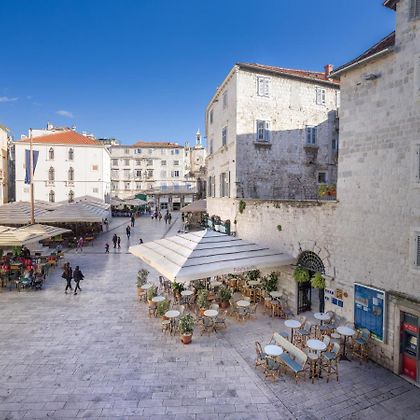
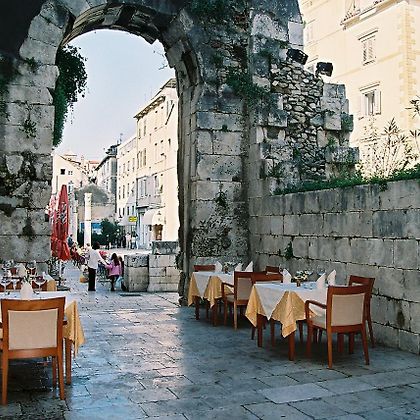
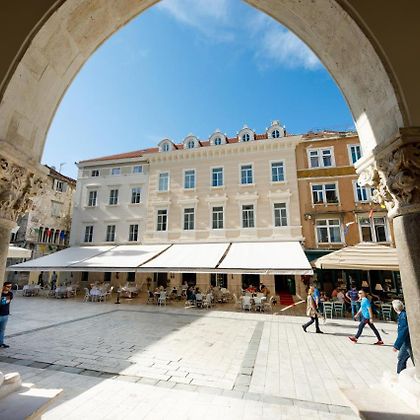
    Carrarina poljana, which occupaing northern part of the former Diocletianus Palace, was never planned to be a square. In fact, the only open space inside the palace planned to be a square was the imperial Peristyle. When passing throughout the Golden Gate you will find yourself at an open air space which is very pitoresque but in some way look alike unfinished. This empty space was created in the beginning of the 19th century when Napoleon conquest Dalmatia and his army crashed down pre-excisting medieval houses. That is why you can't see around any fancy facade of the buildings which usually overlooking carefully planned squares.
    Nowadys this square has usual Split's "crazy" alike life style during a year but in the summer it is part of the Split Festival, using for performing plays called folk theater.

    Was this review helpful?
  • croisbeauty's Profile Photo

    Grisogono - Cipci Palace

    by croisbeauty Updated Dec 26, 2011 6963 reviews

    2.5 out of 5 starsHelpfulness

    Grisogono - Cipci Palace
    1 more image

    Grisogono - Cipci Palace is one of the most interesting building in whole of Split. It is fine example of incorporeting a new built building in already excisting ancient structure of the Diocletianus palace. This palace is unique and real mixture of a very different architectural styles from different ages. Here you could see late-Antique style - Romanesque - late-Gothic - Renaissance - Baroque, all in one and yet so harmonious.
    The palace belonging to the noble Grisogono family, the oldest living family in Dalmatia. In the 14th century the northern part of the palace was acquired by another noble family Cipci (or Cipiko), who restored it in a Gothic style.
    It seems that even great builder Jurij Dalmatinac took his part in redesigning this palace, although there excist no written records about it. Another rumour says that the upper floor of the palace was designed by another great builder, Nikola Firentinac.
    The ground floor of the palace is occupied by the cafe-bar Luxor and you shouldn't miss to entrance inside of it. There on its floor you can see the remains of an ancient temple.

    Was this review helpful?
  • solopes's Profile Photo

    Grad

    by solopes Updated Nov 25, 2011 3902 reviews

    3.5 out of 5 starsHelpfulness

    Split - Croatia
    4 more images

    The upper side of the palace is... a fabulous mess.

    A whole town has grown inside it, with some original remains, as the peristyle and Jupiter's temple, side by side with posterior constructions, some classified, as the cathedral built upon Diocletian's mausoleum.

    To complete the scene, the town lives, in bars, shops and crowds wandering all around.

    Related to:
    • Architecture
    • Historical Travel
    • Arts and Culture
    Was this review helpful?
  • croisbeauty's Profile Photo

    Cipriano de Ciprianis

    by croisbeauty Updated Aug 23, 2011 6963 reviews

    3.5 out of 5 starsHelpfulness

    2 more images

    To my money Cipriano de Ciprianis is the most beautiful palace in whole of Split. This a very simple late-Romanesque styled building from 1394 used to be home of noble family originally from island of Korcula. There is beautiful statue to St. Anthony standing on the corner of the palace, but the building is unique for its six parts windows (heksaforas) which decarating its first floor from the both sides.
    The palace stands on the corner of Narodin Trg, right next to the Western Gates.

    Was this review helpful?
  • croisbeauty's Profile Photo

    Defending towers and walls

    by croisbeauty Updated Aug 17, 2011 6963 reviews

    3.5 out of 5 starsHelpfulness

    South-Eastern Tower
    4 more images

    The story of the people and the walls last so long, since the very beginning. Most of the historians agree that the civilisation has begun when humans started to built the walls. But let's be ironical did they built the walls for protection of the invasion or it was built to obstruct colonisation of those who aren't welcomed?
    Let us see how we stand regarding the city or state walls today? Yeah, nowadays we dont built the walls anymore, but what is visa system if not the walls?

    Was this review helpful?
  • croisbeauty's Profile Photo

    Vestibul

    by croisbeauty Updated Aug 17, 2011 6963 reviews

    3.5 out of 5 starsHelpfulness

    Vestibul
    4 more images

    Vestibul is originally latin word for the entrance, in fact it was entrance hall to the Diocletianus rooms. It used to serve as a foyer in which guests and visitors waited to meet the Emperor. At its time vestibul was richly adorned in a such a way to impress the visitors. Imagine it, as is now, but completely panelled by the marble and adorned by numerous sculptures.
    Vestibul was located in the central part of the Diocletianus Palace, right behind the Peristyle. It is spacious round room and no roof on its top.

    Was this review helpful?
  • solopes's Profile Photo

    The subterranean

    by solopes Updated Jun 14, 2011 3902 reviews

    3.5 out of 5 starsHelpfulness

    Split - Croatia
    4 more images

    Very well preserved the subterranean helps to have an approximated idea of the palace's concept. It evidences the huge size of the original buildings, and shows the techniques of construction, though it's hard to understand the use of most of the rooms.

    A reasonably large craft commerce is installed in its entrance.

    Related to:
    • Arts and Culture
    • Historical Travel
    • Architecture
    Was this review helpful?
  • spidermiss's Profile Photo

    Diocletian's Palace

    by spidermiss Updated Jun 12, 2011 1169 reviews

    3.5 out of 5 starsHelpfulness

    Diocletian's Palace
    4 more images

    The Roman Emperor Diocletian built his palace in preparation for his retirment in May 305 AD by the bay area of Split. The rectangular palace complex consisted of a villa, a military camp, gates and towers and is encircled by fortification walls. The cathedral's belfy was added in the 12th Century.

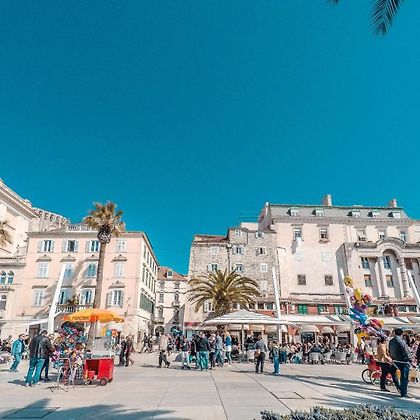
    Today you can wander through the palace and its enclosed mazes and space. In the complex there is a tourist information office and also are markets, shops, cafes and restaurants.

    Related to:
    • Museum Visits
    • Historical Travel
    • Architecture
    Was this review helpful?
  • antistar's Profile Photo

    Temple of Jupiter

    by antistar Updated Apr 6, 2011 2432 reviews

    3.5 out of 5 starsHelpfulness

    Temple of Jupiter, Split

    Back in Roman times this temple to Rome's greatest god would have been much grander, with a decorated portico supported by doric columns, and a set of sharp-cornered, stone stairs flanked by ornate statues. Now it's a small, crumbling church shaded by a pinched stone corridor leading from the Peristylium, the main square of the palace and cathedral. A little of the original survives, including partial remains of two lion statues brought from Egypt by Emperor Diocletian himself.

    Was this review helpful?

Comments

Top 3 Hotels in Split

Radisson Blu Resort, Split  Split

 8 Reviews and 258 Opinions  The guide told us it was situated so close to the center that we could walk back there, but the bus... 

 Hotels in Split

Show Prices

Hotel Vestibul Palace  Split

 1 Review and 161 Opinions  Looking at this: http://vestibulpalace.com/360/ as opposed to this: ... 

 Hotels in Split

Show Prices

Hotel Peristil  Split

 2 Reviews and 222 Opinions  Under construction!!! LOCATION: The hotel is part of the 1,500-year old Diocletian Palace. It is at... 

 Hotels in Split

Hotels Near Diocletian's Palace
3.5 out of 5 stars
41 Opinions
0 miles away
Show Prices
3.5 out of 5 stars
7 Opinions
0.1 miles away
Show Prices
4.0 out of 5 stars
99 Opinions
0.2 miles away
Show Prices