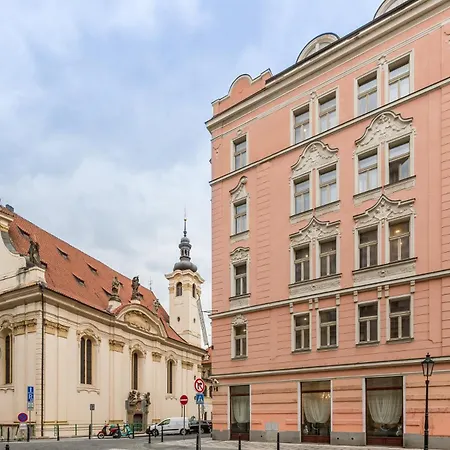
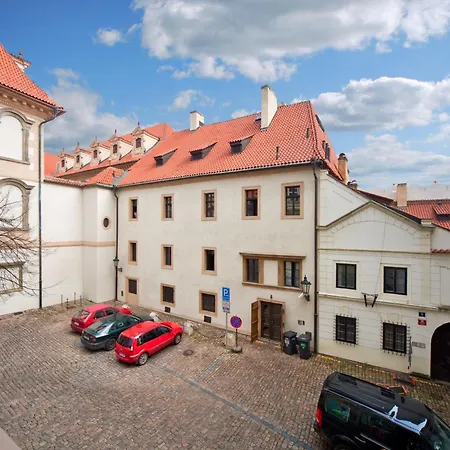
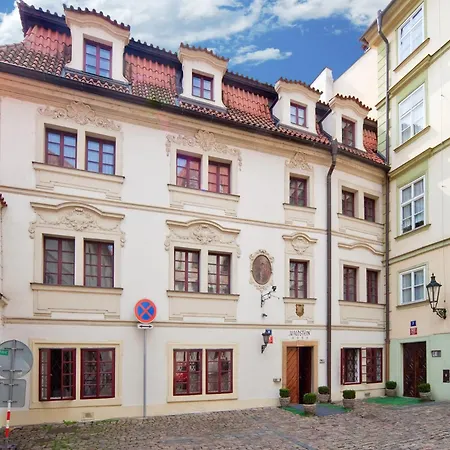
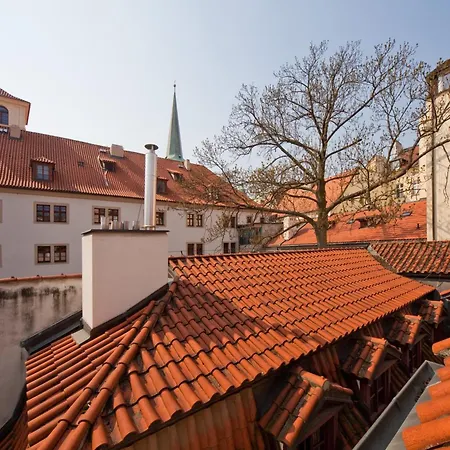
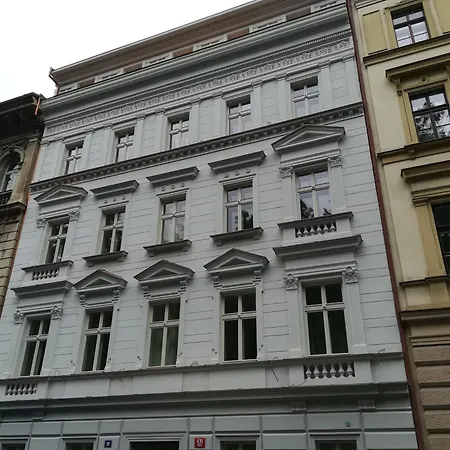
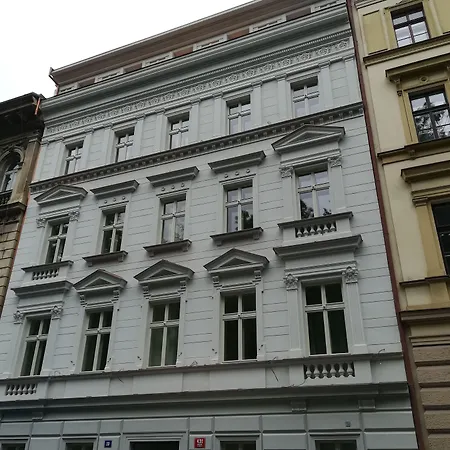
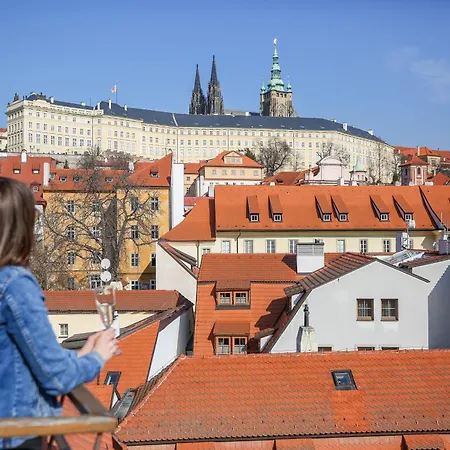
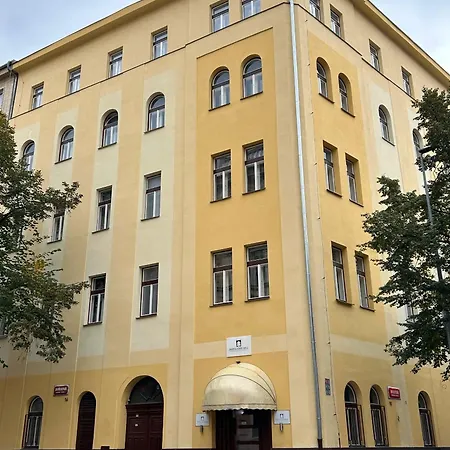
Favorite thing: The Schwarzenberg Palace is a 16th century renaissance structure housing a museum with baroque bohemian art. The exterior is a painted façade with etched sgraffito patterns to simulate cut stone. The building is located on the western portion of castle hill.
Favorite thing:
Golden Lane is very interesting part of the Prague Castle complex.
11 Small houses built in the gothic fortification, the 16th centery homes of castle riflemen and craftsmen.
Now they exhibit medieval armoury and textiles, as well as selling tourist souvenirs.
You can also shoot a crossbow on the upper floor of one of the buildings.
You need to purchase a combined ticket for the whole Prague Castle complex in order to gain entrance to Golden Lane.
Fondest memory:
Don't miss this small street on Prague Castle!
Favorite thing:
To describe Prague castle needs a lot of time. It is a symbol of Prague and also the Czech republic. All czech history relates with Prague castle. Since 9th century it has been always the seat of czech kings and presidents.
History - First reports about castle come from 9. century. But the biggest expansion had reached in 14. century, during the government of king Charles IV. He had the idea to build St. Vitus Cathedral and he begun in 1344. King Vladislav Jagelonsky built the Vladislav hall, beautiful hall for audiences and meetings. Today's look it has thanks to emperor Rudolf II. and Maria Theresia.
What to visit - Prague castle is very large complex, one of the biggest in the world. The main monument is St. Vitus Cathedral, the main building of President's office, then a lot of coutyards, churches, towers, riding schools and gardens (Royal garden, South gardens, Paradise gardens,...). Lovely is also Golden lane with the architecture around, small old houses with tower Daliborka, served as a prison in the past.
Guard changing is every hour, but at 12 am with music at the main gate.
Time to time when an anniversary is possible to see Royal jewels. Inside of castle is worth to see Spanish hall, Vladislav hall, but it is also open twice a year or so when an anniversary, first Saturday after 8.5. and 28.10.
When to visit - Prague castle is fantastic in winter or summer.
Prague castle - 9 sm to 6 pm
Gardens open April to October - 10 am to 20 pm.
Pictures hall - every Monday 4 pm to 6 pm.
Favorite thing: As you enter the third courtyard you stand in front of the cathedral of St. Vitus. You can choose either to wait to the line to go inside the church, or to move on and visit the church later. That’s what we did since the line was endless and there are so many other things to see.
Favorite thing: Just after the Giant’s gate you find yourself into the Ceremonial courtyard. It is surrounded by beautiful buildings which are still in use for official receptions and events. At the west wing of the courtyard is the Matthias’ Gate that leads to the second courtyard.
Favorite thing:
Giant’s gate is the main entrance to Prague’s castle and it is located on the west side. From the square before the gate you can see the entire city.
The name of the gate comes from the gigantic figures at the entrance. The statues are copies, since the originals, which were made of sandstone, have been effected by the climate conditions.
Favorite thing:
Everyone who goes to Prague must take a walk up to the Prague Castle. The views from up there are simply amazing. There is also a beautiful garden, so if you're lucky enough to be there in the spring or summer be sure to stroll through the garden as well.
Fondest memory:
I was introduced to Becherovka the first time I went to Prague. It's a liquor with a very distinctive taste. I love it and always bring a bottle of it back to the US!
Favorite thing:
Golden Lane, dating back to the end of the 15th Century, is yet another interesting part of the Prague Castle complex.
Golden Lane is a small street lined by 11 historic houses, some of which now house interesting armoury and textile exhibits, along with tourist souvenir shops.
A popular section of the Prague Castle complex, Golden Lane attracts it's fair share of visitors, crowding into the small passageway and low buildings.
Golden Lane was created when a new outer wall was added to the existing Romanesque castle complex. It was originally known as Zlatnicka Ulicka (Goldsmith's Lane), due to the many goldsmith's residing there.
In it's early years, Golden Lane consisted of many small dwellings, many of which eventually fell into disrepair. As larger buildings replaced the old ones and then have subsequently themselves been restored, we are left with a charming little passageway, well worth a visit.
Combined tickets for the whole Prague Castle complex include entrance to Golden Lane. Otherwise, buy a single entry ticket.
Fondest memory:
in small blue home # 22 (just 1 room about 6 sq m !!! ) Franz Kafka used to work in 1916-1917.
Favorite thing:
Despite many wars and fires, Prague Castle has grown into a unique architectural complex, the largest of its kind in Europe.
A visit to this medieval castle is a must for all visitors to Prague. It contains the Gothic Saint Vitus Cathedral (the most recognised landmark in Prague), a monastery, several towers, St. George's Basilica, palaces and Golden Lane.
Prague Castle was established during the 9th century, with a Romanesque palace erected during the 12th century. In the 14th century, under the reign of Charles IV, it was rebuilt to Gothic style. A further reconstruction of the Royal Palace then took place under the Jagellons at the end of the 15th century. The builder, Benedikt Rejt, also added the now famous Vladislav Hall.
Fondest memory:
The castle underwent further works during the 16th century, mainly due to a big fire in 1541. The Spanish Hall, a new section of the castle, was added during the reign of Rudolf II, and took its final form in the time of Empress Maria Theresa - under the direction of the architect M. Pacassi.
After World War I, the interior and gardens of Prague Castle were renovated by the architect J. Plecnik.
Today, Prague Castle is the seat of the President of the Czech Republic, and serves as the historical and political centre of both city and state.
Favorite thing:
A national cultural monument, the symbol of more than millennial development of the Czech state.
Since its foundation in the last quarter of the 9th century it has been developing uninterruptedly throughtout the past eleven centuries. It'is a monumen complex of ecclesiastical, fortification, residental and ofice buldings representing all architectural styles and periods, surrounding three castle courtyards and covering 45 hectares.
Fondest memory:
Originally it used to be the residennce of princes and kings of Bogemia, since 1918 it is the seat of the president.
Sponsored Links
Pension Unitas & Art Prison Hostel Prague Prague
5 Reviews and 450 Opinions Pension Unitas is built in the building that housed prisoners of the former Czech Secret Police,...
Aria Hotel Prague
7 Reviews and 692 Opinions innovative musical theme, great location in Mala Strana, except that it is nextdoor to the American...
Arcadia Residence Prague
1 Review and 765 Opinions This is absolutely a great choice for family and budget travellers. The residence sits in a quite...
Sponsored Links
Comments