
The Mucha museum is a fairly small museum packed with information about Mucha, his work and his origins in Moravia. I was really not familiar with his work and this gave a concise overview of his influences, the distinct periods in his career and his versatility. The two examples of his painting ability were particularly striking as were some of the pieces that he put into his Slavic epic. There is a brief video presentation about Mucha's life and work at the end of the tour which i found well done and very informative
overall a very enjoyable museum about a great graphic artist.
Thanks to VT member CatherineReichardt for whetting my appetite on this. She mentioned the Slavic epic to me, I had a bit of a look from there:) Thanks Cathy
Updated Nov 11, 2011
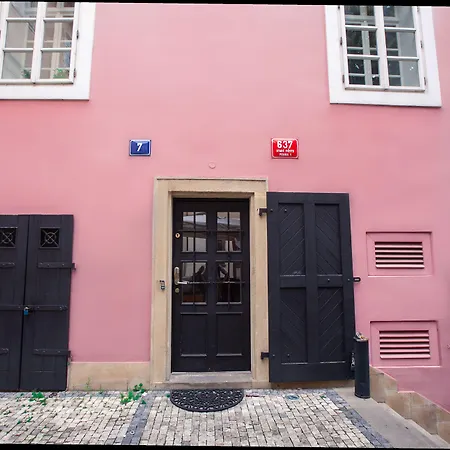
Address: Kaunicky Palace, Panska 7
Phone: +420-221 45 1333
Website: http://www.mucha.cz/
The Alphonse Mucha museum consists of four rooms, one of which was dedicated to photographs. Personally, if it were any bigger, I would probably have not spent time scrutinizing and enjoying the display. Entrance fee was Koruna 160.00
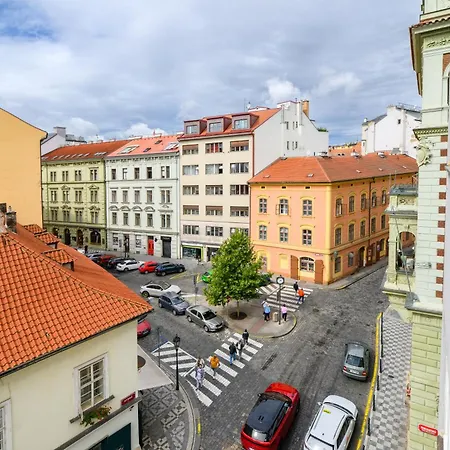
Unfortunately, cameras were not allowed. However, the windows looking out to the Maestrenske Nam were open and afforded fantastic views of the square for picture-taking.
Written Jun 23, 2011
Address: Kaunicky Palace, Panska 7
Phone: +420-221 45 1333
Website: http://www.mucha.cz/
Alphonse Mucha (pron. "Mukka") is one of Prague's most-loved sons.
You have probably seen his art somewhere, at one point in your life, possibly without even realizing. This gentleman's artistic vision was wildly romantic, beautiful, natural and sensual. It was the perfect style for the years of the Art Nouveau movement, hence Mucha is most widely known for the posters he executed for Sarah Bernhardt in the fashionable world of Paris in the late 19th century.
He was born in the historical region of Moravia in in 1860, and throughout his lifetime he would travel to Vienna, Paris, Munich and later the United States, where he painted his life's masterpiece, the "Slav Epic": this consists of 20 enormous canvases, some as tall as 6 metres, presenting a brilliantly conceived narrative history of the Slavic people in general and the Czech people in particular.
Another one of his works that is recognized by most people are his paintings titled "The Four Seasons".
Mucha's influence on the city of Prague can be seen:
> exterior and interior of Obecni Dum.
> stained glass in the St. Vitus Cathedral.
> Mucha had even designed bank notes for the new Czech republic in 1910.
We really enjoyed our visit to this little museum, which is located not far from the Powder Tower and Obecni Dum (Municipal House). Apart from his art pieces (completed works but also unfinished sketches), there are also photographs that give amazing insight into Mucha's personal life, and in the back of the museum you can view a short documentary on the man himself.
There is also a gift shop where you can purchase all kinds of Mucha memorabilia including postcards, calendars, scarves and of course, prints of Mucha's art (my husband liked "The Four Seasons" so much that he now has them framed and hanging in his office :-).
Opening Hours:
Daily 10:00am-06:00pm.
Entrance Fee (year 2010):
180 CZK per adult.
TIP: With your entrance ticket from the Mucha Museum you can enjoy a free slice of cake (value 100 CZK) at the cafe inside the Municipal House, of which he designed the interiors (Kavarna Obecni Dum).
Updated May 25, 2011
Address: Kaunicky Palace, Panska 7, Prague 1, 110 000
Phone: +420-224 216 415
Website: http://www.mucha.cz/
I first fell in love with Mucha's wildly romantic and highly stylised Art Nouveau work when I first visited Prague in the mid 1990's, and so a visit to the excellent Mucha Museum is always a highlight of my visits to Prague.
Too often celebrated artists turn out to have been disappointingly dull people: not so with Mucha, who was a fascinating and multifaceted individual who was renowned for his strong nationalist tendencies as well has his artistic prowess. The museum does an superb job of presenting a perspective on the man as well as his work (as well as offering an excellent gift shop where you can indulge in Mucha memorabilia to your heart's content).
Mucha started his career in a rather low key manner as a theatrical set painter and commercial artist. One of his first commissions was designing a poster for the legendary theatrical diva Sarah Bernhardt, who was so delighted with his work that she retained his services for the next six years, and his prolific output throughout the rest of his career belies his commercial roots. Later on, he progressed from posters and advertising material to paintings, interior design and latterly even designing stamps, bank notes and a stained glass window in St Vitus' cathedral, which appealed to his sense of patriotism.
He is best known for his exquisite stylised Art Nouveau women, which now adorn every imaginable sort of souvenir (including biscuit tins). In fact, he was so influential in the development of this artistic movement that Art Nouveau was originally known as 'Le Style Mucha'. These works conjur up the elegant spirit of the Belle Epoque era, but perhaps are guilty of unfairly 'pigeonholing' Mucha, as he was a far more versatile artist, whose subject matter became more serious and nationalistic as his career progressed.
Although proudly Moravian by birth, Mucha had a great affection for Prague, and donated his Slavic Epic (a cycle of 20 enormous paintings depicting the history of the Czech and Slav people) to the city in 1928. Unfortunately this master work then spent the next 25 years rolled up because there wasn't a suitable space for its display in Prague (a condition of Mucha's donation) and it has been exhibited in the relative backwater of Moravsky Krumlov for nearly 40 years. This magnum opus was due to be transferred to Prague during 2010, but as there are ongoing legal battles over its ownership, this doesn't look like it will happen any time soon: this is a great pity, as it would give a far more balanced view of his work if it were all displayed together.
It seems as though Mucha's defining feature was his patriotism. This prompted his return from a very lucrative situation in the United States (where his existence was comfortably sponsored by a millionaire businessman) to Prague to produce his Slavic Epic, his artistic poem to his homeland. At the end of his life, his intense nationalism got him into trouble when the Germans invaded Czechoslovakia, and his health never recovered from being incarcerated and interrogated by the Gestapo.
Should you wish to pay your respects to Mucha, he is buried in excellent company in the lovely Vysehrad cemetery along with other Czech luminaries such as Jan Neruda and Bedrich Smetana (see my travel tip).
Updated May 9, 2011
Address: Kaunicky Palace, Panska 7
Phone: +420-221 45 1333
Website: http://www.mucha.cz/
This is a small but enlightening museum of featuring the works and life of Alphonse Mucha. Located very close to Wenceslas Square, it only takes an hour to visit. The down side is that they don't allow photos inside.
Written Jun 22, 2010
Address: Kaunicky Palace, Panska 7
Phone: +420-221 45 1333
Website: http://www.mucha.cz/
For anyone who loves Art Nouveau, they will immediately recognize one of the founders and masters of the style, Alphonse Mucha. Many posters of his hung in my college room growing up so I definitely wanted to visit this museum while in Prague. There is a nice short film about his life and work, and many lovely pieces of art throughout! The gift shop is fun with many beautiful Mucha-inspired gifts at good prices.
Written May 14, 2010
Address: Kaunicky Palace, Panska 7
Phone: +420-221 45 1333
Website: http://www.mucha.cz/
"'The Mucha Museum' offers you a unique view into the world of Alphonse Mucha (1860-1939), one of the most celebrated artists of the Art Nouveau period."
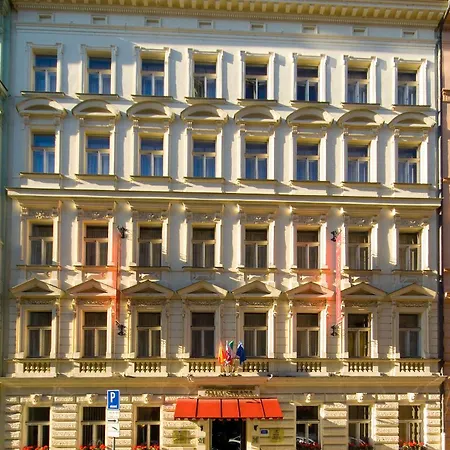
There is no much to add to this official info leaflet text. Located on the ground floor of Baroque Kaunicky Palace, the Mucha Museum exhibits the most famous artworks of Alphonse Mucha, including his lithograph-posters with Sarah Bernhardt, but also his charcoal drawings, pastels, oil paintings, his applied arts works… Very interesting is the drawing Mucha made at the age of 8. Exhibition in the Mucha Museum includes Mucha photographs, memorabilia and excellent movie about Mucha, his life and art, which can be seen in a tiny Museum cinema.
There is very nice shop in the Mucha Museum offering books about Alphonse Mucha and posters, postcards, photos, calendars, glass, jewellery, hand painted silk scarves… with Alphonse Mucha and Art Nouveau motifs.
Updated Apr 16, 2010
Address: Panska 7
Phone: +420-221 45 1333
Website: http://www.mucha.cz/
located in the 18th century kaunicky palace the mucha museum is dedicated to the works of alphonse mucha (1860-1939). mucha was a famous czech art nouveau painter and sculptor. for those interested in art nouveau this is a must see museum in prague.
Written Jun 21, 2008
Address: Kaunicky Palace, Panska 7
Phone: +420-221 45 1333
Website: http://www.mucha.cz/
One of the most important and world famous Czech painters. 1860 - 1839
Become famous in 1894 when he recieved to make poster for one of the most famous actress of this time Sarah Bernhart!
Though the printer was apprehensive about submitting Mucha´s final design because of its new unconventional style, Bernhardt loved it and so did the public. ´Le style Mucha´, as Art Nouveau was known in its earliest days, was born.
Written Feb 13, 2007
Address: Kunicky Palace, Panska 7, Prague 1
Phone: +420-221 45 1333
Website: http://www.mucha.cz/
This small museum is a small gem among Pragues many sights. The painter Alphonse Mucha is mainly famous for his stylish art-noveau paintings of female beauties; some of his best-known works are paintings of the actress Sarah Bernhard. He also created some monumental paintings on slavic history, dedicated to the revival of an indepent Czech national culture. The museum features a video on the life and times of Mucha that give you a better understanding of his work ... watch the video first, then take your time for the stunning pictures.
Mucha also contributed a stained glass window to the cathedral - try to discover it in the left wing.
Updated Aug 22, 2006
Address: Kaunicky Palace, Panska 7
Phone: +420-221 45 1333
Website: http://www.mucha.cz/
Sponsored Links
Aria Hotel Prague
7 Reviews and 583 Opinions innovative musical theme, great location in Mala Strana, except that it is nextdoor to the American...
Pension Unitas & Art Prison Hostel Prague Prague
5 Reviews and 484 Opinions Pension Unitas is built in the building that housed prisoners of the former Czech Secret Police,...
Hotel Le Palais Prague
5 Reviews and 400 Opinions The hotel provides de-luxe accommodation, with large rooms, decorated and furnished in old style,...
Kaunicky Palace, Panska 7
Alphonse Mucha Museum tips and photos posted by real travelers and Prague locals.
Write a Review
This small museum is a small gem among Pragues many sights. The painter Alphonse Mucha is mainly famous for his stylish art-noveau paintings of female beauties;...
820 members live in Prague

Q: Hi been concentrating on Prague first up but what i,d like is suggestions for day trips by train/bus to smaller towns and...

A: Kutna Hora is about an hour east of Prague and has the very well known ossuary (bone church). A bit macabre, but worth the visit. Ste Barbora, a miner's cathedral is in...
Read 8 Replies
1

Welcome to the beautiful town of Prague. The town of Prague is fantastic!!! Here you can see all the evolution of the architecture art: from the Romanic Style untill the Modern (Cubist) Style. The...
2

July 1995 we had a long day visit to Prague on a day visit from Austria. We had a good tour of the castle district and old town before savouring a traditional meal in a restaurant (name long since...
3
What a great and romantic place !

I've got some interesting experiences in Prague. I'd love to share with you the 138 tips I've written, the 165 photos uploaded, and 0 travelogues I've created.
4

prague is the capital and largest city in the czech republic. it is located on the vltava river in central bohemia. the area around modern day prague was originally settled durning the stone age....
5

When I visited Prague I didn't quite know what to expect. I had assumed to see a lot of faceless concrete buildings, and time worn faces on the local population. That couldn't have been farther from...
Build your own Prague page
Sponsored Links