Saint-Denis Things to Do

  South Transept Rose window - St. Denis
by balhannah
 
  • South Transept Rose window - St. Denis
      South Transept Rose window - St. Denis
    by balhannah
  • St. Denis
      St. Denis
    by balhannah
  •   Things to Do
    by balhannah
  •   Things to Do
    by balhannah
  •   Things to Do
    by balhannah
 

Best Rated Things to Do in Saint-Denis

Saint-Denis
Diana75 profile photo

3.5 out of 5 starsHelpfulness

Diana75 1519 reviews
Saint-Denis
2 more images

Dating from 250, Saint-Denis has a long and tense history.

During the French Revolution, the city was renamed "Franciade" and the royal necropolis was destroyed.

During the 19th century, Saint-Denis became increasingly industrialized and in 1843 the first railway reached Saint-Denis.

During the Second World War, Saint-Denis was occupied by the Germans and liberated by General Leclerc.

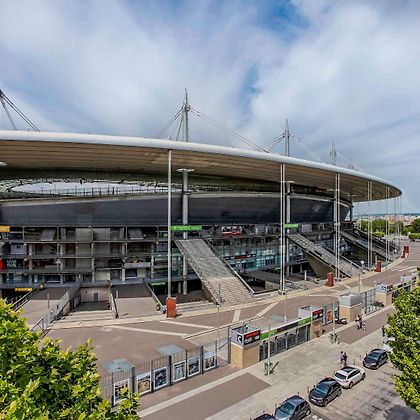
Building Stade de France for the 1998 Football World Cup gave an important impuls to Saint-Denis's development .

Saint-Denis of today is a quite suburb of Paris with small shops and nice old buildings.

Updated Mar 18, 2006

Related to:
 Road Trip
 Backpacking
 Budget Travel

Was this review helpful?

Basilique Saint-Denis
Diana75 profile photo

3.5 out of 5 starsHelpfulness

Diana75 1519 reviews
Basilique Saint-Denis

Famous burial site for the French Royal family, Basilique Saint Denis was originally a small chapel on the graveyard of Saint Denis.

After the 7C, Basilique Saint-Denis became the royal abbey church.

Dagobert I, who reigned from 628 to 637, founded the Abbey of Saint Denis, attached to a Benedictine monastery.

The third Basilique Saint-Denis was rebuilt by Abbot Suger in 1137, who completed the west façade, the narthex and the choir until 1144. As he died in 1151 before finished it, it is said that the nave, including the upper part of the choir and transept, was reconstructed by probably Pierre de Montreuil and others.

Viollet-le-Duc took care of the reconstruction works from 1836 to 1846. He restored the apsidal chapels to their former medieval state removed the tombs from the crypt and had them placed in the transept, he altered the choir and above all built a tomb for Napoleon III in front of the Bourbon tomb.

He also had plans to reconstruct the whole facade and to add two spires, but could not find the necessary support to allow him to complete this project.

Updated Mar 18, 2006

Related to:
 Museum Visits
 Religious Travel
 Historical Travel

Was this review helpful?

Arriving to Saint-Denis
Diana75 profile photo

3.5 out of 5 starsHelpfulness

Diana75 1519 reviews
Arriving to Saint-Denis
2 more images

Located in the northern part of Paris, 10 km from the city centre, Saint-Denis is perfectly connected throught the metro network.

The line 13 is stopping in Basilique de Saint-Denis station located near the Basilica, while another option could be the RER D1 (Orry-la-Ville - Coye) Saint-Denis stop.

Updated Mar 18, 2006

Related to:
 Backpacking
 Trains
 Road Trip

Was this review helpful?

Tombs of Francois I and Claude de France
Diana75 profile photo

3.5 out of 5 starsHelpfulness

Diana75 1519 reviews
The lower level of the mausoleum
1 more image

One of the sumptuously decorated mausoleums in Saint-Denis is the one with the tombs of Francois I and Claude de France.

Placed just next to the entrace in the part of the Basilica housing the Kings' tombs, the mausoleum was made by Philibert Delorme and Pierre Bontemps.

Nearby is the wonderful adorned urn holding the heart of the great Renaissance king Francois I which can be easily identified from the letter "F" that marks many of his works.

Updated Mar 18, 2006

Related to:
 Historical Travel
 Religious Travel
 Arts and Culture

Was this review helpful?

Outside the Basilica-Exterior de la Basílica
spanishguy profile photo

3.5 out of 5 starsHelpfulness

spanishguy 645 reviews
Basilica
2 more images

The Basilica is gorgeous, but as you can see, its not something wonderful from outside. It's best part is found inside. The church is an architectural landmark as it was the first major structure partially built in the Gothic style, although only part of the original Gothic ambulatory at the chevet, or east end remains. The narthex of the Gothic church was begun in 1136 and finished in 1140. Among other innovative features at St. Denis are the stained glass windows in the chevet, the rose window on the facade, and the statue columns. All of this is reconstructed, because it was destriyed during the Franch Revolution.

La Basílica es magnífica, pero como puedes ver no es nada extraordinaria desde fuera. Lo mejor está dentro. La iglesia es un hito arquitectónico pues fue la primera gran estructura construida parcialmente en estilo gótico, aunque solo una parte del deambulatorio original, el coro o la parte este se mantienen. La obras de la iglesia gótica comenzaron en 1136, y acabaron en 1140. Junto a otras novedades destacan las grandes vidrieras, el rosetón de la fachada y las columnas en forma de estatua. Todo esto es reconstruido, pues fue destruido durante la Revolución Francesa.

Written Feb 8, 2008

Was this review helpful?

Stained glass windows - Vidrieras
spanishguy profile photo

3.5 out of 5 starsHelpfulness

spanishguy 645 reviews
4 more images

There are a lot of natural light inside the Basilica thanks to its wonderful fine bid stained glass windows. Actualy they're a copy from the original ones coming from 12th century, but destroyed for the Revolution. It's said that the grass grew inside the Basilica after it was destroyed, but fortunatly the building had been perfectly well rebuilt during the Restauration era.

Hay muchísima luz natural dentro de la Basílica gracias a sus magníficas vidrieras. Realmente son una copia de las originales del siglo XII, pero que fueron destruidas durante la Revolución. Se dice que crecía la hierba dentro de la Basílica tras estos acontecimientos, pero afortunadamente el edificio fue reconstruido en la época de la Restauración.

Written Feb 8, 2008

Was this review helpful?

Royal Pantheon - Panteón Real
spanishguy profile photo

3.5 out of 5 starsHelpfulness

spanishguy 645 reviews
Louis XVI and Marie-Antoinette
4 more images

The Basilica is where the kings of France and their families were buried for centuries and is therefore often referred to as the "royal necropolis of France". Francis I concibed the idea of put into the same place all the Royal Family tombs as it was been doing in Spain, in El Escorial, by Philip II. All but three of the monarchs of France from the 10th century until 1789 have their remains here. The effigies of many of the kings and queens are on their tombs, but during the French Revolution, these tombs were opened during the Revolution. The bodies were removed and dumped in two large pits nearby. At least, an Archaeologist saved many of the monuments from the same revolutionary officials by claiming them as artworks for his Museum of French Monuments.

La Basílica es el lugar donde los Reyes de Francia y sus familias han sido enterrados durante siglos. Francisco I concibió la idea de crear un gran panteón para la Familia Real, al igual que se estaba haciendo en España con Felipe II en El Escorial. Todos los Reyes de Francia, salvo tres, desde el siglo X hasta 1789 están aquí. Las esculturas de muchos de los Reyes y Reinas fueron profanadas durante la Revolución. Los cuerpo fueron sacados y tirados en dos grandes fosas comunes cercanas. Al menos se salvaron muchas de las esculturas por parte de un arqueólogo, que las catalogó como monumentos nacionales.

Updated Feb 18, 2008

Was this review helpful?

Royal Pantheon (2)
spanishguy profile photo

3.5 out of 5 starsHelpfulness

spanishguy 645 reviews
The heart of Francis I - Coraz��n de Francisco I
2 more images

Napoleon reopened the church in 1806, but the royal remains were left in their mass-graves. Following Napoleon's first exile to Elba, the Bourbons returned to power. They ordered a search for the corpses of Louis XVI and Marie Antoinette, the few remains, were found on 1815, brought to Saint Denis and buried in the crypt. In 1817 the mass-graves containing all the other remains were opened but it was impossible to distinguish any one from the collection of bones. The remains were therefore placed in an ossuary in St. Denis' crypt, behind two marble plates with the names of the hundreds of members of the succeeding French Dynasties that were interred in the church duly recorded.

Napoleón reabrió la iglesia en 1806, pero los restos reales continuaron en las fosas comunes. tras el exilio de Napoleón, los Borbones regresaron al poder y ordenaron buscar los cuerpos de Luis XVI y María Antonieta, los cuales fueron encontrados en 1815, traídos a San Denís y enterrados en la cripta. En 1817 las fosas comunes se abrieron para recuperar los cuerpos de los demás Reyes, pero fue imposible distinguirlos entre todos los huesos. Todos los restos se depositaron en un osario en la cripta de San Denís tras dos placas de marmol con los nombres de los cientos de miembros de la Dinastía francesa, para así, quedar en el recuerdo.

Updated Feb 18, 2008

Was this review helpful?

The apse - El ábside
spanishguy profile photo

3.5 out of 5 starsHelpfulness

spanishguy 645 reviews
Banner - Pend��n
3 more images

The Basilica's apse is completly ornated with colourful stained glass windows. There are different chapels in this part. The main one is devoted to the Virgin but there are another very interesting, as the one which keeps an original medieval King banner.

El ábside de la Basílica está ornamentado completamente con coloridas vidriedas. Hay varias capillas en esta sección. La principal está dedicada a la Virgen, pero hay otras más muy interesantes, como una que tiene un pendón del Rey original de la Edad Media.

Updated Feb 25, 2008

Was this review helpful?

Town-Hall - Ayuntamiento
spanishguy profile photo

3.5 out of 5 starsHelpfulness

spanishguy 645 reviews
Town Hall - Ayuntamiento
1 more image

When you are going to the Basilica you'll find the town hall at your left. It's a beautiful building, the very typical French official construction that I like a lot. When I was there it was about to be a wedding there. It was very nice, because they were a Moslem couple and some of their friend where playing very big music instruments like trumpets. What a pity don't take them a picture!

Cuando vas hacia la Basílica te encuentras el ayuntamiento a la izquierda. Es un bonito edificio, de la típica arquitectura francesa para edificios oficiales que me gusta mucho. Cuando estuve allí iba a celebrarse una boda. Era muy bonito, porque se trataba de una pareja musulmana y algunos de sus amigos estaban tocando grandes instrumentos como trompetas. ¡Lástima no haberles sacado una foto!

Updated Feb 24, 2008

Was this review helpful?

Comments

Top 3 Hotels in Saint-Denis

Map of Saint-Denis