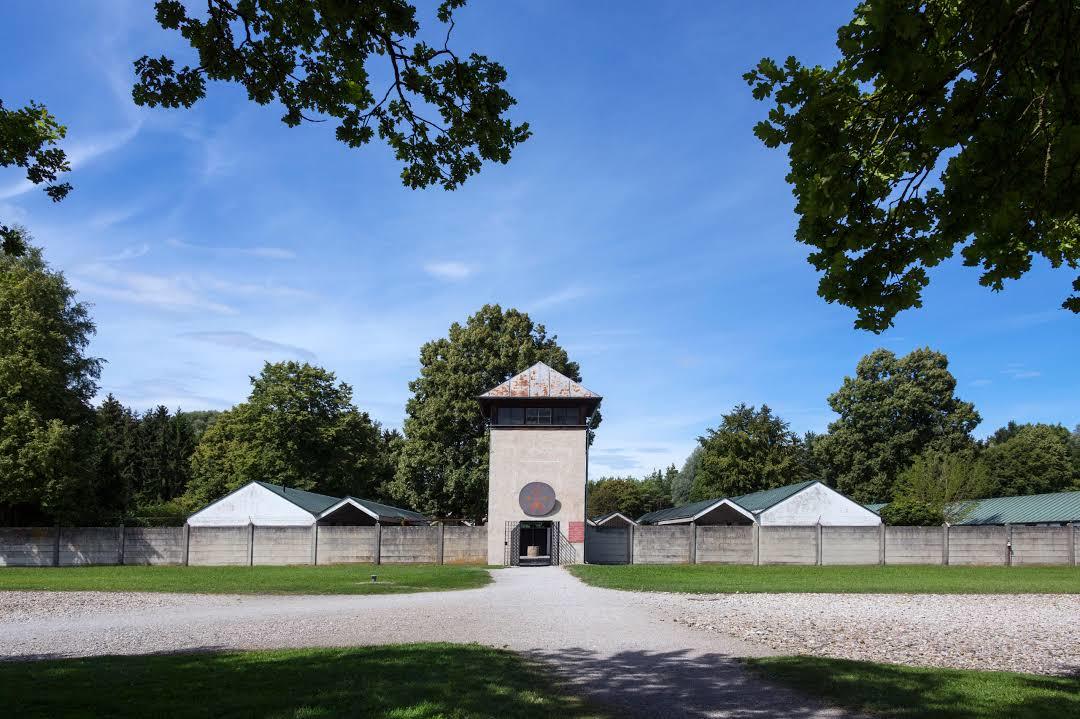
pictured is the main lane that runs through the barracks area of dachau concentration camp. when theodor eicke planned the camp he laid out 17 rows of barracks on each side of the "avenue" for a total of 34 barracks. the original plan was for a capacity of 3500 inmates. between 1933 and 1945 200,000 inmates passed through the gates of dachau. at the end of the lane is one of several memorials to the victims of dachau.
Updated Apr 4, 2011
Address: alte romerstrasse 75
Phone: 49 8331 66997 0
Try not to visit when school groups are attending. I say this, but it is impossible to determine when they might be there. We were surprised to find that schools were still in progress at the end of July.
If you see a large number of tour buses parked in the lot, be prepared, and avoid as best you can. I was disappointed to find the lack of respect given by the kids, especially the teens. This is not a typical site as such, a tourist destination of course, but it has questionable entertainment value.
Visiting Dachau was much like an extended vist to your local cemetary, however much more moving for the average adult.
Updated Apr 4, 2011
Spotted here and there, thick cement bunkers had been erected by the SS to defend against outside interference, and included gun ports facing inwards to prevent inmates from escaping. After sixty years, these bunkers are in surprisingly good condition.
Updated Apr 4, 2011
The entire camp was encircled with barbed wire fencing, leaving approximately thirty feet of flat ground running parallel with the fencing which was considered to be no-man's land. In addition to the barbed wire fencing, barbed wire was also strung knee high about eight feet from the fence, and a moat was filled with water, more barbed wire, and sharpened stakes facing inward.
Any prisoner found stepping within this strip of land was immediately shot to death by guards on the towers, and if a prisoner made it as far as the wire, then he was left to die as a warning to other prisoners considering an escape attempt.
Many prisoners commited suicide this way, finding life as it existed just not worth continuing.
Updated Apr 4, 2011
A 6x8 foot square unheated concrete cell, with a heavy wooden door, small peephole, and boarded windows, with an open toilet in the corner, shared with as many as seven other inmates on a temporary basis, sleeping in rotation...considered luxury by unknowing inmates in the general population.
Many of these cells were used as torture chambers, and prisoners would be left in the dark for days on end. Flogging the prisoner was a favoured past time, and the prisoner himself was expected to count each lash of the whip. If he lost count, or fell unconscious, the count would start all over. Tree or pole standing was another method of torture, where the prisoner was strung from a pole or tree by his bound hands, often wrenching muscles or pulling joints from their sockets.
Often the halls would echo with cries from prisoners being softened up by the SS guards, and a walk down the length of the central hallway was the last thing a prisoner may have seen.
Updated Apr 4, 2011
Built in 1942, the new crematorium had four additional ovens to accomodate the greatly increasing need, adding to the one heavily used oven in the old crematorium located just a few hundred yards away.
Updated Apr 4, 2011
Be aware that the additional pictures show the ovens in great detail.
Over 200,000 registered prisoners went through the concentration camp at Dachau, and out of those, there were 31,951 registered deaths. I say registered, because many mass shootings of Soviet prisoners were never recorded, nor were the forced marches of prisoners to locations outside of Dachau's gates.
These ovens operated at peak efficiency, and the overflow was later found buried in mass graves. At no time were the ovens used in conjunction with gassing of prisoners.
Updated Apr 4, 2011
The first crematorium built on the site of Dachau's concentration camp is located a few hundred feet from the second newer building. It proved to wholly inadequate to the demand, and more ovens had to be added to improve efficiency. Built in 1940, it handled 11,000 cremations alone until the construction of the new site.
Updated Apr 4, 2011
Gas chambers were included in the construction of the new crematorium, but were never actually used in Dachau. No one seems to know why. The design called for an 'undressing room', a 'shower bath', and a 'mortuary', and the shower heads which would be used to dispurse the poisonous gas, had 'NOT' been constructed with the required pipelines to order to make them functional.
This does not mean that inmates of Dachau were never gassed, in fact, thousands were transported to Hartheim, near Linz (Austria) particularly for extermination.
It is believed that an intentional design flaw may have saved hundreds, perhaps thousands of lives.
Updated Apr 4, 2011
This monument has been installed at the site of the two crematoriums, located halfway between both. It is in memorium to all who died in Dachau. The statue is very forlorn looking, wearing oversized shoes, and an obviously reclaimed greatcoat. The figure is gaunt, with a shaven head, and a sad faraway look in his eyes.
Very powerful. I recall this monument every time I think of Dachau.
Updated Apr 4, 2011
Sponsored Links
Reviews and photos of Dachau attractions posted by real travelers and locals. The best tips for Dachau sightseeing.

This monument has been installed at the site of the two crematoriums, located halfway between both. It is in memorium to all who died in Dachau. The statue is...
3 members live in Dachau
Q: My husband and I plan to visit Dachau in our upcoming trip. We will have a 9 month old infant with us. Would it be inappropriate...

A: It will not bother your child at that age, of course, and I can find no mention of minimum age on the Dachau Memorial Museum website...
Read 4 Replies
1

The red brick train station isn't new, but it is clean and comes with a McDonald's on the upper level. The main bus station is right out the front door, appears new, with lanes for the different bus...
2
Welcome to Dachau: the beginning of the end

Dachau was the first concentration camp opened by Hitler in 1933. Unlike what many people think, this was not an extermination camp and it was not conceived to kill Jewish people, but to emprison (and...
3
To Honor the Dead, and to Remind the Living

Words can not describe how terrible you feel knowing that the site of so many senseless deaths occurred in such a beautiful part of the world. If you were to walk into Dachau today, and you were told...
4

dachau is a small town located about 12 miles northwest of munich. this village will always be remembered for the nearby dachau concentration camp. in 1933 dachau concentration camp was established in...
5
The former SS concentration camp

In Dachau, one of the most famous SS concentration camp is located. Nowadays, the camp is preserved as a memorial to the thousands of people who suffered and died there at the hands of the...
Build your own Dachau page
Sponsored Links