
















Hofkirche, Dresden

  Inside the nave
by BruceDunning
 
  • Inside the nave
      Inside the nave
    by BruceDunning
  • Panorama of the church
      Panorama of the church
    by BruceDunning
  • Rooftop view of the detail sculptures
      Rooftop view of the detail sculptures
    by BruceDunning
  • The alter decor and cross
      The alter decor and cross
    by BruceDunning
  • The tower dome
      The tower dome
    by BruceDunning
 

30 Reviews of Hofkirche

Sort by: Most recent | Most helpful

Write a Review
Hofkirche-Church of Holy Trinity
BruceDunning profile photo

3.5 out of 5 starsHelpfulness

BruceDunning 3103 reviews
Panorama of the church
4 more images

It is the Catholic church that Augustus the Strong left his heart; literally it is in the church crypt. He converted to Catholicism in order to obtain the Polish King crown title. At the time, the region was mostly Protestant, but the ruler wanted more power and larger region. He attended service in the royal chapel and later his son decided to build the Catholic church to rival Fraunenkirche being Protestant.
Italian architect Gaetano Chiaveri designed the large church in combination of Roman and Baroque architecture. and it was built between 1738-1751. It was the largest church in Saxony. The roof height is 272 feet at the peak. The 78 statues on ringing the top walls are each 10 feet tall, and they represent holy figures and historical people.It was destroyed in WWI and did not get completed to original state until 2006 after 26 years of work. In 1980 the church was christened Sanctissimae Trinitatis-Holy Trinity that elevated it to status of Bishop residence

It is open Monday-Thursday 9-5PM, Friday 1-5PM. Saturday 10:30-4PM, and Sunday 12-4PM. Entry is free

Updated Dec 10, 2011

Related to:
 Historical Travel
 Museum Visits
 Architecture

Was this review helpful?

Hofkirche
Maria81 profile photo

2.5 out of 5 starsHelpfulness

Maria81 373 reviews

Where?

In the Old City, on Theaterplatz, right by the Zwinger Palace and the Opera

What?

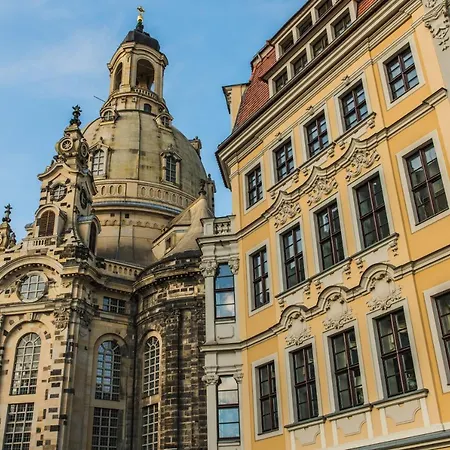
Hofkirche was the main Catholic church of the Saxon royal court, and the primary church of Dresden in Saxony's heyday. Built in mid-18th century by Gaetano Chiaveri in the Baroque style, The church became a cathedral in the second half of 20th century. Richly decorated both inside and outside, Hofkirche still has some of the finest statues in Dresden, mostly sculpted by Lorenzo Mattielli. Another striking feature is the 80m+ belfry, crowned with a copper onion dome.

Updated Aug 5, 2011

Related to:
 Architecture
 Photography
 Religious Travel

Was this review helpful?

Hofkirche inside
Kuznetsov_Sergey profile photo

4.5 out of 5 starsHelpfulness

Kuznetsov_Sergey 3857 reviews
Hofkirche inside
4 more images

The exterior of the church is striking, with its 85.5m high tower and its 78 statues in niches and on the balustrades.
Notable features of the interior are the processional ambulatories, Balthasar Permoser's magnificently carved pulpit (1722), the altarpiece of the Ascension (by Mengs, 1750-51) and the Silbermann organ (1750-53), Silbermann's last and finest work.
In four burial vaults are the remains of kings and princes of Saxony. An urn contains the heart of Augustus the Strong. His body was buried in Krakow.

Written Mar 13, 2011

Related to:
 Historical Travel
 Architecture

Was this review helpful?

Hofkirche
Kuznetsov_Sergey profile photo

4.5 out of 5 starsHelpfulness

Kuznetsov_Sergey 3857 reviews
Hofkirche in 2005
4 more images

The Katholische Hofkirche (The Catholic Church of the Royal Court of Saxony) is a Roman Catholic Cathedral, located in the 'Altstadt' in the heart of Dresden.
The Church with an openwork tower in height of 83 meters is located on the western side of the Royal Palace square . There are 78 statues, height of each of which more than 3 meters, on a roof of church.
The church was erected under the order of August Strong, accepted a Catholicism to become king of Poland. It was built by architect Gaetano Chiaveri from 1738 to 1751. Preparation for construction of a Catholic cathedral in style of a late baroque was conducted in the deepest secret since over Dresden was dominated at this time with Protestant religion.
The church was badly damaged during World War II and was restored during the mid-1980s.

Updated Mar 13, 2011

Related to:
 Travel with Pets
 Castles and Palaces
 Architecture

Was this review helpful?

Cathedral
german_eagle profile photo

3.5 out of 5 starsHelpfulness

german_eagle 1553 reviews
Cathedral, seen from the right bank of the Elbe
4 more images

The cathedral called "Katholische Hofkirche" is the largest church in Saxony. It was built 1738 - 1755 by Gaetano Chiaveri as the latest masterpiece of Roman Baroque in Europe. The tall, graceful tower is one of Dresden's landmarks.

As you may know Saxony is the birthplace of Reformation. However, when Elector Duke Augustus the Strong wanted to become King of Poland he had to convert to Catholizism. At first a small chapel in the Royal Comedy Theatre was sufficient for catholic services, but when his son took over (he was married to *very* catholic Maria Josepha, daughter of the Habsburg Emperor!) he gave order to build an impressive Catholic church.

Inside you must see Permoser's Baroque pulpit (relocated from the previous chapel), the fantastic altar painting by Raphael Anton Mengs (Ascension, 1752 - 65) and the organ by Gottfried Silbermann - his latest work. Well worth to see are also the chapels at the four corners with stucco marble and beautiful paintings (Stefano Torelli, Louis de Silvestre, Franz Karl Palko). The sacrament's chapel was restored originally after the destruction in WWII, the others more basic. Very interesting and moving is the memorial chapel (former John Nepomuk chapel). The altar and the pieta were made of Meissen porcelain by Friedrich Press in 1973. High on the side walls you can read the words of the last prayer prior to the fateful night of 13 February 1945 (the bombing). Almost prophetic.

Every Wednesday and Saturday free organ concert 11.30 - 12.00 am.

Don't miss a guided tour of the burial vault with tombs of the Saxon Kings.

Updated Dec 19, 2010

Address: Schlossplatz

Related to:
 Architecture
 Historical Travel
 Religious Travel

Was this review helpful?

Kathedrale St. Trinitatis or Hofkirche
pieter_jan_v profile photo

3.5 out of 5 starsHelpfulness

pieter_jan_v 3564 reviews
Kathedrale St. Trinitatis - Dresden
4 more images

In 1980 the former Hofkirche was renamed into the Kathedrale St. Trinitatis.

The original church construction started in 1739 and lasted till 1755 during the time August III of Poland was in power. The architect was Gaetano Chiaveri who came up with a Baroque design.

The church was heavely damaged by bombardments in Worl War II, but was restored completely in 1965.

In the graves in the basement 49 Rulers are buried and also the heart of "August des Starken", who is buried at Krakow.

On the outer balustrade 78 statutues of Saints are erected. On the 85.5 meters high tower are symbolic statues for Faith, Hope, Love and Justice.

Updated Jun 28, 2010

Address: Schloßstraße 24 - 01067 Dresden

Phone: +49-351-4844712

Website: http://www.kathedrale-dresden.de/

Related to:
 Architecture
 Religious Travel
 Historical Travel

Was this review helpful?

The Cathedral or Hofchurch
Henk.Irene profile photo

3.5 out of 5 starsHelpfulness

Henk.Irene 66 reviews
The Cathedral (1754), but with
4 more images

The Cathedral - or Hofchurch - is an outstanding barokmonument on the Slotsquare and Theatresquare. After the Zwinger and Frauenkirche is the Cathedral the thirt barokmonument of Dresden. The Cathedral is 86 m high with 78 holyfigures, have a groundbase of 4800 m² and is the bigest church of Saksen.

See also an unknow Dutch choir to sing in the Cathedral.

Updated Jun 9, 2010

Website: www.dresden.de

Related to:
 Architecture
 Historical Travel
 Castles and Palaces

Was this review helpful?

St. Trinitatis - a Cathedral for Secret Converters
Kakapo2 profile photo

4 out of 5 starsHelpfulness

Kakapo2 1832 reviews
The cathedral on the left, castle on the right.

The former Catholic Church on the castle grounds (Hofkirche) became the cathedral of the diocese Dresden/Meißen in 1980. It is Saxony’s biggest church. And it is beautiful, built of limestone, with 78 massive three metre high statues of saints surrounding the balustrades. They look much smaller than they are in reality – as is the whole church which was BTW Dresden’s last big Baroque building. It looks very light and airy.

The story of this church is also very interesting. It had to be built because August the Strong wanted to become King of Poland. Unfortunately he was protestant and absolutely needed to become Catholic to achieve this goal. So he converted to Catholicism in the protestant city of Dresden, and Dresden’s taxpayers later had to pay for the construction of the immensely expensive cathedral. Not only the Dresdners were upset, but also August’s wife and his son who later became Elector Friedrich August II and King August III of Poland. When he converted to catholicism in 1712 it was kept secret for a while.

It was him who requested the church to be built in 1733, and he hired the Italian architect Gaetano Chiaveri. He had known him in Warsaw – and was happy to hire him because he did not find any willing Protestants for the job in Dresden.

A lot of Italian craftsmen were brought into Dresden. They lived in small houses nearby. They are now known as Italienisches Dörfchen (Italian Village) on Theaterplatz. Now a place for having a coffee.

Works started in 1739. But soon problems started, and after arguments (because he did not get much support) an angry Chiaveri left in 1749. After that some Saxon master-builders were found who finished the job, and the church was consecrated in 1751.

The Silbermann organ and some paintings survived the 1945 bombings as they had been taken out of the church and put into storage a year earlier.

Reconstruction took from 1945 until 1987.

Updated Sep 17, 2008

Related to:
 Historical Travel
 Religious Travel
 Architecture

Was this review helpful?

He left his heart in the Hofkirche
richiecdisc profile photo

1.5 out of 5 starsHelpfulness

richiecdisc 5866 reviews
Hofkirche, even more impressive at night
3 more images

Though rebuilt sooner than the Frauenkirche the original Hofkirche was a built not only after the impressive “stone bell” but in response to it. With August the Strong a converted Catholic due to his coronation as the Polish King, he wanted a place of worship equal to the famous Protestant Frauenkirche so he employed Italian architect Gaetano Chiaveri and began his plan in secret to erect the 83 meter oval structure. Though the angular belfry is its hallmark feature another interesting aspect are the seventy-eight 3 meter statues of biblical figures that look out over the city from the remaining oval roof. It was originally built between 1738 and 1751 but as with most of Dresden’s old city center was completely destroyed in 1945’s bombing. The rebuilt structure was begun in 1979 and features an amazing pulpit in the Rocco style by Permoser and a restoration of the last organ built by famed Gottfried Silbermann. Though his body is buried in Krakow, Poland August the Strong showed his allegiance to the city by having is heart laid to rest here.

Updated Jan 26, 2008

Related to:
 Historical Travel
 Religious Travel
 Architecture

Was this review helpful?

Hofkirche, The Cathedral of the Holy Trinity
nicolaitan profile photo

4.5 out of 5 starsHelpfulness

nicolaitan 908 reviews
4 more images

This famous Dresden landmark overlooks the Elbe River and the Dresden touristic center. There are only a small percentage of Catholics in predominantly Protestant Dresden, but this great cathedral is theirs thanks to the chicanery of the Wettins. Upon the passing of August the Strong, his heir Elector Frederick Augustus II wished to inherit the throne of Poland from his father. To mollify the Pope, suspicious of Frederick's Dresden upbringing, the Elector not only commissioned the church but imported the Italian architect Gaetano Chiaveri and a host of Italian stonemasons and sculptors to build it (1738-51). The famed steeple towers over the area with individual statues of the graces. The Baroque ( with Roman touches ) exterior features niches with over 70 statues of saints, apostles, and popes created by Lorenzo Mattieli. Like most of central Dresden, the church suffered extensive damage in WWII but reconstruction was undertaken in GDR times.

The highlight of the interior is the altar painting of the Ascension of Christ by Raphael Mengs. The 3000 pipe organ is one of the last created by a famous organ maker named Gottfried Silberman. Perhaps the most notorious attractions are the tombs of about 50 members of Wettin Royalty plus an urn with the heart of August the Strong ( the rest of his remains are in Poland as befits a Polish king but I guess his heart was always in Dresden ). Sadly my beloved Proserpina wanted nothing to do with this particular item.

As impressive as the Hofkirche is during the day, the building appears surreal with the provided lighting after dark and is well worth an extra stroll.

Updated Jan 10, 2008

Was this review helpful?

Top 3 Hotels in Dresden

Hotel Taschenbergpalais Kempinski  Dresden

 7 Reviews and 314 Opinions  Hotel Taschenbergpalais Kempinski has 182 rooms with an average floorspace of 50 square meters. On... 

 Hotels in Dresden

The Westin Bellevue Dresden  Dresden

 7 Reviews and 378 Opinions  Chose the hotel on the strength of my past (very positive) experiences with other Westin properties... 

 Hotels in Dresden

Dresden Hilton  Dresden

 1 Review and 556 Opinions  solid hotel. Buffet breakfast was excellant (but expensive). Hotel gym was above average and the... 

 Hotels in Dresden

The Place

Hofkirche

Hofkirche tips and photos posted by real travelers and Dresden locals.

  Write a Review  
Experience Dresden
 

The People

92 Members Live Here
 
Our Members Say
 profile photo

 This famous Dresden landmark overlooks the Elbe River and the Dresden touristic center. There are only a small percentage of Catholics in predominantly... 

92 members live in Dresden


Questions and Answers

theclaw profile photo

Q:  Previous I asked about hostel in the ex WW 2 POW camp which was in Colditz Castle and that's a go for a dorm--have app which... 

leics profile photo

A: Not sure this will help but... The town is called Colditz. It's near Leipzig, Dresden and Chemnitz. Here's the... 

Read 8 Replies

postQuestion_button

Top Dresden Writers

1

Still Beautiful Elegance

BruceDunning profile photo

 This wonderful monument in the center of the old city area has so much to see and do inside and around the complex. Beside six different museums inside, the ornate facade and sculptures enhance the...... 

2

Welcome to Dresden

german_eagle profile photo

 I was born and grew up in a small town near Dresden. I moved to Dresden for my studies at the university. Now I am living here in Dresden for more than 12 years. I love this city for its cultural... 

3

one of the most beautiful cities in Germany

globetrott profile photo

 Dresden is certainly one of the most beautiful cities in Germany ! You will find a lot of great buildings there and the scenic river Elbe ! 

4

Back to the Future: From Rubble to Baroque Beauty

Kakapo2 profile photo

  The War and its long lasting Symbol When you walk through Dresden, or only when you read descriptions of Dresden’s architectural highlights, you are permanently reminded of World War II when the...... 

5

Five visits in Dresden

Kuznetsov_Sergey profile photo

  I visited Dresden on business in 1995 for the first time and fell in love with this beautiful city. So whenever I had an opportunity, I visited it again and again with Irina and our German shepherds... 

View all rated pages

View newest pages

Build your own Dresden page

Travel Editors for Dresden

Bigs profile photo