One another main reason to visit Pecs for anyone interested in history (and art, architecture and archeology) is their Cella Septichora Visitor Centre, a complex of mainly Early Christian buildings and burial sites from Roman period, which were after throrough excavation projects connected by series of underground paths and exhibition room, now presented to public. Altogether with other few burial sites in vicinity it was listed as an UNESCO site in 2000.
Ruins are mostly of 4th century, and biggest within Visitor Centre complex is Cella, funerary building whose walls exhibit seven apses and it dates to 430'ies. Cella was excavated in 1938 and 39.
Among most monumental ruins is Peter and Paul burial chamber with rich color and decoration, still in good shape. Above it, the chapel was built and that part of the unity was taking place above the ground (now entire Cella Septichora Visitor Centre lays underground below Dom (Cathedral) square and vicinty). Another similar construction with burial chamber and chapel is Wine Pitcher chamber, whose decoration is still well preserved, though simplier than Peter and Pauls's.
Few other burial chambers and sarchopagus come scattered across the site and are another remarkable ruin all being part of a system; for those who would be interested in more details, there are good explanation posters with cross sections and ground plans at the site. Really, I would only transform someone else's knowledge (with my limited narration) here if I write about them all. Beside, who can do that better than scientists?
Fee to enter CS Visitor Centre was 1200 HUF per person in 2011. Students pay half price.
Updated Jan 13, 2012
Address: Szent Istvan ter
Kodaly centre is a new massive building on a location between the new Library and old-new Zsolnay factory, only opened by late 2010 as congress centre and cultural hall. Yes, it's one of key buildings of Cultural capital project, among which two were entierly new (Kodaly and Library, they are neighbours with eachother), so their appearances are entierly post modern.
The bright colors and asymmetric formal architecture immediately capture attention from a distance, but only when you get closer on foot, you'll see that building calls you to take a walk - to its roof! The roof looks like vertically articulated performance stage itself, and the access is through incline below which is one side of the spacious entrance hall.
Main hall has 999 seats and had given to audience since its opening many performances - the updates of program can be followed on their web site.
The stairs in front of the building provide interesting public place for social interaction, and if its not too cold, the cemented benches can be nice place to sit down for relaxing rest.
Updated Jan 10, 2012
Address: near Zsolnay factory and Regional Library
Website: http://www.kodalykozpont.hu/index.php?nyelv=english
As a ceramic manufacture founded by Miklos Zsolnay its name was famous far accross the borders and continents to conesseur and collector; it was since late 19th century untill 1940'ies that its products were highly prized and Zsolnay was the brand connected with success, at the age of international breakthrough ran by founder's son Vilmos. After the WWII the company was nationalized, its numerous priceless pieces got lost in private collections of ranking officials at that time or were (deliberately) destroyed, but never after that the factory had fully recovered.
Many things were ultimately lost forever, the nationalization managed to destroy once big name within one stroke of a pen and since then things were running down, and down.
Now, the glimpse of better future reveals as you visit the place, but keep in mind that is all just the begining of big story. Old shells bring in new content! See the below site for upcomming events.
The factory permises take huge 35 000 square meters of surface, and were recently brought to life with restoration project known as Zslonay Cultural Centre, one of key project for Pecs 2010 when town was cultural capital of Europe. Some pieces of precious ceramic surviving abroad were indeed brought back here and were housed in a museum; a puppet theatre settled, galleries and cafes were opened, and a few buildings of former factory are now planned to house faculty.
Yet, it is large project and less than half of plans were realized. The plan is also to revive manufacture of ceramic, though on a smaller scale and in future there is supposed to be an art academy. Pace of reconstruction depends on finance of course.
Not all content gets sheltered in buildings though; have a look of the factory revived outdoor yards who become popular public space with park, promenade, nice playgrounds for kids, tiny pocket sqaures and basketball grounds. All that executed in a manire that challenge any larger and rich European town, and most importantly, the locals have embraced the place and they use it enthusiastically, even during winter.
If there is a single place for an urban planner to visit in Pecs, then she has to go to Zsolnays factory ground. It is like a textbook case of what can be successfully done out of degraded town areas.
Updated Jan 10, 2012
Website: http://pecsikult.hu/en/
The South Transdanubian Library and Knowledge Centre was one of key projects in Pecs to be realized for European Capital of Culture in 2010 and when finally opened to public, it became another landmark of the city.
It doesn't fascinate that much by its massive appearance from outside and bold formal strokes. The magic of this architecture comes from the content, from impressive, organic 'hive' which is heart of the building, quite literally. You really have to go inside the hive and your eyes will automatically raise towards the oculus at the top of it, at the point where light enters the structure, where darkness ends and meets the sky, as if it wants to suggest symbolic and sublime power of ... the knowledge that this building holds. All the surface from inside of hive is covered by ceramic tile in multiple color, locally made from neighbour Zsolnays; the colors, the shape, the acoustics are real contrast to otherwise very formal looking architecture when approached from the streets.
Fascinating, stunning work of art!
PS. When we were visiting the library was closed, but we were noted by guards and they unlocked the building for us so that we could see it from where it's most interesting. I was impressed by that kind gesture, and most thankful.
Updated Jan 6, 2012
Website: http://artur.org.hu/#/pecs/regional_library_and_knowledge_centre
Impressive amount of stone makes this bastion largest among towers along the city wall; today, nice square is being laid in front of it frequented by groups of tourists as well as locals hanging out there, while if you take a look behind the fortification, you can still observe remains of a moat. In summers, the square hosts events and I can only imagine the timeless architecture being included in the concept of events by dark.
Its role in past was primary defensive, to protect gates of the castle. Though it was built by the end of 15th century as one of key strategic elements, strong as it appears, the Ottoman forces conquered against local and took over Pecs.
Like most of sites, it was unfortunatelly closer for better looks from inside out (and from top around) which we have to thank to winter season.
I will go back another time, yes, yes, yes.
Updated Jan 6, 2012
Address: Esze Tamas utca
The 16th century mosque that was good preserved was closed when I tried to visit, so I could only get a clue of its exterier by the street, but do take a walk to the hospital yard where views of the building are more revealing. The garden saves three or four tombstones in the shade of a mosque. While most of other things of that time notably changed or were gone, Pecs city treat this building as a jewel. What a sight - of a minaret, ancient mosque and such distinctive oriental feel in Central Europe, yet among the very different architecture that was built later.
Sometimes in recent history the mosque had been used as a chapel of hospital behind.
It's closed during winter.
Updated Jan 4, 2012
Address: Rakoczi ut. 2
Narrow, mostly pedestrianized Ferencesek street connects Jokai square to Rakoczi at the west where there used to be border (enclosure) to an old town by the Franciscan church (which gave the name to the street) and town gates. It's pleasant walk here, lined by mostly historic buildings from 18th and 19th century, now many of them house small shops and services, but also few restaurants and cafes, so it's another excellent spot to sit down for a coffee or meal, or wine or palinka.
Most buildings is one or two storeys, displaying well preserved facades and details - and worth to observe are the entries to the doors which shows individual taste - and fashion.
In front of the church you will also spot a site of a ruins where turkish bath was once - now the remain of that activity manifests itself through a fountain and partly reconstructed walls and stone benches, as if they would still invite you to relax.
Updated Jan 3, 2012
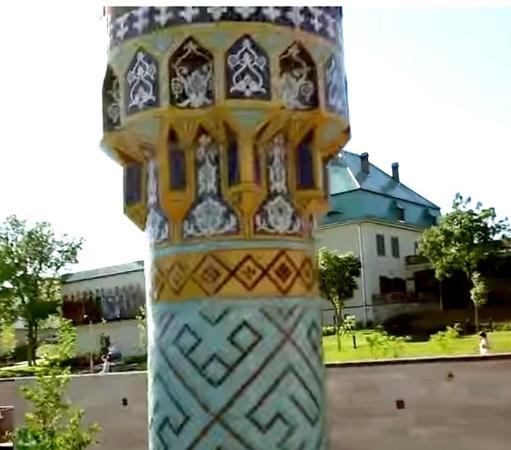
The Mosque of Jakovali Hassan Pasha is the best-preserved Turkish mosque in Hungary, the only one which has an intact minaret. It was built in the 16th century. It is located at Southwest of Pécs' inner town and opposite the Pátria hotel wedged between a trade school and a hospital. The 16th-century mosque - complete with minaret - is the most intact of any Turkish structure in Hungary and contains a small museum of Ottoman "objets d'art."
Written Nov 7, 2011
Address: 7621 Pécs, Rákóczi út 2
Just down from the main square you'll find the Zsolnay Fountain, with its eye-catching glazed bull's head. Its pagan design and its shades of metallic turquoise, offset against a background of grand turn of the century town houses, is more attractive than the dowdy Church of the Good Samaritan it sits in front of.
Updated Oct 23, 2011
Address: Irgalmasok Utca
This little museum houses an impressive collection of Csontváry's work. Most of the oeuvre of the great hungarian postimpressionst painter, who remained unknown during his lifetime, can be admired here.
Works created at the various stages of his career can be seen up to the large-scale symbolic compositions of the mid 1910's. These include the masterpieces on moral and philosophical models like the Entrance to the Wailing Wall in Jerusalem and Mary's Well in Nazareth as well as the magical radiant paintings like Baalbek and the Solitary Cedar.
His last major canvas. "Riding along the Beach" was painted in Naples in 1909.
His pictures would have got lost certainly because his Heirs wanted to sell the exceptionally high-quality linens to roadmen in a substance price. Gedeon Gerlóczy, a young architect, who bought them up in the last moment, was the rescuer of the pictures.
Some time after Csontváry's death, Picasso saw an exhibition of his work and referred to him as the "other" artistic genius of the 20th century.
Hungary was represented by Solitary Cedar on the exhibition of "The masterpieces of European art".
Opening times: 1 Apr-31 Oct: Tue-Sun 10-18; 1 Nov-31 March: Tue-Sun 10-17
Updated Apr 4, 2011
Address: Pécs, Janus Pannonius u. 11.
Phone: +36 (72) 310-544
Sponsored Links
10 Reviews and 42 Opinions I used to work in the hospitality industry, so this is my professional opinion, but I did have...
4 Reviews and 8 Opinions We took two rooms as we were 5 people. One for two in number 10 was only 28 euro priced, and was bit...
2 Reviews and 14 Opinions I used to work in the hospitality industry, so I can describe this hotel as a comptetitor or...
Reviews and photos of Pecs attractions posted by real travelers and locals. The best tips for Pecs sightseeing.

This little museum houses an impressive collection of Csontváry's work. Most of the oeuvre of the great hungarian postimpressionst painter, who remained unknown...
52 members live in Pecs
Q: Could someone please tell me what is the best and easiest way to travel from the netherlands to pecs== Thank...

A: The train journey is extremely long, almost 24 hours. Check http://www.bahn.com/i/view/overseas/en/index.shtml for train times & details. You could get a bus...
Read 2 Replies
1
city at foot of Mecsek hill and Baranya capital

Cold winters are best spent in warm places, but if this isn't possible, in interesting cities and caves. Pecs as an ex-cultural capital of Europe in 2010 and one of the largest Hungarian cities has...
2

I have visited Pecs many times, in particularly near termal springs of Harkany where I drove my parents on therapy twice a year. This weekend I was there again in order to make new photos, coz the old...
3
A true, historic, European city!

Everything you ever wanted to experience in a European city, Pecs got it all! The museums, Hundreds of years of history, great food and wine, affordable accomodations, good transportation. Friendly...
4

I was born in Pécs, I finished my schools here, I played football in the local team, I live in the city centre, I hit upon my wife in the unversity - these are just few reasons while I so hold onto...
5

PECS lying equidistant from the Danube and the Drava rivers in Southern Transdanubia, Pecs is one of the most interesting cities in Hungary. Blessed with a mild climate, it has an illustrious past,......
Build your own Pecs page
Sponsored Links