


Piazza Maggiore, Bologna

4.5 out of 5 stars4.5 Stars - 40 Reviews

 
by croisbeauty
 
  •   Piazza Maggiore
    by croisbeauty
  •   Piazza Maggiore
    by croisbeauty
  • The back façade of Palazzo Comunale
      The back façade of Palazzo Comunale
    by MM212
  • Palazzo Comunale
      Palazzo Comunale
    by Tijavi
  • Archiginnasio
      Archiginnasio
    by Tijavi
  • Palazzo del Podestà, Bologna, May 2010
      Palazzo del Podestà, Bologna, May 2010
    by von.otter
  • Palazzo del Podestà, Bologna, May 2010
      Palazzo del Podestà, Bologna, May 2010
    by von.otter
  • Palazzo del Podestà, Bologna, May 2010
      Palazzo del Podestà, Bologna, May 2010
    by von.otter
  • Image of Gregory XIII
      Image of Gregory XIII
    by Tijavi
 
  • croisbeauty's Profile Photo

    The statue of Gregory XIII

    by croisbeauty Updated Feb 19, 2013 6957 reviews

    3.5 out of 5 starsHelpfulness

    the statue to Pope Gregory XIII
    4 more images

    At the top of the main portal of the Palazzo Comunale is placed magnificent Pope Gregory XIII bronze statue, carved by Alessandro Sermenghi.
    Pope Gregory XIII (1502-1585) born Ugo Boncompagni, was Pope from 1572 to 1585. He is best known for commisioning and being the namesake for the Gregorian Calendar. The chief architect in the process of reforming the calendar was Christopher Clavius, Jesuit priest and astronomer, who was credited by the Pope.
    In the beginning, the switchover from Julian to Gregorian Calendar was bitterly opposed by much of the populace, who feared it was attempt by landlords to cheat them out of a week and a half's rent. The Catholic countries complied it soon but more than a century passed before Protestant Europe accepted the new calendar. The Gregorian Calendar, however, was not accepted in eastern Christendom for several hundred years, and then only as the civil calendar.
    Gregory XIII was liberal patron of the recently formed Society of Jesus throughout Europe, for which he founded many new colleges. The Roman College of Jesuits became the most important centre of learning in Europe for a time, known as the University of the Nations. It is now named the Pontifical Gregorian University.
    In many aspects, Pope Gregory XIII is one of the most significant popes in the history of Papacy.

    Was this review helpful?
  • sylina's Profile Photo

    Piazza Maggiore

    by sylina Written Feb 21, 2012 371 reviews

    2.5 out of 5 starsHelpfulness

    Piazza Maggiore
    3 more images

    Piazza Maggiore is in the center of the hisotrical town. Main events are often held here. Always full of people, both tourists and local.. young people seemed like to gather here.. especially around Fontana Nettuno.. and the staircase below Basilica San Petronio... It's a perfect spot to relax and people watching if that's your thing.. :)

    Was this review helpful?
  • von.otter's Profile Photo

    Palazzo Comunale: Pope Gregory XIII Bronze

    by von.otter Updated Apr 26, 2011 1169 reviews

    2.5 out of 5 starsHelpfulness

    Pope Gregory XIII; Bologna, May 2010
    4 more images

    “Gregory XIII, Hugo Buoncompagno of Bologna, who had raised himself to eminence as a jurist and in the civil service, was cheerful and lively in disposition.”
    — from “The History of the Popes, Their Church and State” 1853 by Leopold von Ranke (1795-1886)

    Above the entrance gate to Palazzo Comunale is a 1580 bronze of the Bologna’s native son, Gregory XIII. Alessandro Menganti created the likeness of this reforming pope between 1576 and 1580. It was saved from France’s invading, destructive, anti-papal Grande Armée when Bologna’s citizens disguised it to resemble their patron saint, San Petronio.

    Ugo Boncompagni was born on the 7th of January 1502, in Bologna. He studied law, and later taught at Bologna’s university; his students included a future cardinal, Alexander Farnese and a future saint, Charles Borromeo. Cardinal Boncompagni was called to Rome in 1539 by Pope Paul III, who him employed in various offices.

    Following his election to the throne of St. Peter, Cardinal Boncompagni chose the name Gregory XIII, in honor of Pope Gregory I, in whose footsteps he planned to follow as a reformer of the church.

    Gregory XIII is best known for giving the world a new calendar, the Gregorian Calendar vs. the old Roman Julian Calendar.

    Related to:
    • Museum Visits
    • Castles and Palaces
    • Historical Travel
    Was this review helpful?
  • von.otter's Profile Photo

    Palazzo del Podestà

    by von.otter Updated Nov 10, 2010 1169 reviews

    3.5 out of 5 starsHelpfulness

    Palazzo del Podest��, Bologna, May 2010
    4 more images

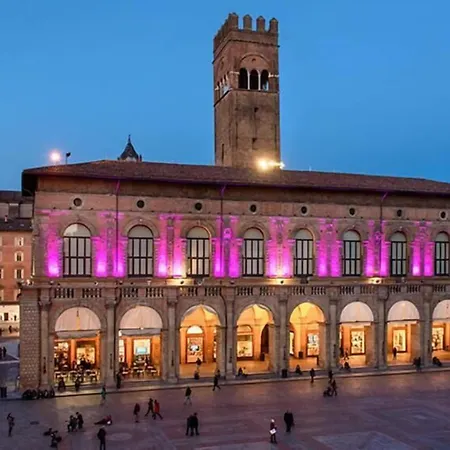
    The Palazzo del Podestà was built around 1200 as the headquarters/offices for Bologna’s podestà, the chief administrator of an Italian city-state. It was at Bologna that the first documented usage of the word podestà can be found in 1151. Guido di Ranieri di Sasso of Canossa was brought from Faenza to Bologna to be rettore e podestà.

    This palazzo faces the Basilica di San Petronio on Piazza Maggiore; and it is across from Palazzo Communale. The functions of government quickly outgrew the space in Palazzo del Podestà. In 1245 Palatium Novum (New Palace) was added; today this building is known as Palazzo Re Enzo. Torre dell’Arengo, whose bell once called the citizens during emergencies, looms over both buildings.

    The double open arcade, called Voltone del Podestà, of Palazzo del Podestà is made up of two lanes of shops on the ground floor. The large Hall of Podestà was used as a public theatre between the 16th and the 18th centuries, and then for handball games.

    Related to:
    • Historical Travel
    • Arts and Culture
    • Architecture
    Was this review helpful?
  • von.otter's Profile Photo

    Palazzo Comunale: Michelangelo’s Eagle

    by von.otter Updated Oct 19, 2010 1169 reviews

    2.5 out of 5 starsHelpfulness

    Palazzo Comunale, Michelangelo���s Eagle, May 2010
    2 more images

    “Carving is easy, you just go down to the skin and stop.”
    — Michelangelo (1475-1564)

    Two marble eagles sit beneath a window of Palazzo Comunale; the left-hand bird was carved by Michelangelo.

    Related to:
    • Architecture
    • Arts and Culture
    • Historical Travel
    Was this review helpful?
  • von.otter's Profile Photo

    Palazzo Comunale, Madonna del Terremoto

    by von.otter Written Oct 18, 2010 1169 reviews
    Madonna del Terremoto, Bologna, May 2010
    2 more images

    “Once or twice wandering about Bologna while my friends were at the Congress of Philosophers, I caught a glimpse . . . (or was it rather one of those sounds whose hearing is partly one of expectation?)—I caught, shall we say, the ghost of a mood; almost an emotion of forty years ago.”
    — “Dark, Many-Towered Bologna” 1922 by Vernon Lee (1856–1935)

    On the right-hand wall of Sala Ercole is a fresco known as the Madonna del Terremoto, Madonna of the Earthquake. Madonna con bambino appear in glory, blessing Bologna, its walls and many towers beneath them. Fascinating: to be in Bologna of the early 16th century. Francesco Francia’s fresco was painted for the nearby Elders’ Chapel in fulfillment of a vow made when the city was struck by an earthquake in 1505, the same year the fresco was painted; it was moved to Sala Ercole in the 19th century.

    The city’s art collection above is also on view at Palazzo Comunale.

    Related to:
    • Historical Travel
    • Castles and Palaces
    • Museum Visits
    Was this review helpful?
  • von.otter's Profile Photo

    Hercules at Palazzo Comunale

    by von.otter Written Oct 18, 2010 1169 reviews
    Hercules at Palazzo Comunale, May 2010
    4 more images

    “Bologna, where I stayed ten days, is next to Rome in regard to fine paintings.”
    — from a letter, dated 23.March.1771, written by Mr. John Gray to Dr. Tobias Smollett

    FINE PAINTING, FINE SCULPTURE In Sala Ercole, on the first floor of Palazzo Comunale, was once the dining hall; it retains its Renaissance look. Alfonso Lombardi’s 1519 terracotta sculpture at the far end gives the hall its name. Painted in mock bronze, it shows a victorious Hercules after killing the Hydra of Lerna.

    Related to:
    • Arts and Culture
    • Historical Travel
    • Museum Visits
    Was this review helpful?
  • von.otter's Profile Photo

    Palazzo Comunale: Madonna di Piazza

    by von.otter Updated Oct 15, 2010 1169 reviews
    Madonna di Piazza, Bologna, May 2010
    1 more image

    Sheltered under a wooden canopy, to the left of the main entrance to the Palazzo Comunale, sits Niccolò dell’Arca’s 1478 “Madonna con bambino.” This high-relief work is known as Madonna di Piazza. Created in terracotta and formerly gilded and polychromed it was placed where a portrait of Pope Julius II once hung.

    Related to:
    • Historical Travel
    • Museum Visits
    • Architecture
    Was this review helpful?
  • von.otter's Profile Photo

    Palazzo Comunale

    by von.otter Updated Oct 15, 2010 1169 reviews

    2.5 out of 5 starsHelpfulness

    4 more images

    “Proceed next southward into the Piazza just named, and observe, Palazzo Maggiore fronting it on the west, the Palazzo Maggiore, the residence of the Papal Legate, and of the Senator of Bologna, with a bronze statue of Pope Gregory XIII in a niche on its front.”
    — from “Handbook for Travelers in Northern Italy” 1860 by John Murray

    WHAT’S IN A NAME? What Mr. Murray calls Palazzo Maggiore is Palazzo Comunale or Palazzo d’Accursio, Bologna’s city hall until November 2008. It borders the 161,458-square-foot Piazza Maggiore, the city’s main square.

    Palazzo d’Accursio houses the Civic Art Collection, displaying art work from the Middle Ages to the 19th century. The Museo Morandi, with the works by Giorgio Morandi donated to the city by his family, is also located within Palazzo d’Accursio.

    Palazzo d’Accursio is a huge complex of buildings which have been connected over the years, originally it was the residence of Accorso di Bagnolo (1182-1263), an Italian jurist. In 1336 it became the seat of the Anziani, the Elders, the city’s highest magistrates; it then became the city hall. It was renovated in the 15th century by Fioravante Fioravanti, when the Clock Tower (see photo #4) added. Another round of restorations were made in the 16th century.

    Related to:
    • Arts and Culture
    • Historical Travel
    • Architecture
    Was this review helpful?
  • Tom_Fields's Profile Photo

    Piazza Maggiore

    by Tom_Fields Updated Jan 5, 2010 2352 reviews

    3.5 out of 5 starsHelpfulness

    The Piazza Maggiore
    4 more images

    Bologna's central square, the Piazza Maggiore, is a good starting point for a walking tour of this city. The most prominent building here is the Palazzo del Podesta, which served as the seat of municipal government for centuries. The Arengo Tower stands over the great palace.

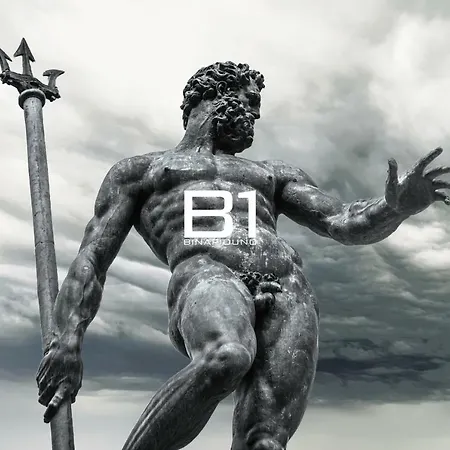
    At the south side of the square is the Flemish Giambologna's statue of Neptune, Roman god of the sea (Poseidon to the Greeks).

    The current town hall is in the Palazzo d'Accursio, completed in the 16th century. In front is a statue of Pope Gregory XIII.

    On the north side of the piazza is the Basilica of St Petronius, begun in 1390 but never quite completed. Antonio di Vincenzo, the noted Bolognese architect, designed it to be even more imposing, but it was just too costly and time-consuming. It's still a masterpiece of Italian Gothic architecture.

    Related to:
    • Architecture
    • Historical Travel
    • Arts and Culture
    Was this review helpful?

Comments

Top 3 Hotels in Bologna

Grand Hotel Baglioni  Bologna

 2 Reviews and 132 Opinions  Quite expensive but situated right in the centre of the city , very nice hotel ,rooms and bar , and... 

 Hotels in Bologna

Show Prices

Savhotel  Bologna

 2 Reviews and 228 Opinions  Modern 4**** Hotel in Bologna. Plus: - value (esp. weekend rate) - cleanliness - comfortable rooms... 

 Hotels in Bologna

Show Prices

Metropolitan Hotel  Bologna

 1 Review and 265 Opinions  We stayed in the Met Apartments. You book the apartments through the hotel and check in and out at... 

 Hotels in Bologna

Show Prices
Hotels Near Piazza Maggiore
4.0 out of 5 stars
21 Opinions
0 miles away
Show Prices
3.5 out of 5 stars
76 Opinions
0.1 miles away
4.5 out of 5 stars
118 Opinions
0.1 miles away
Show Prices