

“For Bologna it is alright.” — Pope Pius IV (1499–1565)
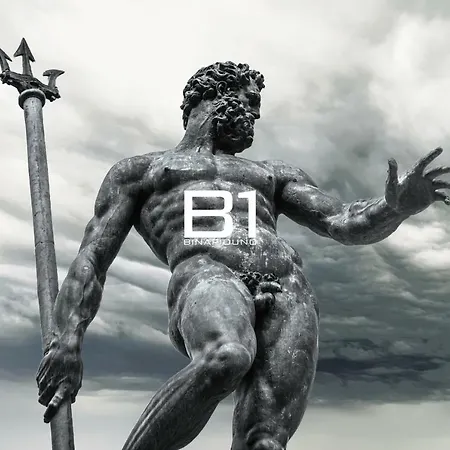
GRANTING PERMISSION The Holy Father is referring to the bulging muscle mass that is Giambologna’s Neptune at what is one of Bologna’s signature sights, la Fontana di Nettuno.
Born in Douai, Flanders, now part of France, Jean Boulogne (1529-1608) was concerned that his creation would not meet with the approval of the man it was meant to honor. Future saint, Charles Cardinal Borromeo, the Papal Legate in Bologna, commssioned the fountain to celebrate the 1559 election of his uncle, Giovanni Angelo Medici as Pope Pius IV. Tommaso Laureti designed the fountain, completed in 1565; Nettuno was added two years later.
When Pius gave his approval he acknowledged the liberal outlook on life for which Bologna has long been known.
The fountain gives its name to Piazza Nettuno, which borders Piazza Maggiore and Palazzo Comunale.
Updated Oct 16, 2010
Address: Piazza Nettuno
One of the symbols of Bologna, the giant statue of the god Neptune, Nettuno in Italian, crowns a fountain of sculptures in the centre of Piazza del Nettuno. Completed in 1567, the fountain was commissioned by Cardinal Carlo Borromeo who assigned the project to the architect Tommaso Laureti. However, it was the sculptor Jean Boulogne (known as Giambologna or Giovanni da Bologna), famous for the sculpture of the Rape of the Sabine Women in Florence, who created the celebrated bronze statue of Nettuno to top Laureti's design. Locally referred to as il Gigante (the Giant), the god Neptune stands majestically above delightful sculptures of cherubs and nereids with four water spouts representing the major rivers of four continents.
Updated Aug 2, 2009
Address: Piazza del Nettuno
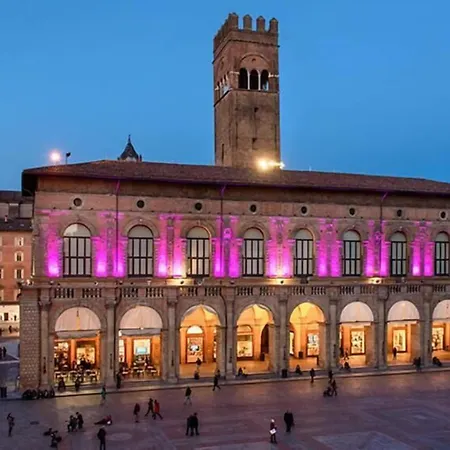
Resembling a defensive castle, il Palazzo Re Enzo dominates Piazza del Nettuno. It is adjacent to Palazzo del Podestà, and was in fact built in 1245 as its extension and first called Palatium Novum, i.e. "New Palace". However, shortly after its construction, Enzo of Sardinia, son of Emperor Frederick II, was captured by the Guelphs and imprisoned within the palace, so thereafter the palace became known by his name. In 1259, the tower, Torre dell'Arengo, was erected above Voltone del Podestà, a vaulted passageway between the two palaces. The tower carries the largest bell in Bologna, once used to summon the population during major events.
Updated Jun 29, 2009
Address: Piazza del Nettuno
Adjacent to Palazzo del Podesta on Piazza del Nettuno is Palazzo del Re Enzo, another medieval palace built in the 13th century. It is named after King Enzo, the illegitimate son of the Holy Roman Emperor Frederick II (he wasn't holy after all!). Papal forces held King Enzo in this palace between 1249-1272. Closed to the public, the only option available to tourists it to take pictures of the palace from the outside, which makes for a fitting background to the Fontana di Nettuno.
Updated Dec 27, 2008
Fontana di Nettuno is the centerpiece at the centro storico's (historical center) Piazza di Nettuno. Sculpted by Giambologna in 1566, it is a vivid bronze representation of one of Roman mythology's most artistically portrayed gods. Beneath the water god's feet are four cherubs representing the winds and at the base, four shapely sirens with water flowing from their breasts.
More than just a tourist attraction and an obvious subject for shutter-happy tourists, the fountain is a gathering point for many social and political events in Bologna, long considered one of Italy's most political cities (former PM Prodi hails from the city). At the time of my visit, there was a massive student protest which was well-covered by local and national media.
Updated Dec 21, 2008
The old stock exchange sat empty and unused for decades but has now been totally transformed into Sala Borsa, a new multimedia library in the centre of Bologna. The main floor of which is large transparent tiles that enable you to see archaological ruins found beneath the building (see other photo).
There are several small stores and cafe's inside and its well worth a look just to be amazed at that incredible floor. There are more than 209,000 volumes, 54,000 of which are for children and teenagers; they are placed on open shelves in subject order.
Monday 2.30 p.m. - 8 p.m.
Tuesday to Friday 10 a.m. - 8 p.m.
Saturday 10 a.m. - 7 p.m.
Written Nov 1, 2008
Address: Piazza Nettuno, 3
Phone: 0512194400
The beautiful centre of Bologna is formed by Piazza Maggiore, the adjoining Piazza Nettuno with its Fontana di Nettuno - Neptune's fountain - and the Piazza Porta Ravegnana, with its leaning towers rivalling Pisa.
Updated Sep 19, 2008
Piazza Nettuno is so named for the large fountain in the centre of the square with a large statue of Neptune (Nettuno in Italian). The bronze statue of the God of the Sea was completed by Laureti, while the other broze statues are all thanks to Giambologna and date from 1566. The Piazza is remarkable not just for the statue or for the imposing architecture of Palazzo di Re Enzo and the Palazzo Comunale, but also because of the throngs of people that gather here. Bologna is a student city, so you should expect to find large groups of young people wherever you go in the centre, but Piazza Nettuno is a particularly favourite spot for meeting before going out. I met my friends there when I arrived in Bologna at night and the Piazza was so busy we had to phone each other to find out exactly where the other person was. If you want to photograph the square, the surrounding buildings and the fountain, its advisable to come here in the morning, when its relatively quiet. Also, historic recreations and city fairs often take place here (the town hall is right next to the Piazza) so don't be surprised if you suddenly find yourself among people in Renaissance dress.
Written Aug 27, 2007
Address: Piazza Nettuno
Adjoining Piazza Maggiore is the smaller Piazza Nettuno. The centrepiece of the square is the Fontana del Nettuno - a fountain featuring a bronze statue of Neptune, God of the Sea. The fountain was constructed in the mid-16th century, and along with Neptune there are four cherubs, and four mermaid-looking creatures who have water spouting forth from their breasts.
On the eastern side of the square is the Palazzo del Re Enzo. It was named after King Enzo from Sicily, who was banished to the palazzo for 20 years in the 13th century. These days the palace is only open to the public when it is used for exhibitions.
Written Nov 15, 2006
Piazza del Nettuno and Piazza Maggiore are seen as the heart of Bologna. These two main squares, which are conneceted with eachother without any visible border, have many historic buildings around them. It is the central place for locals to meet and also a popular place for tourists to spend some time. In the center of Piazza Nettuno, you will find Neptune's fountain. It was designed in 1563 by Tomassso Laurent and finished three years later. Neptune, god of the seas, stands in the middle of it. Four angels around him represent the four winds while the water spouting sirens represent the four continents known in the renaissance world. They are named after the big streams on these continents (Danuba, Ganges, Amazon and Nile). All these bronze figures are the work of Giambologna.
By the way, the trident of this Neptune sculpture is excatly the same as the one in the logo of Bologna's well-known car manufacturer Maserati.
Written Oct 19, 2006
Sponsored Links
Savhotel Bologna
1 Review and 404 Opinions This 4-star hotel is located near Fiera di Bologna, so the area isn't very interesting if you aren't...
Ramada Encore Bologna Fiera Bologna
2 Reviews and 429 Opinions This 3-star hotel was chosen for its location, that is, it was close to Parco Nord (a 10...
Metropolitan Hotel Bologna
1 Review and 314 Opinions We stayed in the Met Apartments. You book the apartments through the hotel and check in and out at...
Piazza Nettuno tips and photos posted by real travelers and Bologna locals.
Write a Review
Piazza del Nettuno and Piazza Maggiore are seen as the heart of Bologna. These two main squares, which are conneceted with eachother without any visible border,...
198 members live in Bologna
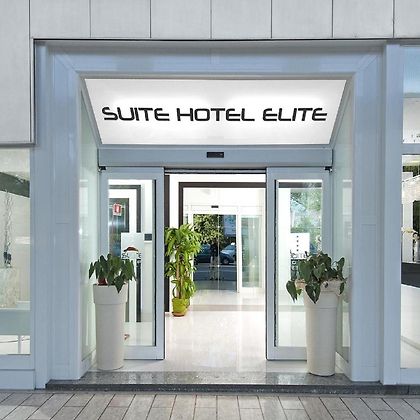
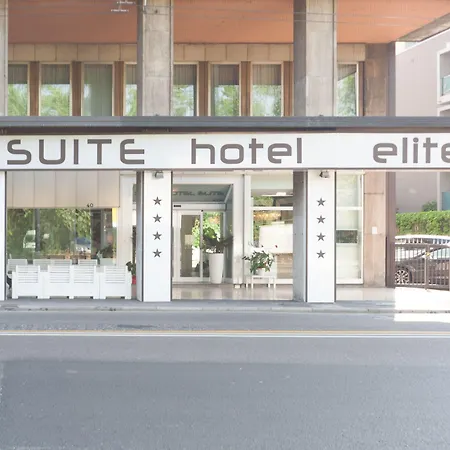
Q: how far is from HOTEL ELITE SUITE to historical centre in bologna on foot?I m coming for the first time and i m a little bit...

A: Well, Google maps shows it as 2.2km or 26 minutes walking (my expeerience with google is that you should add 10 minutes for the walking time - they seem to gallop along!)...
Read 4 Replies
1

A lot o f Vt members wrote about Bologna, the history, the cuisine and more. I was born, I live and work there but I'm not the typical bolognese woman: I’m 43, I have a 23 month's baby, I ride a...
2

Bologna, chief town of the Italian region Emilia Romagna, is located between the two rivers Reno and Savena in the Po Valley (Pianura Padana), backing the Apenine Tosco-Emiliano. The town has a...
3

One of Italy's best kept secrets, if such a thing were possible, Bologna is a treasure overlooked. It has a unique identity, rich in art, music, architecture and history, and boasts Europe's oldest......
4
Bologna - Capital of Emilia-Romagna

Bologna is underrated. The capital of Emilia-Romagna is a wonderful city. It is not filled with big tourist groups like nearby Florence, making it a joy to wander the streets. It has a stunning big......
5

We arrived in Bologna during the rush hour and my first overall impressions were of a madhouse with thousands of people rushing everywhere. By the time we left several days later we realised this is...
Build your own Bologna page
Sponsored Links