Here is all general visitors info for Villa d'Este. I see many people reporting that the fountains were not working - read hours re fountain activation - from 10 a.m. every 2 hours!
From the Villa D’Este website (http://www.villadestetivoli.info/indexe.htm)
Villa D’Este
Piazza Trento, 5
00019 Tivoli, Italia
Call Center – 199.766.166
Number to dial from all of Italy for pre-sales and reservations for: tickets, guided tours, school groups, instructional visits.
Bookings from abroad:
email: villadestetivoli@telekottageplus.com
fax: 0039.0445.357099
telephone: 0039.0445.230310
Visiting Hours:
Opening 8.30 – closed one hour before sunset.
The ticket office closes one hour before the closing of the monument.
The hydraulic organ of the Organ Fountain is active daily, from 10.30am, every two hours.
The Fontana della Civetta functions daily, from 10.00am, every two hours.
The Monument is closed the following days:
All Mondays, January 1st, May 1st, and December 25th. If Monday is a holiday, the monument will remain open and the weekly closure will then be delayed
Written Oct 9, 2009
Photo 1 - in front of the Fountain
Photo 2 - Sitting by 3 reflecting pools that face the fountain
Photo 3 - Upper walkway of fountain behind the water
Photo 4 - Facade with organ enclosure atop the fountain
Photo 5 - Close-up of the organ
Updated Oct 7, 2009
Address: Villa d'Este
Between the Small and the Great Baths you can see the vestibolo. From the ruins scholars supposed to be made by three buidings connected to one another. At the center there was a square courtyard suroounded by a portico. To the west side of the central building there was a tetrastyle temple dedicated to Matidia, emperor Hadrian's mother-in-law.
Written Sep 6, 2009
The Piccole Terme (Small Bath, in Englis) is one of my best building of the Villa. This complex is well preserved and it was built between 121 and 126 AD. The building is surrounded by courts adorned in various ways (exedrae, gardens, etc.). Inside there were large windows which allowed a lot of light inside. The rooms were covered with various types of vaults (barrel, spherical and semi-spherical) which you can see during the visit. In the vestibule you can see on the vault fragments of plasters and mosaic. From there you can reach the nymphaesum (you can see the hydraulic system to heat the water), the apoditherium (dressing room, in English), the calidarium and the frigidarium.
Probably these baths were reserved for women, instead the Great Baths was used by men.
Written Aug 31, 2009
In fron of the Cento Camerelle you can see the building called Tre Esedre (Three exedrae, in English). The Hall is so called for its peculiar plan with semi-circular exdrae open open on three sides. It has got a central room with internal colonnades to create of a dipiest building. This building was probably the main access of the villa and the core of the villa's reception area with rich ornaments and the elegance of the structures. The north side of the building have got many open air rooms and they were probably used for summer banquets, instead the south part were used for state activity.
Updated Aug 31, 2009
Walking in the nice garden of the Pecile you arrive to Cento Camerelle (One hundred Small Rooms, in English). This complex takes its name from the numerous rooms by which it is composed. It was built to create a terrace to support the Poikile which had a difference in height of about 15 meters.
The structure have a series of non-communicating rectangular rooms of identical dimensions (6.1 X 4.7 meters) on four floors. The rooms were the residential quarters of the imperial guard and the villa's servants.
At the foot of the structure you can see a road of stones that leads to the underground of the villa.
Written Aug 31, 2009
The Pecile (Poikile, in English) is the first building you meet. It is an arcaded court based on the design of the famous stoa poikile in Athens. It was a four-sided portico wit sloping roofs. In the centre there is a large pool with a vast garden.
The pecile was used as summer dining room and also as a place where the emperor could relax and have meeting with his entourage. Nowadays you can still see the north side wall (204 meters long) and the central pool with some funny goslings and ducks swimming inside.
Updated Aug 30, 2009
Villa Adriana (Hadrian's Villa, in English) is the biggest Roman villa of the world. It was built by the Roman Emperor Hadrian as a retreat villa from the crowd Rome in the 2ne century.
The villa has got over 30 buildings, covering an area of about 1 square kilometre. Hadrian wanted to reproduce the places he met during its journey along the Roman Empire and it shows echoes of many different architectural orders, mostly Greek and Egyptian.
The complex included palaces, several thermae, theatre, temples, libraries, state rooms and quarters for courtiers, praetorians and slaves.
The ruins you can still seen nowdays give you an idea how wonderful the villa was in the ancient time.
After Hadrian, the villa was used by his various successors. During the decline of the Roman Empire the villa fell into disuse and was partially ruined. In the 16th century Cardinal Ippolito II d'Este had much of the marble and statues in Hadrian's villa removed to decorate his own Villa d'Este.
Since 1999 the villa is an UNESCO World Heritage Site.
At the entrance of the villa there is a big model showing you how it was when was built.
Written Aug 30, 2009
famous for its water system, the architecture of its gardens, the pavilions, the artificial caves and the fountains.
the famed Tivoli water-and-wind garden, a haven for princes and lovers of the humanities, and arguably the most beautiful villa in all of Italy.
SPEND SOME TIME THERE
ENJOY..
Written Oct 26, 2008
Address: TIVOLI
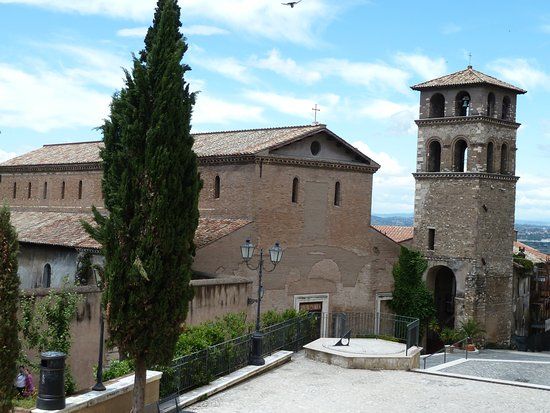
Take an hour or two to walk around town and see for things other than the villas. There are lots of hills, beautiful churches, cobblestone streets, and little alleyways that add a lot of charm to it. In many ways, it's straight out of the olden days and very much worth exploring. Just get a map from the tourist/info booth and trek away!
Written Jun 16, 2008
Sponsored Links
38 Opinions
107 Opinions
63 Opinions
Reviews and photos of Tivoli attractions posted by real travelers and locals. The best tips for Tivoli sightseeing.

Take an hour or two to walk around town and see for things other than the villas. There are lots of hills, beautiful churches, cobblestone streets, and little...
Q: My daughter is to be married in Tivoli on the 17th of September. Would like to rent a horse and carriage to take her from the...

A: Which Tivoli? You could mean the one in Italy, Ireland , UK, Belarus, Australia, or 3 in the USA.
Read 9 Replies
1

Historic hilltop Tivoli, 28 km E. of Rome is a popular day excursion - only 1 hour away by bus. Most visitors come to see the garden of fountains that is Villa d'Este but the town itself should not be...
2

Tivoli is situated along the Aniene river near the Great Waterfall on the western slopes of the Monti Tiburtini. Since ancient times the town has taken advantage both of its climate and of its...
3
Tivoli - UNESCO World Heritage Site

Tivoli, 25 miles east of Rome is renowned both for the Villa d'Este with its marvelous fountains and statuary as well as for the ancient ruins of Hadrian's villa. From the time of the Roman Empire,......
4

Tivoli is renowned for its gardens and they certainly have rightfully earned this praise as I found out. Here is my journey to the gardens of Tivoli...
5

Tivoli is probably the most popular excursion from Rome and should not be missed. It's less than an hour's drive and and what awaits you are the most beautiful gardens and fountains in all of Italy.
Build your own Tivoli page
Sponsored Links