




Piazza della Signoria, Florence

4.5 out of 5 stars4.5 Stars - 115 Reviews

  Entering the Piazza Della Signoria
by riorich55
  • Entering the Piazza Della Signoria
      Entering the Piazza Della Signoria
    by riorich55
  •   Piazza della Signoria
    by riorich55
  • LOGIA @ Piazza della Signora
      LOGIA @ Piazza della Signora
    by Homanded
  • Palazzo Vecchio
      Palazzo Vecchio
    by croisbeauty
  • Snaped from Piazzale Michelangelo
      Snaped from Piazzale Michelangelo
    by croisbeauty
  • detail of the Fountain of Neptune
      detail of the Fountain of Neptune
    by brendareed
  • detail of the execution marker
      detail of the execution marker
    by brendareed
  • Fountain of Neptune in the Piazza della Signoria
      Fountain of Neptune in the Piazza della...
    by brendareed
  •   Piazza della Signoria
    by goodfish
  • goodfish's Profile Photo

    The heart of the matter

    by goodfish Updated Dec 4, 2012 1093 reviews

    3.5 out of 5 starsHelpfulness

    4 more images

    That this piazza has its own website is a pretty good indication of its importance to the Florentine story - although it was never originally intended to be a piazza at all. Way back in the 13th century, Florence was nearly decimated during a conflict between two opposing factions who, depending on which side had the upper hand at any given time, leveled the properties belonging to their respective enemies. The palazzo of one of those factions stood on this site and when it was destroyed, the ruins were left in place to deter any attempt at reclamation - of property or power - by the deposed family.

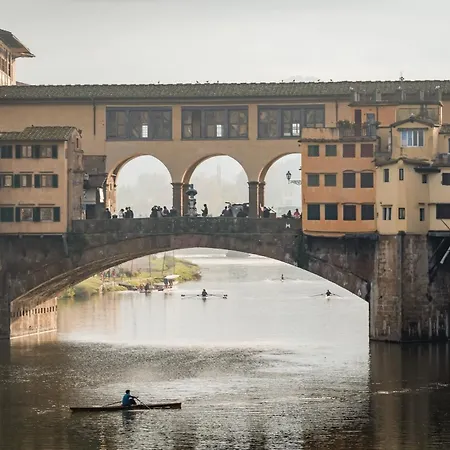
    At the very end of the century the rubble was cleared away and construction began on a fortress-like headquarters, Palazzo della Signoria, for the city’s government. That’s the one with the big bell tower looming over the southeast side of the piazza. The tower was briefly a prison for Savanarola, the “Mad Monk” who staged his “Bonfires of the Vanities” in the square and who was himself executed by fire on the spot marked by a plaque directly in front of the goofy-looking Neptune fountain. Gradually the square was enlarged as more buildings were removed from the perimeter, and the palazzo expanded as well when Cosimo I de’ Medici called it home in the mid 1500’s. He eventually moved residence across the river to more impressive digs in the Pitti Palace, and had a private passageway - the Vasari Corridor - built between the two which crosses the Arno above the shops on Ponte Vecchio. Round about that time the palazzo, previously named for the Signoria, a frequently revolving, 9-member group who headed Florence’s republican government, was renamed Palazzo Vecchio: Old Palace.

    Today, the palazzo is part city hall and part museum, and the square’s relative proximity to the Uffizi, Ponte Vecchio, the Duomo, Piazza Repubblica and, of course, the Pitti museums on the south side of the river make it a busy place. Tourists flock here to snap away at the replica of Michelangeo’s ‘David’ (the original is in the Uffizi) and browse the free collection of sculptures at Loggia dei Lanzi. The square is also ringed with restaurants which, while convenient for people watching, come with a price tag. Best time to visit? Early evening when most of the tourists have trotted off to dinner and the golden-lit palazzo is at its forbidding, Medieval best.

    Related to:
    • Architecture
    • Castles and Palaces
    • Budget Travel
    Was this review helpful?
  • riorich55's Profile Photo

    Everywhere You Look is a Feast for Your Eyes

    by riorich55 Updated Oct 9, 2012 640 reviews

    2.5 out of 5 starsHelpfulness

    Entering the Piazza Della Signoria
    2 more images

    As the title of this tip says, "Everywhere you look is a feast for your eyes". The activity, the statues, the painters, the people, it was probably the best piazza we visit while in Italy.

    It seemed like the majority of groups walking around in Florence were school kids which I always find amusing and a chance for a couple of photo opportunities. It seemed like most groups wore something distinct so that the group leaders could find stragglers a bit easier.

    The mood in Florence compared to Rome seemed more jovial and not as rushed. Maybe it is the smaller size of the city or maybe the fact that there was more an emphasis on art over ruins that lightened the spirits of everyone.

    We thoroughly enjoyed our 1 day in Florence and wished we could have included at least an additional day. We didn't see any fountains to throw some money into so that we would return, but I'm sure on another trip to Europe that we will be back.

    Related to:
    • Romantic Travel and Honeymoons
    • Arts and Culture
    • Photography
    Was this review helpful?
  • brendareed's Profile Photo

    Savonarola’s execution site

    by brendareed Updated Jul 29, 2012 1338 reviews

    4.5 out of 5 starsHelpfulness

    site of the execution of Savonarola
    2 more images

    The Italian Dominican friar, Girolamo Savonarola, stirred up passions and trouble in Florence in the late 1400s. He lived in San Marco and used that as his parish church. He preached against books, immoral art, wigs, make up, and virtually anything else that could be considered secular or nonreligious.

    He was famous for his “Bonfires of the Vanities” in which people burned up their sinful objects. The famous artist Botticelli became a follower of Savonarola and threw many of his works into these fires and from that point on, only did religious works. Lucky for us, his Birth of Venus and Primavera paintings (seen in the Uffizi Gallery) were owned by the Medici and were saved from the burnings.

    Eventually the people tired of his rantings about the last days and destruction of the city. When he declined to participate in a trial by fire, his followers began to wane. Eventually he was excommunicated, tried for heresy and preaching sedition. He was executed by burning on the same spot as his own bonfires were held – in the Piazza della Signoria in front of the town hall.

    The site of his execution is marked by a round plate in the piazza. You can find this plate directly in front of the statue of Neptune. His monk’s cell and belongings can be seen in the San Marco Museum.

    Before we get too far from the Fountain of Neptune, I want to point out a nifty little thing that makes Florence a little more special in my book, especially on those long, hot Italian summer days - free water refills for your water bottles.

    Related to:
    • Historical Travel
    Was this review helpful?
  • brendareed's Profile Photo

    Fountain of Neptune – central meeting point

    by brendareed Updated Jul 29, 2012 1338 reviews

    4.5 out of 5 starsHelpfulness

    Fountain of Neptune in the Piazza della Signoria
    4 more images

    In the Piazza della Signoria, to the left of the Palazzo Vecchio, is a fountain with Neptune as its center piece. Neptune, the Roman god of the sea, has a face similar to Cosimo I de’ Medici. The fountain was meant to symbol Florence’s dominion over the water. It was created by Bartolomeo Ammannati in the mid-1500s for the wedding of one of the Medici family.

    The actual statue of Neptune is a copy with the original in the Bargello Museum. The statue has been the target of vandalism in the past and now has surveillance cameras watching at all times. After it was first erected, it was also used as a place for doing laundry. Nowadays, security of the statue is a high priority.

    If you need to meet people in Florence, this statue makes a good meeting spot – it is central and easy to find.

    Two more things near the statue – there is a free water refills behind the statue; simply put your bottle or glass into the machine and you get fresh water for free. Also, in front of the statue is the round marker that shows where the monk Savonarola was executed for heresy and sedition in the late 1400s.

    Having read about the history of Florence and the craziness that went on with the monk Savonarola, I was curious to see the location of his “Bonfires of the Vanities”, which are marked by a disc in the Piazza della Signoria. From the Fountain of Neptune, walk away from the fountain but stay in front of it until you find the large circular golden disc. This marks the location of Savonarola’s execution.

    Related to:
    • Family Travel
    • Arts and Culture
    • Museum Visits
    Was this review helpful?
  • Kuznetsov_Sergey's Profile Photo

    Loggia dei Lanzi

    by Kuznetsov_Sergey Written Jun 17, 2012 4541 reviews

    3.5 out of 5 starsHelpfulness

    Loggia dei Lanzi
    2 more images

    The Loggia dei Lanzi, also called the Loggia della Signoria, is a building on a corner of the Piazza della Signoria, adjoining the Uffizi Gallery.
    It consists of wide arches open to the street, three bays wide and one bay deep. The arches rest on clustered pilasters with Corinthian capitals. The wide arches appealed so much to the Florentines, that Michelangelo even proposed that they should be continued all around the Piazza della Signoria.

    You can watch my 2 min 42 sec Video Florence part 2 out of my Youtube channel or here on VT.

    Related to:
    • Arts and Culture
    • Historical Travel
    • Architecture
    Was this review helpful?
  • Kuznetsov_Sergey's Profile Photo

    Piazza della Signoria

    by Kuznetsov_Sergey Updated Jun 17, 2012 4541 reviews

    3.5 out of 5 starsHelpfulness

    Piazza della Signoria
    4 more images

    The Piazza della Signoria has been the center of political life in Florence since the 14th century with the prominent Palazzo Vecchio overlooking the square. It was the scene of great triumphs, such as the return of the Medici in 1530 as well as the Bonfire of the Vanities instigated by Savonarola, who was then himself burned at the stake here in 1498 after he was denounced by the Inquisition as a heretic. A marble circle inscription on the piazza shows the location where he was burned.

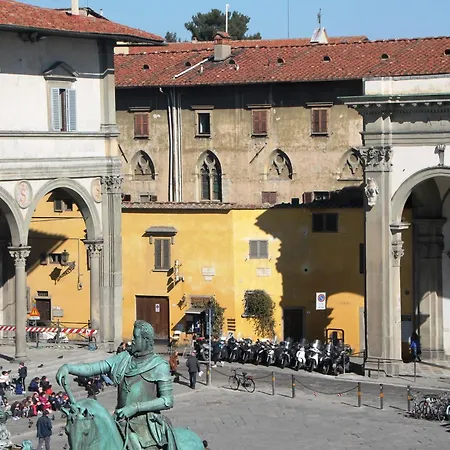
    The sculptures in Piazza della Signoria bristle with political connotations, many of which are fiercely contradictory. The David (the original is in the Galleria dell'Accademia) by Michelangelo was placed outside the Palazzo Vecchio as a symbol of the Republic's defiance of the tyrannical Medici. Bandinelli's Hercules and Cacus (1534) to the right of the David was appropriated by the Medici to show their physical power after their return from exile. The Nettuno (1575) by Ammannati celebrates the Medici's maritime ambitions and Giambologna's equestrian statue of Duke Cosimo I (1595) is an elegant portrait of the man who brought all of Tuscany under Medici military rule.

    Related to:
    • Architecture
    • Historical Travel
    • Arts and Culture
    Was this review helpful?
  • Jim_Eliason's Profile Photo

    Piazza Della Signoria

    by Jim_Eliason Written Nov 12, 2011 4471 reviews
    Piazza Della Signoria
    4 more images

    This was and still is the main square of Florence sitting in front of the Palazzo Vecchio the original governmental palace. The greatest works of sculpture produced in the republic once stood in this square including Micheangelo's David. Today those sculptures are distributed around the cities museums and only copies are in the piazza.

    Related to:
    • Architecture
    • Arts and Culture
    • Historical Travel
    Was this review helpful?
  • Jefie's Profile Photo

    Oh my goodness, it's David!!

    by Jefie Updated Jun 24, 2010 1828 reviews

    4.5 out of 5 starsHelpfulness

    3 more images

    If Piazza San Marco can be described as the heart of Venice, then surely once can say that Piazza della Signoria is the heart of Florence. There is something magical about suddenly finding yourself surrounded by wonderful works of art, and for some reason you just know you're in Florence once you reach the piazza. Piazza della Signoria is dominated by the Palazzo Vecchio, Florence's city hall, and it's often described as an open-air art museum, especially thanks to all the statues found at the Loggia dei Lanzi. Initially built in 1382 to hold public ceremonies, the loggia is now home to many famous statues, including Benvenuto Cellini's "Perseus with the Head of Medusa" and Giambologna's "The Rape of the Sabine Women". I also thought the piazza's "Fountain of Neptune" was quite remarkable, especially considering it was originally a wedding gift (it was commissioned in 1565 in honour of Francesco I de Medici's wedding with Johanna of Austria). But of course, the most famous statue of all is that of Michelangelo's David, located near the main entrance to the Palazzo Vecchio. Although it's the statue's original location, the David that now stands on the Piazza della Signoria is a copy of the original one which was moved to the Accademia in 1873 to protect it from damage. Of course, that doesn't stop people from admiring and taking numerous pictures of Michelangelo's masterpiece.

    By the way, there are several restaurants located around the piazza (including an Irish pub!), and most have nice outdoor patios. However, we took a quick look around and decided we'd probably be better off trying to find a restaurant in a less conspicuous location...

    Related to:
    • Castles and Palaces
    • Arts and Culture
    • Photography
    Was this review helpful?
  • clareabee's Profile Photo

    Main square in heart of Florence

    by clareabee Written Dec 14, 2009 132 reviews

    2.5 out of 5 starsHelpfulness

    I could sit here for hours watching the world go by....this is a fantastic place to people watch. There are some lovely restaurants here you can while away an hour for lunch (they don't rush here so get used to the slow pace!) or a pleasant evening - particularly nice in the summer!

    I loved it here - although it was busy it was never claustraphobic and it was nice to see everybody enjoying the place as much as me!

    Was this review helpful?
  • aukahkay's Profile Photo

    Piazza della Signoria

    by aukahkay Written Nov 5, 2009 883 reviews

    2.5 out of 5 starsHelpfulness

    Piazza della Signoria
    3 more images

    For many centuries, the Piazza della Signoria was at the heart of the city's historical and political events. It is dominated by the 13th century Palazzo Vecchio. The Loggia dei Lanzi holds many sculptures including the Rape of the Sabine and Hecules and the Centaur and Perseus.

    Related to:
    • Architecture
    • Museum Visits
    • Castles and Palaces
    Was this review helpful?

Comments

Top 3 Hotels in Florence

Hotel David  Florence

 7 Reviews and 1151 Opinions  We have stayed with this establishment many times. Initially, it was because they have free parking... 

 Hotels in Florence

Show Prices

Rapallo Hotel  Florence

 4 Reviews and 178 Opinions  I spent 4 days in hotel Rapallo in February, a very cheap budget hotel I found on the Internet. I... 

 Hotels in Florence

Show Prices

Grand Hotel Florence  Florence

 2 Reviews and 366 Opinions  We didn't have to pay because we were using Frequent Travelor points. This was a 5-star hotel, and... 

 Hotels in Florence

Show Prices
Hotels Near Piazza della Signoria
4.5 out of 5 stars
49 Opinions
0 miles away
Show Prices
4.5 out of 5 stars
35 Opinions
0 miles away
Show Prices
4.5 out of 5 stars
160 Opinions
0 miles away
Show Prices