


The Cathedral of Pisa's baptistery is the largest baptistery in all of Italy. Built between 1152 and 1363, it's the second oldest structure on the Piazza dei Miracoli after the duomo. The baptistery is 55 m high, with a circumference of over 100 m. Like the cathedral it's made almost entirely of marble, and its exterior combines two architectural styles, Romanesque and Gothic, into a surprisingly homogeneous design. There isn't that much to see inside the baptistery - the font designed by Guido Bigarelli isn't especially remarkable, but the pulpit carved by Nicola Pisaro (the father of Giovanni Pisaro who carved the cathedral's pulpit) is very nice - so much so that many art historians date the beginning of the Italian Renaissance back to 1260, the year Pisaro completed the pulpit. Another really interesting feature of the baptistery is its accoustics. Every 30 minutes, one of the staff members gives a quick demonstration of how one single note can last for several seconds as it travels through the dome, allowing a person to sing a chord all by herself. The effect is kind of eerie and it's truly worth sticking around to hear it.
Updated Jul 7, 2010
Phone: 39 050 83 50 11/12
Website: http://www.opapisa.it/en/home.html
Inspired by the architecture of the Dome of the Rock in Jerusalem, the interior of the Baptistery (il Battistero di San Giovanni) consists of a circular double arcade surrounding the central baptismal area. Black marble is used to add stripes to the white marble of the interior, while eight Corinthian columns alternate with four pillars to support the upper gallery which was reserved for women. The inside dome retains the original design by Diotisalvi in the shape of a polygonal pyramid and provides the space with exceptional acoustics. Although still quite impressive, the interior of the Baptistry may disappoint the visitor by the lack of ornamentation that other baptistries in Italy tend to have (e.g., Florence or Ravenna); only the baptismal font and the pulpit are richly decorated. The baptismal font in the centre was the work of Guido da Como in 1246, while the carved pulpit was sculpted by Nicola Pisano in 1260. The latter contains a naked Herculean sculpture, the first recorded use of a nude figure in Christian art and is considered a precursor to Renaissance art which synthesised Christian and Classical imagery.
Updated May 13, 2010
Address: Piazza del Duomo
Dedicated to Saint John the Baptist, il Battistero di San Giovanni is the largest baptistry in Italy. Its construction began in 1152 AD by the architect known as Diotisalvi, who planned a Romanesque round structure, with eastern influences, topped by a pyramidal dome. The exterior architecture is said to have been inspired by the Church of the Holy Sepulchre while the interior by the Dome of the Rock, both in Jerusalem, at a time when Pisa had participated in the Crusades. Diotisalvi died before the work was completed, so it was taken over first by Nicola Pisani and then by his son, Giovanni Pisani. The latter two shifted the design from Romanesque to Gothic and built a round exterior dome which gave the baptistry this curious bulbous shape and its mix of styles. To a much lesser extent than the tower, the Baptistry is slightly leaning.
Updated May 11, 2010
Address: Piazza del Duomo
Diotisalvi began work in the Baptistry in 1153, but it was interrupted numerous times. Later, Nicola and Giovanni Pisano worked on the upper parts, including busts of the prophets and saints. The evolution of architectural styles during this period explains why the lower parts are mainly Romanesque, while the upper ones are more Gothic.
Written Jan 6, 2010
Website: http://www.pisa-tourism.com/web/en/pisa/da_non_perdere.html
The Baptistery completes the trio of buildings that make up the cathedral complex. It is situated immediately opposite the west facade of the cathedral and although not as spectacular as the latter repays closer examination. Il Battistero di San Giovanni or Baptistery of Saint John, to give it its full name, was founded in 1152 to be a worthy addition to the cathedral and a further sign of the city’s wealth and magnificence. Its construction was partly funded by the citizens themselves; in 1163 it was ordered that on the first day of the month every family of Pisa should pay one denaro to continue the building of the monument.
At 107.24 metres in circumference, and slightly taller than the Leaning Tower, it is the largest Baptistery in Italy, so in scale it certainly delivers on the city’s ambitions. It is built of the same white marble as the cathedral, edged with grey, and with it creates a harmonious scene. The lower part is 12th century Romanesque (with round arches) and the upper parts are predominantly 13th century Gothic (with pointed arches – photo 2). Its dome is covered in red tiles on the west side and in lead slabs on the east side (see photo 3).
Inside it is rather sombre and plain, but there is some attractive stained glass and a magnificent pulpit carved in 1255-60 by Nicola Pisano, father of the Giovanni who was to carve the one in the cathedral. Its high reliefs (photo 4), which depict scenes from the life of Christ, are strongly influenced by Roman art such as the sarcophagi which can be seen today in the Camposanto.
The baptistery is renowned for its perfect acoustics. You can whisper on one side of the corridor, and a person on the opposite side can hear you perfectly. This is apparently demonstrated every 30 minutes by the staff on duty, but unfortunately we hadn’t realised this until after our return from Pisa and so missed hearing this phenomenon.
According to a legend told amongst the city’s students, the Baptistery is a place to be feared. If as an undergraduate you walk around the Baptistery, you will never get your degree. I also read of a similar legend relating to ascending the tower; clearly the students here are a superstitious lot.
See my Campo dei Miracoli tip for some information about tickets
Written Sep 16, 2009
Website: http://www.opapisa.it/en/miracles-square/baptistery/the-building.html
One of the biggest baptistries in Italy, Pisa's Baptistry offers tourists a more tangible (read: in the form of bricks and mortar) lessons in Pisan architecture. Began in 1152, it was first planned along the lines of Romanesque but scarcity of funds prolonged its construction for 100 years, which by that time Gothic was more in vogue. It's interesting to see the largely and more ornate gothic Baptistry juxtaposed with the more streamlined romanesque Duomo.
In addition to the crash architectural lesson, visitors would marvel at the size of the baptistry (say, vs. that in Florence) and the acoustics. At certain times of the day, a lady sings a few tunes to deomonstrate the special acoustic qualities of this medieval wonder. On a much smaller scale, the centerpiece is clearly the ornate marble pulpit by Nicola Pisano, father of Giovanni, the man behind the magnificent pulpit at the adjacent Duomo. Another BIG feature is the octagonla marble baptismal font by Guido da Como - big in the sense that it could qualify as a decent size swimming pool - and that is because baptism here was by immersion.
Updated Aug 11, 2009
The Baptistry of St. John (Italian: Battistero di San Giovanni) is a religious building in Pisa, Italy. It started construction in 1152, in replacement of an older baptistry, and completed in 1363. It's the second building, in the chronological order, in the Piazza dei Miracoli, near the Cathedral and the famous leaning Tower.
Written Sep 3, 2008
The intricacy of the exterior and interior work for this monument is great. Take a little time and look around to appreciate all of the little detail that went into the building. For being built in 1153, it looks great, but then it was rebuilt in 1600's so still not so new, except for European standards. the silver alter inside is real neat to see.
It is in the Piazza del Duomo and called Piazza dei Miracoli, there are four structures dedicated to the faith. It was begun in 1153 by artist Deotisalvi and the Romanesque facade was the vogue in that time. It was dedicated to St. John the Baptist and is the largest Baptistery in Italy, which says a lot. The inside is huge but not of great splendor, but still a super place to have quite solitude while thinking of how you got here. The pulpit was built in 1253-60
Updated Aug 24, 2008
Website: http://en.wikipedia.org/wiki/Campo_dei_Miracoli
In this circular building you can see the Pulpit, the Baptismal Font and a statue of St. John the Baptist in the middle.
Go upstairs to admire it all from above. There are also very nice views of the Cathedral and the top of the leaning Tower.
Written Jul 27, 2008
The Baptistry is the forgotten member of the Pisa three. Often hidden in the shadows of the Cathedral and with all the attention the Tower draws the Baptistry doesn't get quite the recognition it deserves. In many ways its similar to the Baptistry in Florence, granted it doesn't have a golden door, but its still beautiful in its own way.
Written Mar 19, 2008
Sponsored Links
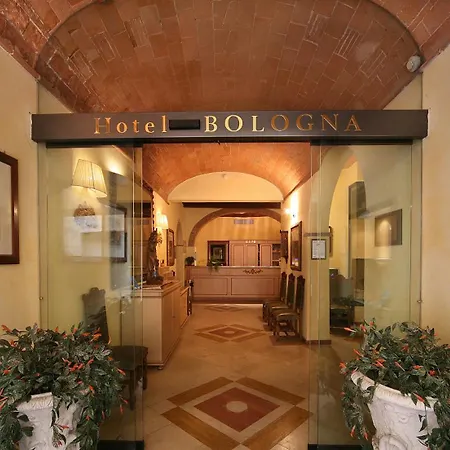
Bologna Hotel Pisa Pisa
6 Reviews and 1031 Opinions This is a gentle warning to anyone using a vehicle on the road at the front of the hotel, who is not...
Royal Victoria Hotel Pisa
5 Reviews and 500 Opinions This hotel was recommended by VT member sue_stone, and it didn’t disappoint. It’s in an excellent...
Hotel San Ranieri Pisa
2 Reviews and 899 Opinions This is an ultra modern hotel set just outside the town of Pisa, very close to the hospital - which...
The Baptistery tips and photos posted by real travelers and Pisa locals.
Write a Review
The Baptistry is the forgotten member of the Pisa three. Often hidden in the shadows of the Cathedral and with all the attention the Tower draws the Baptistry...
70 members live in Pisa

Q: I have been to the station in Pisa but I never noticed if there was lockers or baggage claim. Does anyone know if this is...

A: Hi Randy, according to Trenitalia site Pisa Centrale has a "deposito bagagli" that is a baggage deposit....
Read 4 Replies
1
More then just the leaning tower

In September 2004 (04-09 till 12/09), I had planned a short Italy trip. This trip started in Rome, then with the train to Firenze, with a journey to Siena, and the trip ended in Pisa. I had an...
2
PISA is a lot more than just the leaning tower

I've got some interesting experiences in Pisa. I'd love to share with you the 60 tips I've written, the 110 photos uploaded, and 0 travelogues I've created.
3

Pisa was the last place I've visited during my mini Toscana tour. I had ten lovely days, starting at Ferrara (which is not part of Toscana), moving from place to place and spending no more then two......
4

Why are there so many people saying that Pisa is not worth the visit. Do they only visit the leaning tower? They are so wrong, there's so much more to see than the famous tower. Take your time to...
5

I have been lucky enough to visit Pisa 5 times so far since 1999, and have no doubt I will be back again one day! Pisa is like a mini version of Florence, with its amazing architecture, pretty river,...
Build your own Pisa page
Sponsored Links