
Fonte di Docciola was built in 1254 by Maestro Stefano, as it was written on the walls. This little architectual gem is a bit hidden today, at the bottom of a steep hill. In the Middle Ages the water from this font served the mills and the manufactures of the wool in the Era valley. The font isn't far from Porta di Docciola.
Updated Oct 17, 2011
The Renaissance Castello Medici is monumental fortress built for military purpose by Lorenzo de Medici the Magnificent. At the same time it served as political prison for all oponents to the Medici.The fortress streches from east to west with two long massive walls uniting trapezodial Rocca Vecchia, from 1342, and Rocca Nuova from 1472. Castello de Medici is also well known patrimonial of Italian Risorgimento.
Updated Oct 17, 2011
San Michele is 13th century Romanesque styled church bearing the coat of arms of the Farnese family at its facade. In the lunette above the main entrance is copy of Madonna and child, the 14th century sculpture which original is preserving in the Museum of Sacred Art. There is notable marble tabarnacle in the presbytery, work of Giovanni della Robbia.
Updated Oct 17, 2011
San Giusto is beautifully located church dominating the small hill. It was built in 1627 under the design of Florentine architect Coccapani. Each day of the year, exactly on midday, a ray of sunlight shines through a hole and and falls on the marble meridian line marked out on the floor of the church.
Updated Oct 17, 2011
The cathedral, dedicated to the Assumption Marry, was reconstructed in 1120 on a site of am older church. It has Romanesque styled facade with the marble intarsia framework of the main door added in the 13th century, attributed to Nicolo Pisani. The interiors is in the Latin cross plan and a nave flanked by two aisles. There are six altars inside the cathedral, framed by a sculptured frieze in a Montecatini stone date from the 16th century.
The bell tower is separated from the cathedral and was built by the end of the 15th century after the old bell tower collapsed. Most probably it was designed by Sansovino.
Updated Oct 17, 2011
Address: Piazza del Duomo
I was quite taken by the little explanatory pamphlets with which the various Volterran churches greeted visitors. Each says, "Welcome, pilgrim and tourist"and I had the notion that they really meant it -- and not just because we were willing to drop .50 in the collection box. The stand-alone octagonal baptistery must have been a standard design choice, as you can see similar structures in at least Parma and Ravenna (which even has an octagonal church dating to 548); the facade and portal of this particular Baptistery of San Giovanni were likely built in 1278 although records suggest a baptismal function on the site as early as 989. In the large central font -- the present version added in 1759, though an earlier version from 1502 remains in a side niche -- adults would have been immersed within view of the main altar. The large painting by Niccolo Cercignani (dated 1591) was moved to the Baptistery in 1764 after the Church of St. Marco, where it was originally installed, was destroyed. (The upper part of the painting was seriously damaged during World War II.)
Written Nov 15, 2010
Address: Piazza Duomo
Nearly every guide and website on Volterra features a photograph of this famous Etruscan gate, built in the 4th century BC. The three heads, or what's left of them, are of Zeus and his sons (although on one site, they were named as Juno, and Minerva, which sure don't sound like sons to me!), and they were added about three hundred years later.
Don't miss the little plaque which recounts the story that on June 30, 1944, Volterrans rallied to convince the retreating Germans not to blow up this ancient gateway -- by completely filling it with the large stones paving the road which leads from it into the central part of the walled city. It must have been quite an effort because, as the photo shows, this is one BIG gate.
Written Sep 10, 2010
Sue Stone's top-rated Volterra page gives a good description of the remains of the Roman theater, located just outside the Porta Fiorentina. I never saw anyone actually enter the site, but there are numerous places where you can get an excellent view of the ranks of seats, the remaining pillars of the theater (both of which were constructed in the 1st century), and even the elaborate baths (a later 4th century addition) which were a part of the complex. As you can see from the photo, it looks pretty glamorous in the twilight!
Unfortunately, we just missed the Roman Theater Festival, which was due to take place from July 1-17, 2010. If you're likely to be in Volterra around that time next year, be sure to check out the performance schedule -- and really imagine that you're a Roman.
Written Sep 6, 2010
Address: Viale Francesco Ferrucci, Volterra
The Ecomuseo dell'Alabastro was an unexpected treat. You enter from the courtyard of the Palazzo Minucci-Solaini (home of the Pinacoteca Civico), and pay an additional fee of 3 euros. The space has been beautifully remodeled -- it was once part of the city wall -- so as to best display the art within. Now, prepare to be amazed. I'd seen some pretty fabulous alabaster in my perusals of several shops and artisans in Volterra, but this museum really took my breath away. It starts by giving you a short course on the substance itself, which can be divided into these four main categories:
Scaglione: a translucent alabaster
Pietra a marmo: a white, opaque alabaster that looks a bit like white marble
Bardiglio: an alabaster characterized by the presence of dark veins, whose color varies based on the type of impurities present in the stone
Agata or Agate: an alabaster whose color ranges between red and brown due to the presence of iron and magnesium oxides
Mastered that? Now take a look at the reconstructed alabaaster workshop so you have an idea of how the mineral would be carved. Then you're ready to see what can be done by the experts. A number of the artisans in town have examples of their work on display, for example, Oasi's replica of the Leaning Tower of Pisa. Personally, I loved the classical sculptures -- the pictured one is by alab'Arte.
There is also a small gift shop with prints and books. An elevator provides access for the mobility-challenged to the museum's four levels.
Updated Aug 15, 2010
Address: Via dei Sarti, 1, Volterra
Phone: 800 223300
Website: http://www.sistemamuseo.it/museoid.php?uid=166
One might surmise that the "civic museum" would contain a lot of material about the city itself. Perhaps the fifteenth century structure which houses the museum, the Palazzo Minucci-Solaini, constitutes a testament to the city; it was certainly worthy of both time and admiration. But the collection it houses is almost exclusively religious art, chiefly paintings and wood carvings as well as some frescoes and polychrome, most of which was rescued from various local churches which are no longer operational. How fortunate that someone thought to move all these wonderful pieces from their former homes, so that visitors can enjoy them today!
There are also medals (especially from the Medici era), ceramics, and coins. But it was the art which drew me. I didn't get to visit the Museum of Sacred Art but I can't imagine it had a better collection.
Opening hours: open every day (excl. 1/1 and 12/25)
Mar 16-Nov 1 9am-7pm
Nov 2-Mar1 8.30am-1.45pm
Updated Aug 15, 2010
Address: Via dei Sarti, 3, 56048 Volterra
Phone: 0588 87580
Sponsored Links
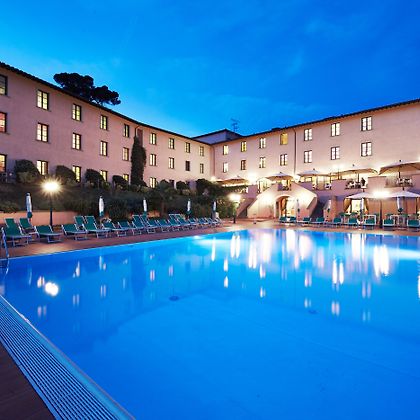
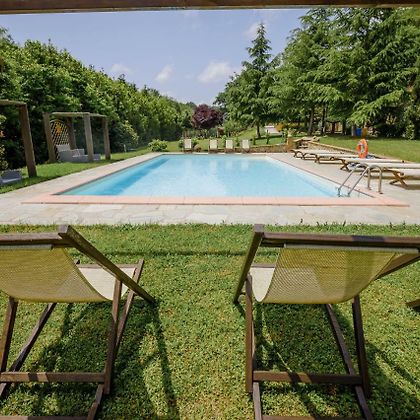
1 Review and 47 Opinions A 3 star situated in a 16th century mansion, with a lovely swimingpool, overlooking wonderful...
1 Review and 46 Opinions Right in the heart of Volterra, in the main street full of shops, restaurants bars and tourists....
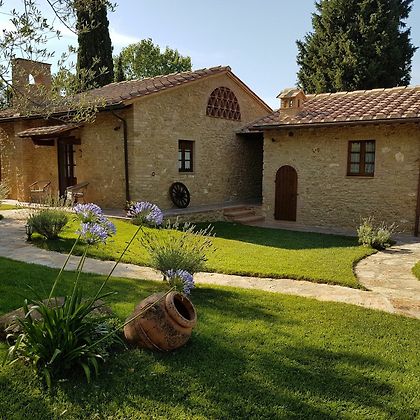
1 Review and 50 Opinions This agrotourism came as such a lovely surprise. We had just left the beauty of Elba and our...
Reviews and photos of Volterra attractions posted by real travelers and locals. The best tips for Volterra sightseeing.

One might surmise that the "civic museum" would contain a lot of material about the city itself. Perhaps the fifteenth century structure which houses the...
Q: Hi everyone, we're 5 youngsters between 18 and 20 years old and we're planning to do a roadtrip across Italy in August. Some of...

A: There are no buses from Volterra to Lucca. You could take the bus back into Florence and then take the train to Lucca, or you can take a bus to Volterra Saline or...
Read 3 Replies
1

Somehow, I managed not to go to Italy during my first five decades of life. I was saving it as a special place. I suppose I had a whole lot of half-baked ideas about what I'd discover and experience...
2

I dunno how to translate the croatian expression "bogu iza nogu",we use it in case the destination is not easy to be reached and Volterra is one of those destinations. Perhaps it is why some tourists...
3

Volterra is perched high on a sheer, rocky plateau, proudly overlooking the lovely Tuscan landscape below. It is an ancient centre, famous for its Etruscan and Roman past, and filled with museums...
4

Welcome to the beautiful town of Volterra. It is located between the rivers Bra and Cecina, and is surrounded by strong walls. The district is rich in alabaster, the working of which was an important...
5

It was the museum. Touted as one of the finest Etruscan places of memorabilia I had pencilled it in on my itinerary. The biggest frustration initially was just getting there. I actually gave up on my...
Build your own Volterra page
Sponsored Links