






















































































it is monumental and a great cultural tradition even with controversies in our modern world, this is Spain,and at Madrid you see the best of it. The biggest show is for the feast of San Isidro, Madrid patron saint in May each year.
It has served as concert venues, and tennis matches for the Davis Cup team etc. an icon in Madrid and a must see
it was inaugurated on June 17, 1931. It has a seating capacity of 25,000 and is regarded as the home of bullfighting in Spain. YES!
it has a wonderful bulls or museo taurino in the back,great this is the city show on it
http://www.madrid.org/cs/Satellite?c=CM_InfPractica_FA&cid=1142313245927&idConsejeria=1109266187218&idListConsj=1109265444710&idOrganismo=1142286457832&language=es&pagename=ComunidadMadrid%2FEstructura&sm=1109266100977
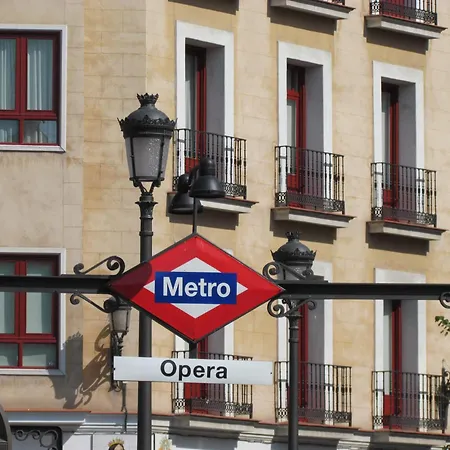
and I used to lived two metro stops from it, for four years !love it, and each time in the city stops by here lol!!!
Update, the latest is the city approve to have the roof covered so very soon you will have the arena with a roof ,which will make it more profitable and hold concerts etc no matter the weather. It will have 110 meters in diameter and light aluminum build in France actually Strasbourg,and will arrive to Madrid by trailers to assembled the biggest metallic structure dismantled in the world !!!
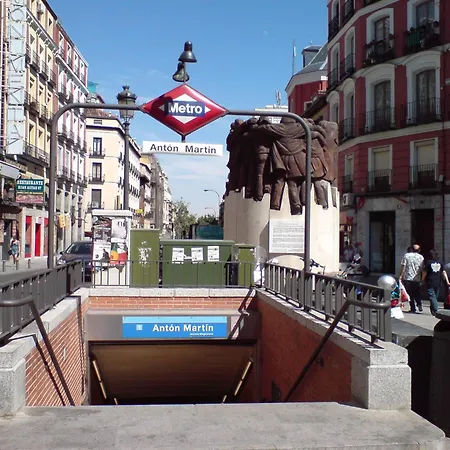
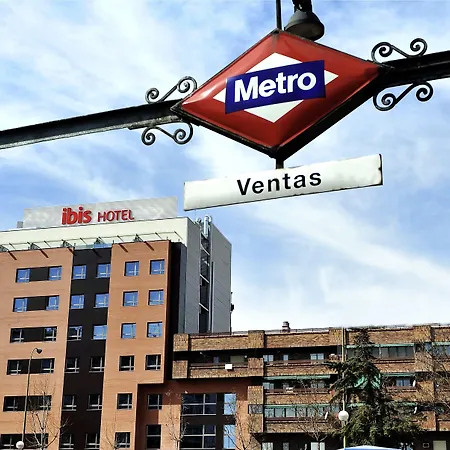
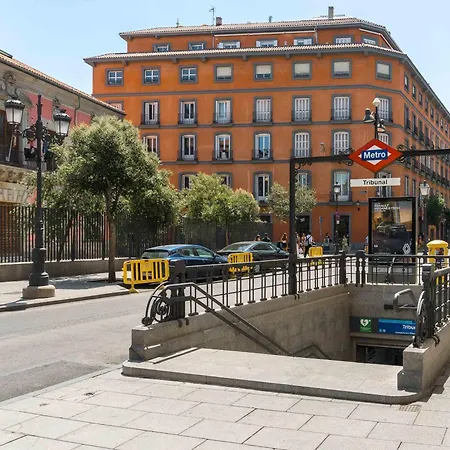
It was not bullfighting season and to be honest I would not want to see a bullfight even if it was, but we did go to look at the bullfighting ring as I had heard there were some interesting statues there. There were three bull fighter statues and a wall sculpture of bulls being led to the ring. The bull fighting arena was a beautiful building with lovely tiles. It was possible to go inside the arena on a tour but we did not do this. There was also a bullfighting museum up the back. Metro: Ventas. Interesting even if you are not into bull fighting.
Personally I am not a fan of bullfighting and to be honest I am completely against it. This, however is a Spanish Tradition and for those who wish to see it, it is also available in Madrid. Check with your hotel receptionist and you will get endless leaflets with information and details on how to see one of these shows.
Most tourists will never see a Corrida de Rejones. This is a horse mounted bullfight by a Rejoneador.
What is very special is the schooling or dressage of the horses, often from Andalusia, to approach in a gallop the attacking bull and avoid his horns. The rider has to demonstrate all his skill in controlling his horse and the bull. It’s a dangerous vaulting and pirouetting imposing a perfect coordination between rider and horse. These horses wear no caparison. All the art of rider and horse is in sidestepping.
The Rejoneo has like classic bullfighting three stages. First a stab of a long lance, then harpoon pointed sticks and finally killing with a sword shaped into a lance.
The Rejoneador uses at least 4 horses, perfectly schooled, one for each stage.
This makes Rejones much more expensive than bullfighting on foot. The number of Rejoneadors is small in comparison with the number of Matadors so that there are few Corridas de Rejones to be seen at Las Ventas or elsewhere.
During the period of the Feria di San Isidro, a religious feast on May 15th, there is a most important bullfighting festival. This year from 10/05 - 02/06/2011. Each day there are corridas but there are only 3 "rejon" on 21/05 with the very famous Hermoso de Mendoza, on 28/05 and 5/06. Las Ventas is full booked.
For a good bullfight you need a good matador and a "good" bull. The Spaniards say Toro Bravo, i.e. a brave bull. This year there were a number of critics in the Spanish press about the physical fitness and bravery of the bulls. Many were considered as "invalidos" and there were protests from the public. It seems there are problems in the ganaderias with breeding good fighting bulls. They are often very heavy, 550 kg and more, but on weak legs.
This year the number of corridas in Spain seems to be reduced by 20%, not because of the "antitaurinas" movements, but because the economical crisis has reduced the budgets of all the smaller towns who use to organize corridas at the occasion of the patron saint festivities. For towns with less than 10.000 inhabitants budgets of about 50.000 € became too heavy. (info from "El Pais").
WARNING: Bullfighting is an old tradition of Spain. Other countries have other traditions, sometimes not less cruel than bullfighting.
Tourists, who love animals, should, in my opinion, not go to a corrida. The bull is always killed after 20 minutes of fight and suffering; there is blood everywhere.
During the period of the Feria di San Isidro, a religious feast on May 15th, there is a most important bullfighting festival. This year from 10/05 - 02/06/2011. Eah day there are corridas.
The two major Plazas de Toros in Spain are Las Ventas in Madrid and La Maestranza in Sevilla. Even if you don't like bullfighting Las Ventas is an architectural monument to be visited.
That's what I did on a sunny morning of May. This is the period of the Feria di San Isidro, a mix of a religious feast on May 15th and a most important bullfighting festival.
This year from 10/05 - 02/06/2011. Eah day there are corridas.
Las Ventas is full booked during these 3 weeks but I could follow some corridas on the Spanish television. I observed that King Juan Carlos I assisted to some of them.
The budget for a corrida afternoon (two hours with 3 toreros and their teams, 6 bulls) approaches 180.000 € from what I read in the Spanish press.
The Spanish Television International (TVE Internacional) has a program about bullfighting called "Tendido Cero". Only for aficionados!
I wrote my mother that Saturday, July 18, 1964 was a National Holiday -- of Spain's independence and nothing "marches". So. We went on a city tour and to the Prado and then went to the hotel and had a nap. My letter continued...
At 5:30 we aroused and packed up again and went to a bullfight. Although I had said I wasn't interested in doing that, it was a holiday and nothing else was open. My sister fed niece dinner there. My niece really liked the bullfight, although she somewhat mistook the bull - pointing and saying "See kitty". She was a great attraction at the bullfight (admiring attention) and has been very good.
My sister had previously been to a bullfight in Mexico with her husband. My mother's comment was that she didn't think I was going to go to a bullfight but actually I went to two of them in Spain - this one in Madrid, and one in Valencia with my husband. I thought it was interesting. I had read about it beforehand so I know what to expect and blood doesn't particularly squick me out.
I don't know what we paid for our tickets, but today (2009) the cheapest tickets in the sun would be 8.00-18.00 €
A "toreador" does not exist in Spain.
The term was used for the famous opera "Carmen" from Bizet.
"Toreador, en garde, Toreador, Toreador!
Et songe bien, oui, songe en combattant
Qu'un oeil noir te regarde,
Et que l'amour t'attend,
Toreador, L'amour t'attend!"
The correct word is Torero or Matador or Espada.
When visiting Las Ventas from the outside I could enter a courtyard where Picadores were training with their heavy horses.
With their lances they stab the muscles of the bull's neck. The public does not like a Picador who is lancing too much because the bull will loose its strength. Picadores are often whistled at.
Till 1928 the horses were not protected as now with a caparison. But even now horse and picador are sometimes lift up and turned over by the charge of the half ton bull!
There are broken ribs or legs when the picador falls under his horse.
(Continued from previous)
“One of the matadors waved his cape at the bull and the bull kind of trotted over to him. It would be several minutes before the tone changed. I was busy looking around and taking pictures when I looked at the bull and suddenly realized that he had blood by his shoulder blades – not a lot but some. A man on a horse (which was covered in some type of armor) had pierced the bull with a knife/sword. The matadors stuck knives that were hidden in their capes into the bull. And then matadors took 2 large knives and plunged them into the bull. I think they did this 2 or 3 times. It seemed to go on forever. By now I was crying and ready to throw up. The bull was making some awful noises and his tongue was hanging out of his mouth. It was the most horrible and cruel thing I have ever witnessed. This was no sport – they taunted and tormented a helpless animal. I was just devastated as the poor bull was down on 2 legs and a cart was brought in – presumably to take away the dead bull. I didn’t stay to see what happened next. The season for bullfighting is several months long and 6-8 bulls are killed each weekly bullfight. I just can’t see how this is allowed to go on."
Sponsored Links
Hotel Atlantico Madrid
7 Reviews and 1372 Opinions With most four-star hotels in Madrid (and throughout Western Europe) charging US$400 or more, the...
Westin Palace Madrid
22 Reviews and 1213 Opinions A beautiful ,historical grand hotel of Madrid. I have been here on business trips and seminars, but...
Hotel Villa Magna Madrid Madrid
4 Reviews and 106 Opinions This was by far one of the best hotels I've ever stayed in, not only because of the great rooms, but...
Sponsored Links
Comments