The "Treasury" was built some time between 100 BC to 200 AD. It is 40m high and is adorned by a 3.5m high urn which people once believed to have hidden the wealth of the Nabateans - hence the name,... more
Continuing from the Royal Tombs through the Collanaded Street to Qasr al-Bint al-Faroun (Castle of the Pharoah's Daughter, the only free standing structure in Petra) and then a further one half hour... more
What?
Almost a mile long, the Siq is the main tourist route into Petra. The winding tunnel is actually not a tunnel at all, but a fissure in the rock, widened by tectonic plate movement. Widening and... more
I found the High Place of Sacrifice to be an interesting and fun place. Not only does it have the alters and stuff but it has great views as well.
The high place has a large pool where rain water was... more
The first of the so called Royal Tombs is the Urn Tomb. This tomb is built high on the mountain side, and requires climbing up a number of flights of stairs. It was suggested that this is the tomb of... more
The Theatre was carved into the side of the mountain at the foot of the High Place of Sacrifice during the reign of King Aretas IV (9BC-40AD). It consists of three rows of seats separated by... more
This is the best preserved free-standing building in Petra. It is the temple of the main Nabataean god Dushara. Its name means "Palace of the Pharoah's Daughter". It is an enormous temple and would... more
The Corinthian Tomb is one of the Royal Tombs. It is quite similar to the Treasury in the structure and its façade is very ornate.
Awfully this tomb is damaged by the wind and water erosion, but the... more
When you leave Al-Khazneh via the Outer Siq you will reach the Street of Facades.
These are rows of Nabatean tombs with typical carvings.
In the same area is the theatre which reminds a lot of a... more
The Urn Tomb is another impressive Tomb that has been carved into the sheer cliffs of Petra.
It is believed that the Tomb was made for King Malichos II in approx. 70 AD.
This tomb is impressive... more
Take it easy on the road into the main part of the site, as there is plenty to see here. The first tomb you pass is also on the road to the Siq, the Obelisk Tomb. Like the Djinn blocks across the... more
This temple was named after the sculpted lions with wings that were found decorating the column capitals. The interior was lavishly decorated using marble, plaster, and stucco. The temple is dated to... more
As you proceed further down the canyon, beyond the Al Khazneh you will get to see also the amphitheatre, it says it has Roman influence but the unique in this particular one is the fact that it was... more
Beyond the amphitheatre, a sudden run on all things touristy (including a major 'camel park') opens out onto a wide wide vista. To the right in the next set of serious facades - the Royal Tombs. A... more
The last of the Royal Tombs is the biggest. The Palace Tomb is particularly wide and like the Corinthian Tomb it is not in excellent condition, much of the carving is worn or broken away in places.... more
Built in about AD 106 by the Romans only a few of the columns that lined it have been re-erected. Off the street there are the remains of the lower, middle & upper market. Even more impressive though... more
Temenos Gateway sits proudly across the colonnaded street, marking its western edge. It's also hiding the fact that the Colonnaded Walk veers slightly to the right if looking from the Great Temple.... more
Whatever the original purpose of this valley, it was inhabited by a number of people.
The big tombs are down the bottom, but tiny dwelling caves can be seen all over the walls, and narrow staircases... more
On the road into Petra, you can see some of the earliest examples of their work. The Djinn Blocks are representations of the Nabataeans gods (Djinn meaning spirit). The first two are on your right... more
Our little guide took us to see the remains of the Byzantine Church . He searched for the guardian who had the key and let us into the fenced enclosure. We were the only visitors.There is a beautiful... more
Just off to the left of the Collonaded Street is the Great Temple. A one great building, and the source of some controversy. Its design led many archeologists to believe it was a temple, but later... more
The Lion Fountain is reached when you descend from the High Place by the back route. Its an interesting carving and you can clearly see where the water was channeled down the rock face passing through... more
Along the walk up to the monastery is a short turn off track signposted to the Lion Biclinium - in here are tombs decorated with Medusa heads and lions and other less decorated tombs.
Only takes a... more
When you pass the Street of Facades you arrive in a big "square" and you can see all around you a lot of tombs in Assir style and Nabataeans houses, all of them cave in the rock in more floors. It's... more
Petra is, and will always be, one of the world's most stunning places to visit. The walk through the twisting narrow confines of the Siq - the high rock-walled passage that leads to the site - and the...
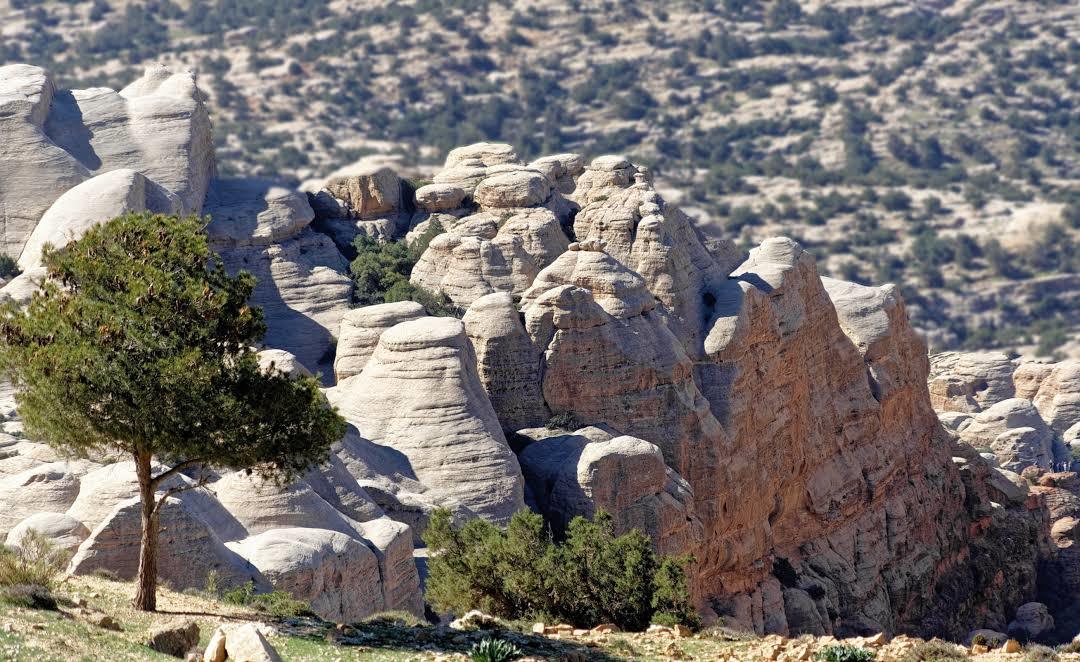
Petra is also knows as the Pink Town thanks the fantastic colors of the rock. It's a fantastic experience to walk across the Siq and to see above you cliff 100 meters high. Another great experience...
Thanks to the incredible thing that is travelling you get to know incredible places and people that in origin are so far from where you have born.
Thanks to the incredible thing that is travelling I...
Petra is a historic and archaeological city famous with its canyon and rock cut architecture. It dates back to the 6th century BC as the capital city of the Nabataeans. Now it is a symbol of Jordan as...
Comments