|
 | Istanbul Dolmabahce Palace Reviews | Tips 1 - 10 of 86 |  |  | |  |  | Dolmabahce Palace: A Study in Royal Excess | Tip Rating:      |  |  | |  |
In 1853, the Turkish sultan decided it was time to move. I mean how many centuries can you live in the same house? So he bid goodbye to Topkapi, the official residence of the sultans for centuries, and built a fancy new palace at a prime location on the shores of the Bosphorus. He filled it with costly carpets, gleaming parquet floors, 4.5 ton crystal chandeliers, marble bathrooms, 14-carat gold dinner plates, gem-encrusted teacups, huge oil paintings, ceiling-high mirrors, polar-bear rugs, elephant-tusk lamps, 193 clocks – in short all the accoutrements of wealth in those days. No matter that the citizens of the Ottoman Empire lived in abject poverty. Even royals had to keep up with the Joneses. Dolmabahce boasted the first telephone in Istanbul (installed in 1910) and a central heating system with gold radiators. During the day, the Sultan was busy with his administrative and diplomatic duties. Times were a-changing. Turkey’s acceptance as part of Europe was borne out in the interior design of the palace. Whereas Topkapi made do with a small hall for receiving guests, Dolmabahce had a gigantic ambassadorial room. While all this pomp and circumstance was going on downstairs, the Sultan’s 18 wives, 33 children and dozens of servant girls were cooped up in the Harem (Arabic for “forbidden”), not allowed to leave the house or be seen by outsiders. They watched the ceremonies through blue-glass windows or lattice grids. At 8-9, the boys were circumcised and sent off to be educated. Behind the scenes, the Sultan’s mother kept an eye on the household, and even chose her future daughters-in-law. The Sultan could have 4 wives at a time. If he divorced one, he could replace her with another. Fascinating stuff. Buy a combined ticket for the Saray and the Harem (16 YTL) and you will learn this and more. Our guide, Mehmet, was a university-trained researcher. Try to stay close to him and listen to his explanations. The groups can be large and noisy, and Turkish-accented English may take some getting used to. Leave a Comment Directions: Closed Monday. Open 9 AM - 3 PM in the winter (Oct-Feb), 9 AM - 4 PM in the summer (March-Sept). English tours at 11 AM. Note: Expect to sweat a lot in the summer. It is very hot and humid inside (no air-conditioning).
|
 | |  |
 | |  |  | Dolmabahce Palace: Why close so early...? | Tip Rating:      |  |  | |  |
285 rooms and 43 dinner/party rooms, all of them so luxius it's incredible. Six sultans have lived here, after they moved from the Topkapi Palace in 1856. After that, also the first president of Turkey, Kemal Atatürk, lived here now and then. He died in one of the rooms at 09.05 the 10th november 1938. It's said that all the clocks in the palace still has that time on. It says, since I never got the chance to get inside... This fantastic palace, with a chrystal stair, a huge ceremony haul and a huge harem (unfortunately no girls there anymore... ;) ) closes at 16.00 every day (except monday-tuesday when it's totally closed). How on earth is it possible for us who prefers to sleep a bit late in the morning to get there in time then...? Well well, that has to be my next mission (to get up early in the morning, that is...). The entrance fee is different depending where you come from. For a turkish student the entrance fee is around 1,5 lira. For other turkish citiziens it's around 17 lira, and for foreigners it's 34-35 lira. If you want to see the harem too, make sure to buy the combination ticket (costs extra). Remember also that the security around the palace is high, so don't be afraid when the first thing you'll see is the guard with the k-pist in his hand... For those of you who comes there late like me I advice to take a look at the other side of the street, against Dolmabache. There are 12-15 huge photos of Kemal Atatürk in different moments of his life. Leave a Comment Address: Dolmabache Palace, BesiktasPhone: 0212-512 04 80Directions: Very close to the place where the boats from the asian side stops.
|
 | |  |
 | |  |  | Dolmabahce Palace: Dolmabahçe Sarayi | Tip Rating:      |  |  | |  |
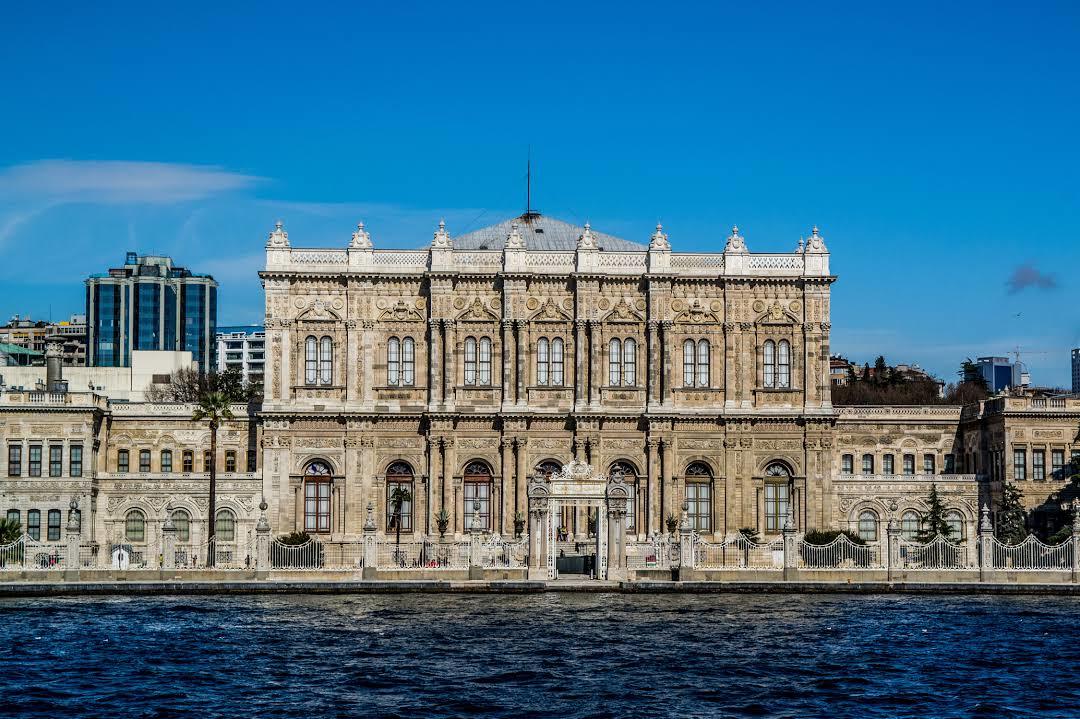
Located on land that was actually reclaimed from the waters of the Bosphorus, "Dolmabahçe", literally translated, means "filled garden". The palace was designed by Garabet & Nigogayos Balyan, and was constructed from 1842 to 1854. It replaced Topkapi Palace as the official residence of the royal family when Sultan Abdulmecit moved in 2 years later in 1856. Quite a contrast from the older and more traditional Topkapi, Dolmabahçe was built to show off the Sultan's wealth to visiting dignitaires and heads of state, despite the rapidly approaching decline of the Ottoman empire. It more resembles a European palace in style, with it's grandiose size, architecture, and decoration. Within the structure, there are 285 rooms, 42 ballrooms and meeting halls, and the huge Harem area for the wives and children of the Sultans. There are hundreds of classic 19th century paintings, Turkish wooven rugs, and grand French & Czech crystal chandeliers, most designed and/or made specifically for Dolmabahçe. The amazing Crystal Staircase, located in the main meeting area, is comprised of Baccarat crystal posts, brass trim, and mahogany wood handrails. And the incredible chandelier in the main hall weighs over 4 1/2 tons, and remains one of the largest chandeliers in the world. The ornateness of the palace is an amazing sight to see in person. After the demise of the empire following World War I, and the beginning of the Turkish republic, Atatürk frequently stayed at Dolmabahçe when in Istanbul. He died within the palace in 1938. When touring, you can take separate guided tours of the Selamlik area, which is the main part of the palace, as well as the Harem. Both have separate admission fees. There is also a charge for use of cameras, both photo and video. And while on the tours, the tour guides stress heavily to stay on the red carpeted walkways that they have designated, to avoid damage of the flooring and rugs. Directions: Located near Besiktas, along the Bosphorus
|
 | |  |
 | |  |  | Dolmabahce Palace: Dolmabahce Palace /saray | Tip Rating:      |  |  | |  |
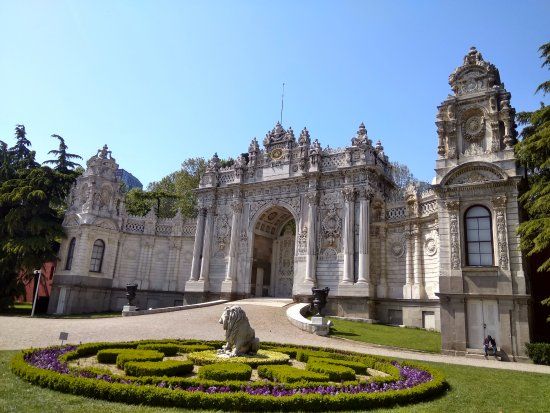
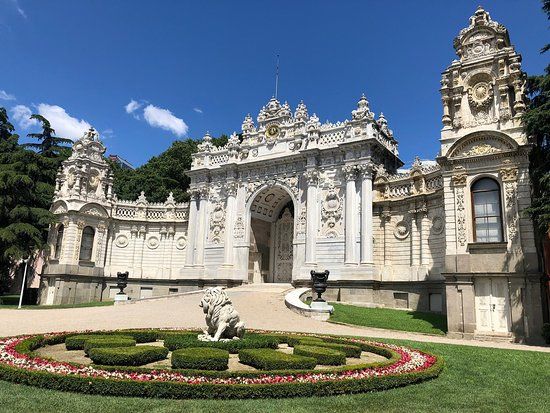
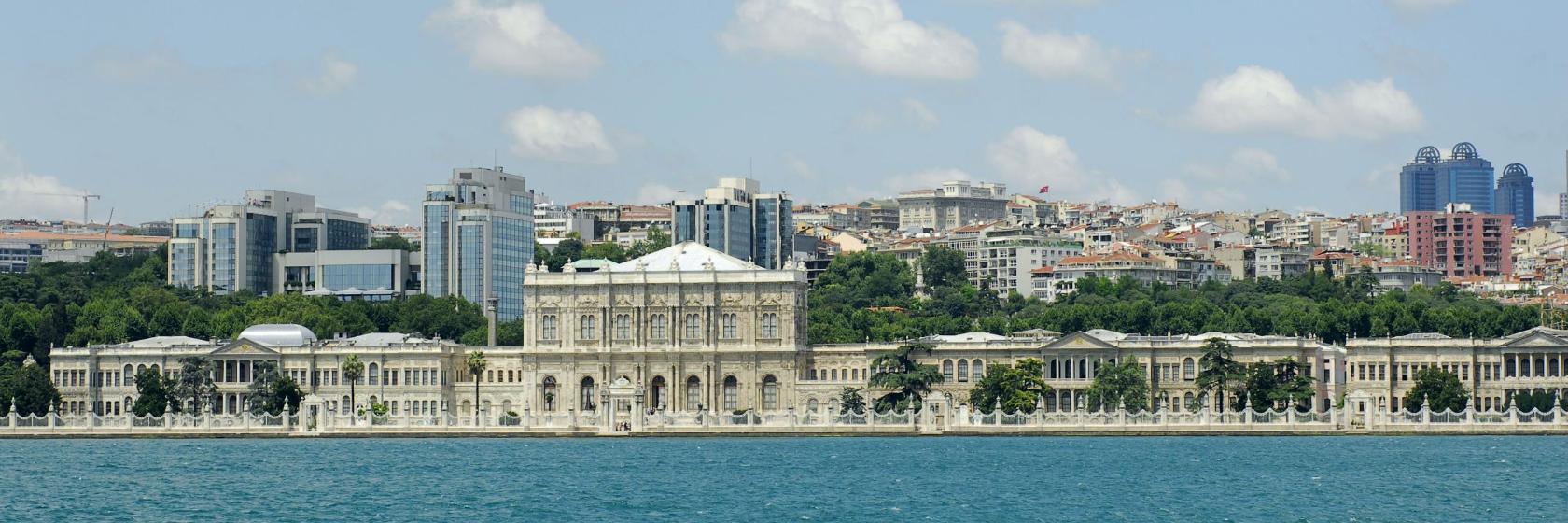
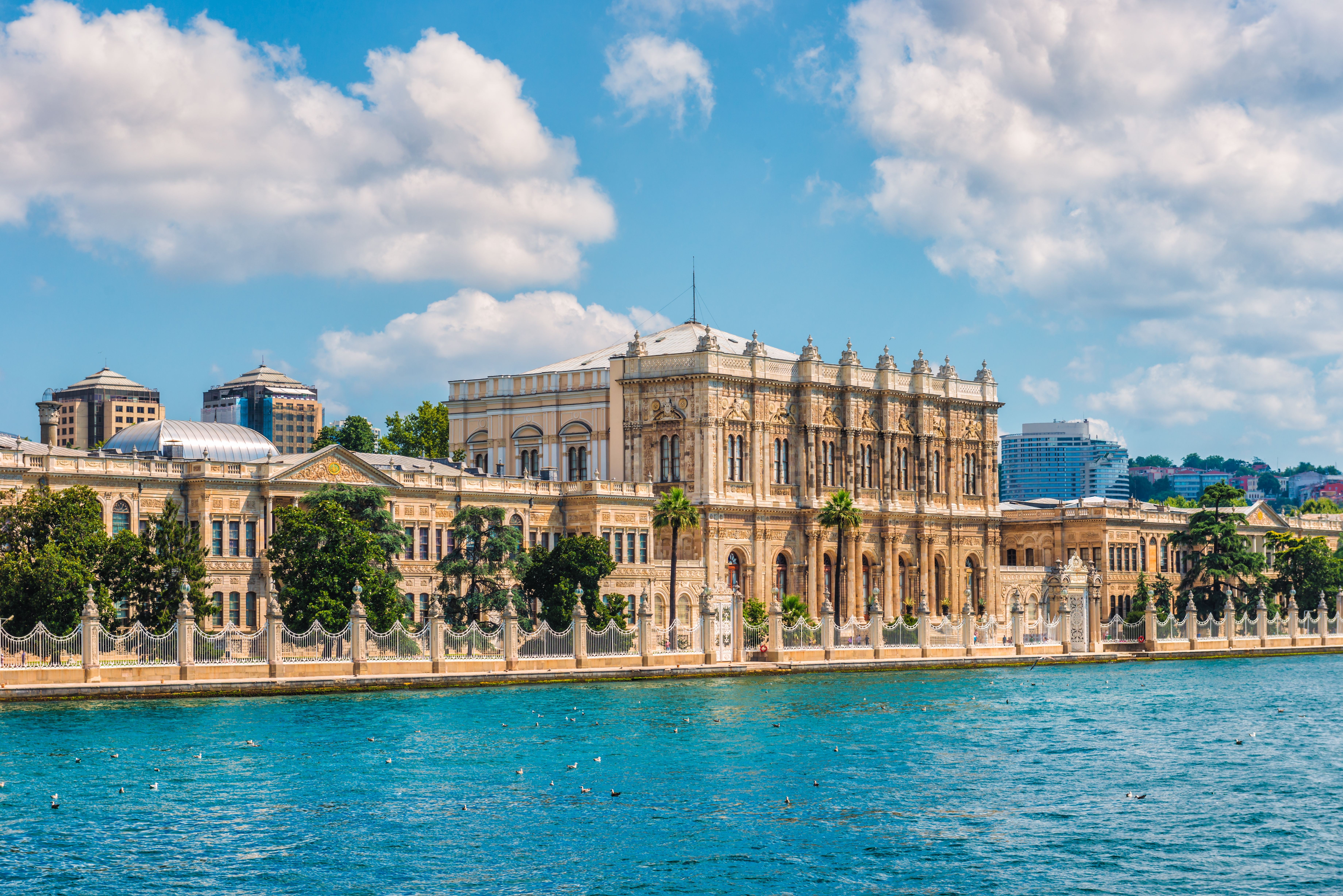
The Dolmabahce Palace, a blend of various European architectural styles, was built between 1843-1856 by Karabet Balyan, the court architect of Sultan Abdulmecid. The three-storied palace built on a symmetrical plan has 285 rooms and 43 halls. There is a 600 m long quay along the sea and two monumental gates, one of them very ornate, on the land side. Well-kept, beautiful gardens surround this seaside palace. In the middle, there is a large ballroom with a ceiling higher than the other sections. The entrance section of the palace was used for the receptions and meetings of the sultan, and the wing behind the ballroom used as the harem section. The palace has survived intact with its original decorations, furniture, and the silk carpets and curtains. It surpasses all other palaces in the world in wealth and magnificence. Rare handmade artifacts from Europe and the Far East'decorate every room in the palace. Brilliant crystal chandeliers, candelabras and fireplaces add to the lavish decor. The ballroom is the largest of its kind in the world. A 4.5 ton colossal crystal chandelier hangs from the 36 m high dome. Of the six baths in the palace, the one in the section reserved for men was made of unique and beautifully carved alabaster. In the Republican era, Atatürk used to reside in this palace when he visited Istanbul. He died here in 1938 and before his body was taken to Ankara, it was laid in state while the public poured in to pay him their last respects. Address: besiktas
|
 | |  |
More Sponsored Links for Istanbul Cruises to Turkey Visit Istanbul & Izmir from Venice Book today and save with Free Kids Istanbul Hotels See maps & pics, read reviews, book online. Relax and enjoy your stay! Ankara Turkey Hotels Save up to 75% on Ankara hotels. Pay at check-in. No booking fees.
|
|