pictured is lock 38 of the chesapeake and ohio canal. the C & O canal runs 185 miles along the potomac river from the washington d. c. area to the northern maryland mountains. the canal was in use for over one hundred years to transport goods to and from coastal virginia to the western frontier. today the C & O canal is a national historic park with six visitor centers along the canal. for more information see the attached web site.
ferry hill plantation was established by john blackford (1771-1839). blackford owned a 700 acre plantation and a ferry service across the potomac river from maryland to virginia. he is best known for his journal about daily life on his plantation. blackford built ferry place plantation house in 1812. blackford died in 1839 and his son franklin took over the operation of the plantation and ferry service. in 1848 franklin sold the plantation to his brother in-law robert douglas. the ferry operation ceased in the 1850's due to the construction of the james rumsey bridge. due to the plantation's location on the potomac both confederate and union armies occupied the property. during the battle of antietam ferry hill served as both a confederate field hospital and headquarters. robert douglas died in 1867 and ferry hill passed on to his son henry kid douglas. henry kid douglas was on general thomas jackson's staff and is famous for his civil war memoir "i rode with stonewall". after the civil war ferry hill ceased to be an active farm and in 1974 was acquired by the national park service.
the original sharpsburg depot was built by the shenandoah valley railroad in 1883. the original depot burned down in 1910. the sharpsburg depot was rebuilt by the norfolk and western railroad in 1911. the name of the depot was changed to antietam after two trains collided after confusing sharpsburg with nearby shepherdstown.
mt. airy plantation house also known as grove farm was built in 1821. this 2 1/2 story flemish bond brick house with federal and greek revival elements was the meeting place of president abraham lincoln and general george mc clellan two weeks after the battle of antietam. lincoln was annoyed with mc clellan for not pursuing general lee into virginia. at this site on november 7 th 1862 lincoln relieved mc clellan of command.
mountain view cemetery is located across the street from the antietam national cemetery on RT 34 just east of downtown. mountain view cemetery was established in 1883. those interned here are citizens of sharpsburg. the majority of confederate dead from the battle of antietam are interned at hagerstown and frederick maryland. mountain view cemetery has an interesting collection of funerary art.
the congregation of st. paul's was organized in 1818. the original church was built in 1819. during the battle of antietam st. paul's served as a confederate hospital. the church was badly damaged during the battle and was later demolished. the current st. paul's episcopal was rebuilt in 1874. for those interested in civil war history and architecture st. paul's is worth a look when in downtown sharpsburg.
this historic building is located on main street in downtown sharpsburg. on the night of september 17 th 1862 general robert e. lee met with generals thomas jackson, james longstreet, and j. e. b. stuart at the grove house before they withdrew back to virginia after the battle of antietam.
Antietam Creek winds its way through the rolling Maryland countryside. It's a peaceful landscape now, and it's difficult to imagine what happened here in 1862.
The Union commander, General McClellan, received a copy of Confederate General Lee's battle plan, complete with a map of Lee's forces. But he failed to exploit this fantastic stroke of luck. Meanwhile, Lee led his army across the Potomac and into Maryland.
By the time the battle was joined, Lee had gathered his troops along the high ground overlooking Antietam Creek. McClellan attacked from the north, near Dunker Church, and Union troops fought their way south. Both sides suffered horrendous losses. By the end of the day, after bloody fights in the Cornfield, along the Sunken Road, and at the Lower Bridge over Antietam Creek, the Yankees had won. It was a Pyrrhic victory for the Union, the bloodiest single day of the war.
But the Union could eventually recover from its losses. The Confederacy could not. McClellan touted his victory, but Lincoln was disappointed that his general didn't take advantage of his opportunity to defeat the Rebels in detail beforehand. McClellan also failed to exploit his victory, and allowed Lee to retreat back to Virginia.
The President replaced General McClellan with General Burnside. A few months later, Burnside suffered a terrible defeat at Fredericksburg, Virginia (see my Fredericksburg page for more).
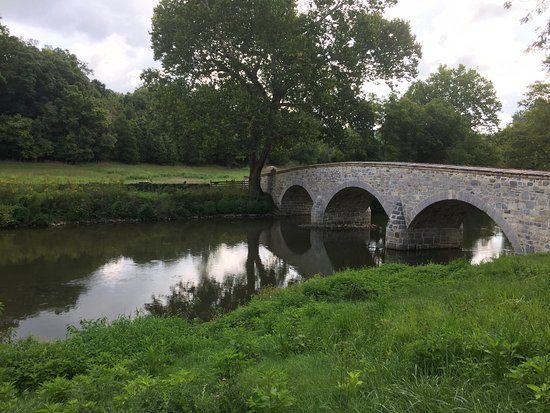
The battlefield has been kept close to its 1862 appearance. The old Dunker church, the farms, and the bridge are all still there. Corn still grows in the cornfield, which once ran red with blood.
Start at the Visitors Center to pick up your map and news about events that day. You can walk the northern parts, but the southern ones are more spread out. A bike is good for this. The rangers give regular talks. Afterward, visit the cemetery (the map has directions).
Ferry Hill overlooks the Potomac River and Shepardstown, West Virginia. The Cheseapeake and Ohio Canal preserves this high point and the Maryland shore of the Potomac. 184 1/2 Miles of Adventure
The Chesapeake & Ohio Canal National Historical Park is 184.5 miles (295.2 km) of adventure. Originally, the C&O Canal was a lifeline for communities and businesses along the Potomac River as coal, lumber, grain and other agricultural products floated down the canal to market. Today millions of visitors hike or bike the C&O Canal each year to enjoy the natural, cultural and recreational opportunities available.
For more information, see VT's Shepherdstown, WV page or My C&O Canal page
The Bloodiest One Day Battle in American History
23,000 soldiers were killed, wounded or missing after twelve hours of savage combat on September 17, 1862. The Battle of Antietam ended the Confederate Army of Northern Virginia’s first invasion into the North and led to Abraham Lincoln’s issuance of the preliminary Emancipation Proclamation.
For more sights to see at Antietam National Battlefield, see VT's Antietam page or My Antietam page
Sponsored Links
Comments